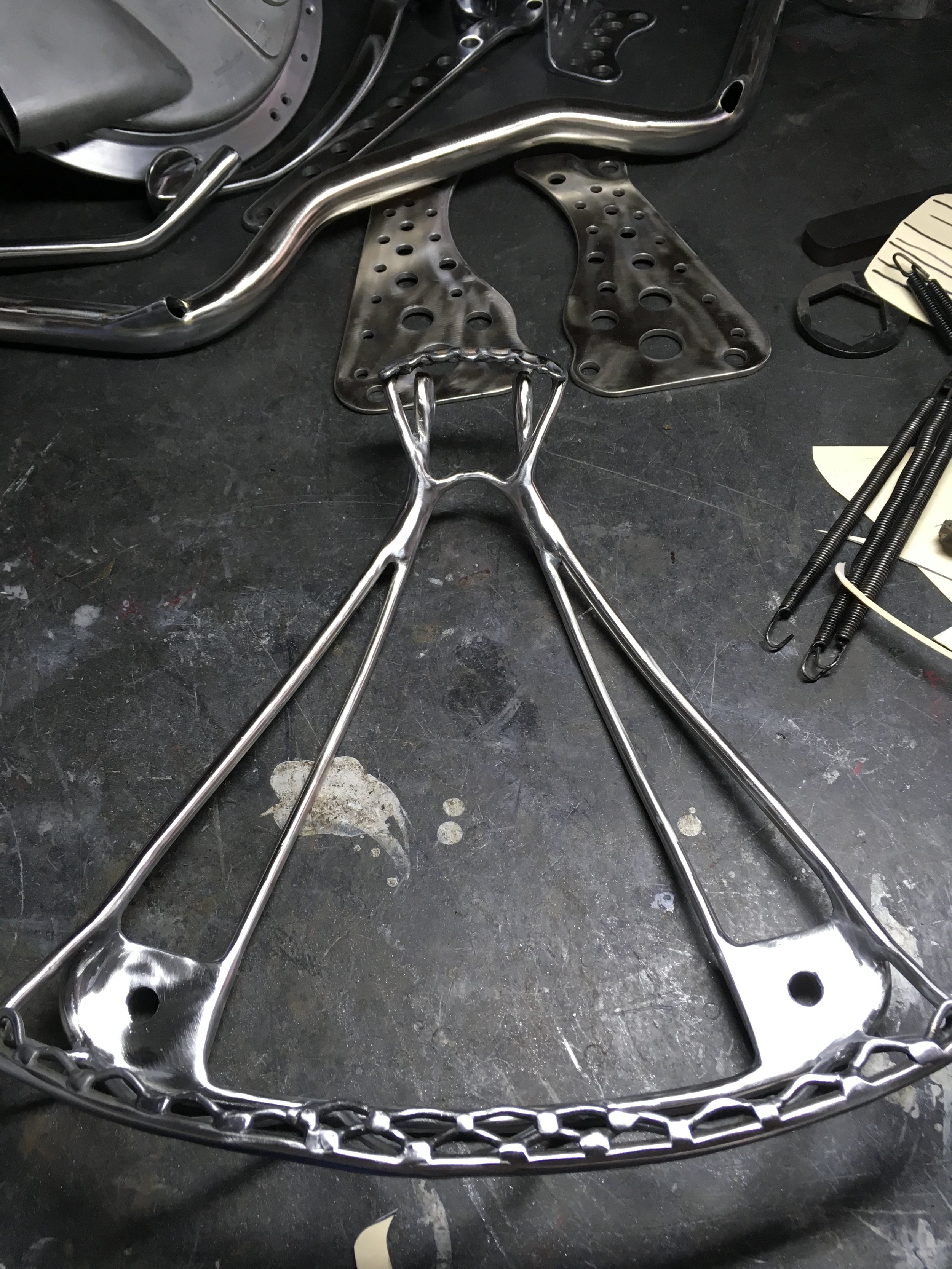
1957 Triumph Freebird going for plating and polishing, custom brass footpegs, and hardware rehab.

The table of parts getting ready to head off for chrome plating and polishing. The aluminum parts minus the engine cases are going for polishing, and the steel parts are going for chrome. A lot of the parts have been stripped of chrome, some polished out, but there is still a ton of work here for the plater and polisher to do.

Besides documenting the parts for the plater, it is a good reference to have for assembly.

Besides documenting the parts for the plater, it is a good reference to have for assembly.

I contemplated and even had a couple suggestions to do nickel plate on the frame, but just not so sure the difference between the nickel and other parts that will be chrome (like wheel rims and forks) would look as good as all chrome. Still time to …

I contemplated and even had a couple suggestions to do nickel plate on the frame, but just not so sure the difference between the nickel and other parts that will be chrome (like wheel rims and forks) would look as good as all chrome. Still time to change my mind, but for now it will be chrome.

Can’t wait to see this polished out…especially by someone else. This will mark the first time ever to send aluminum polishing out. For the last thirty plus years, I have always done my own polishing, but now trying something a little different. Havi…

Can’t wait to see this polished out…especially by someone else. This will mark the first time ever to send aluminum polishing out. For the last thirty plus years, I have always done my own polishing, but now trying something a little different. Having jobs like this done will give me an idea what the job is worth. Even with all the prep on these parts there are hours to go on them.
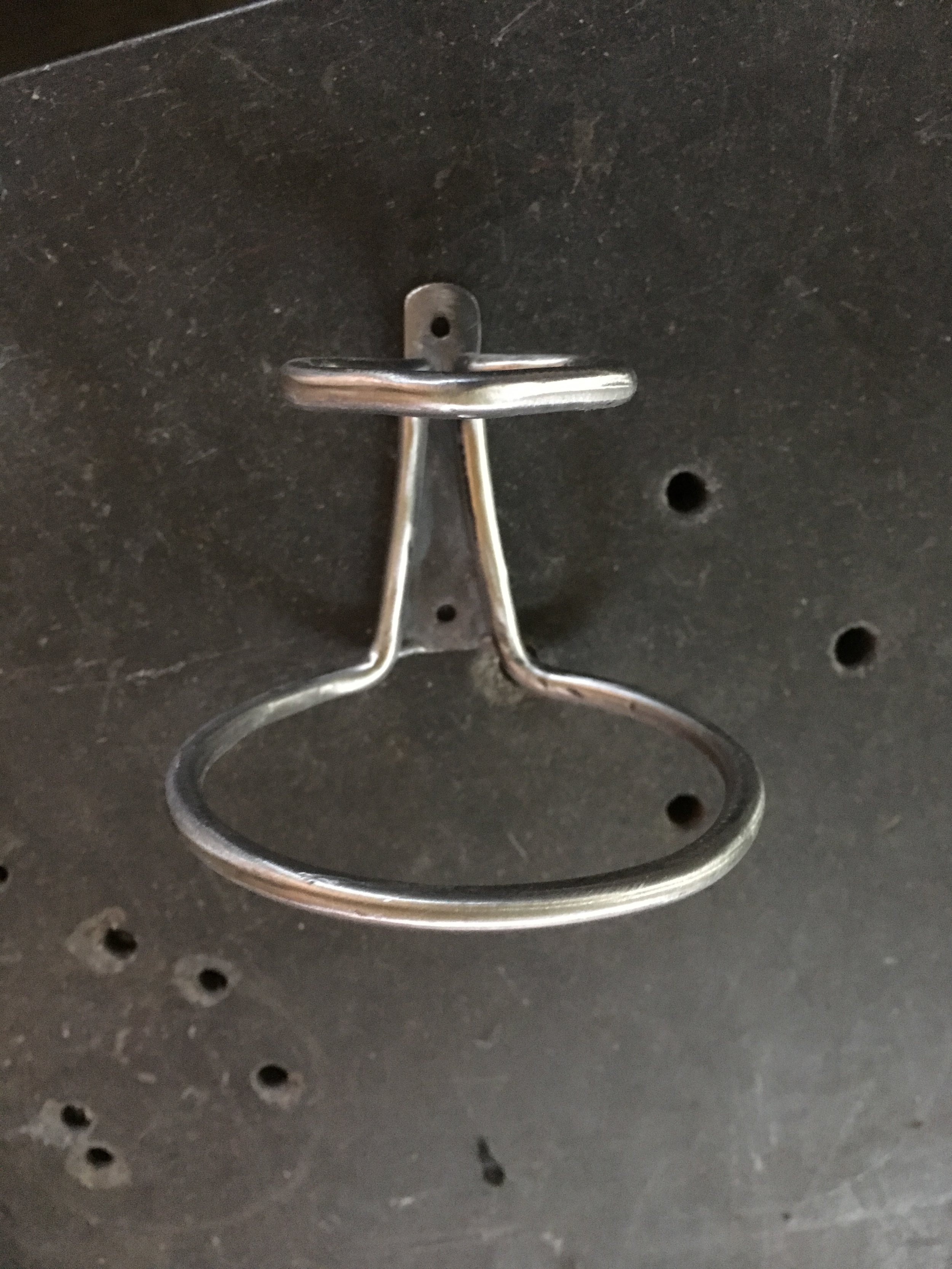
The oil vapor catch-can bracket finally had a small plate welded on to allow it to be mounted with rivets.

The oil vapor catch-can bracket finally had a small plate welded on to allow it to be mounted with rivets.

Held in place by some Cleco fasteners to test the fit.

Held in place by some Cleco fasteners to test the fit.

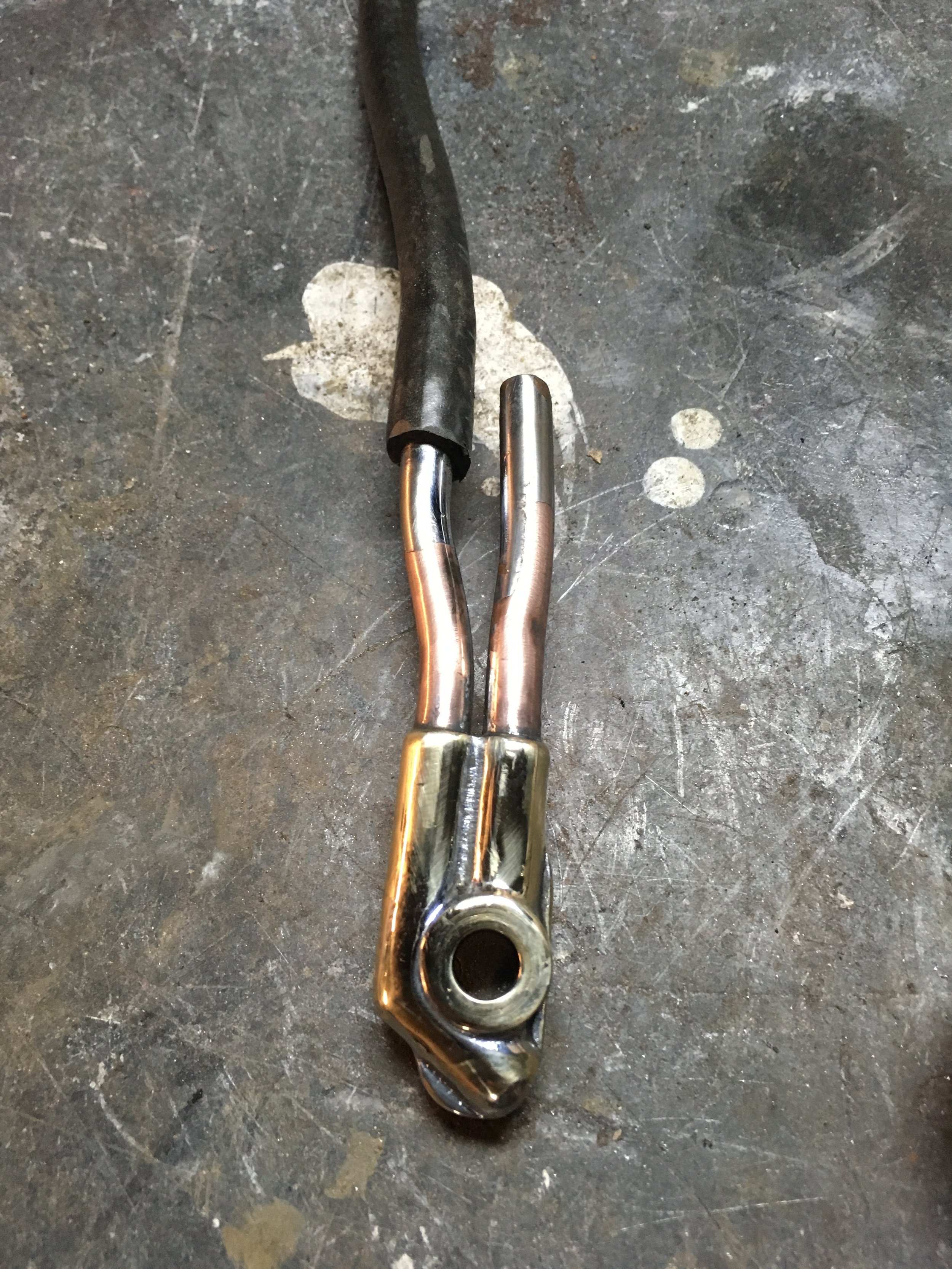
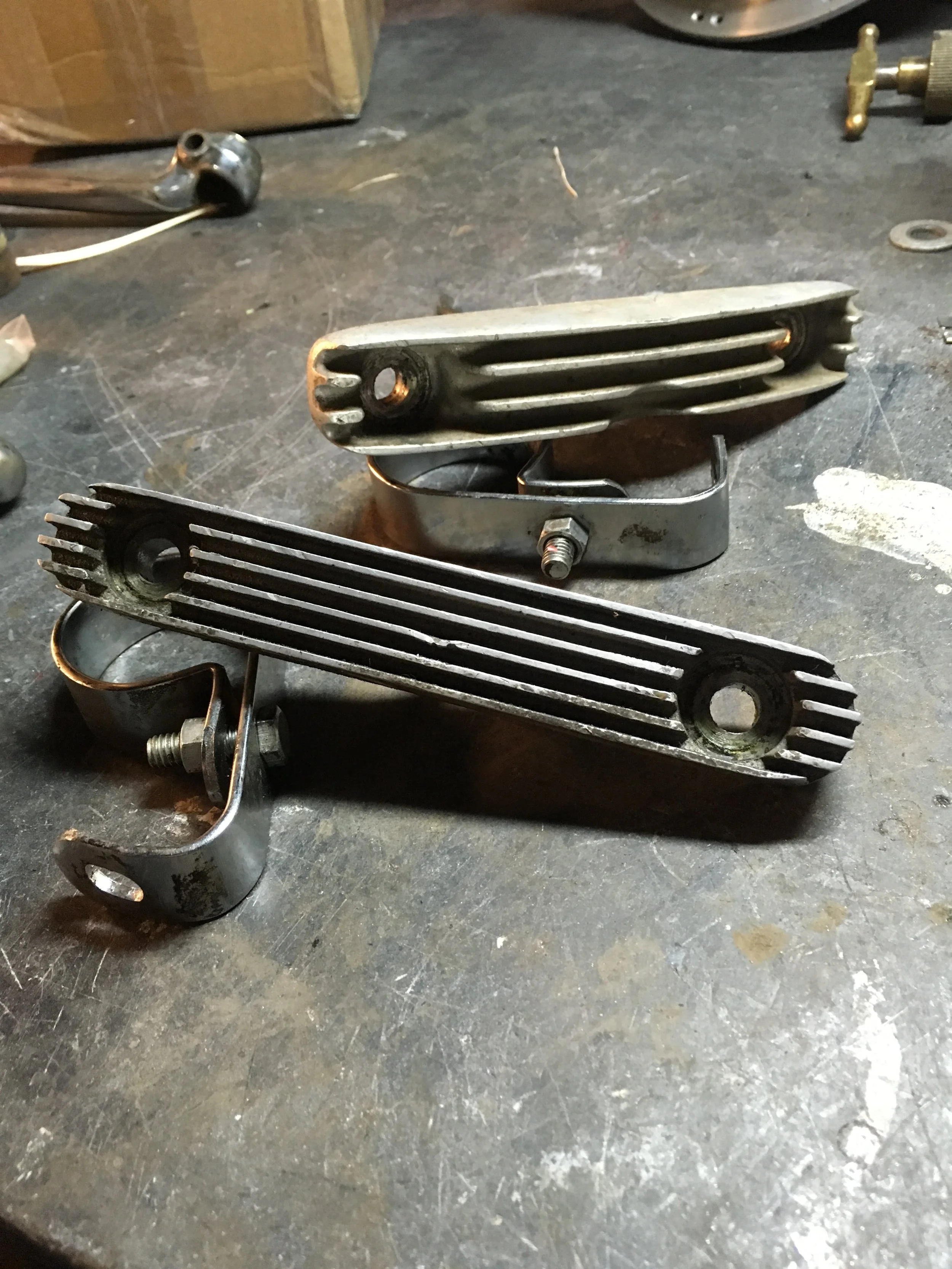
The original footpeg brackets were modified to accept some brass foot rests.

The original footpeg brackets were modified to accept some brass foot rests.

After the top was ground flat, holes were drilled and tapped, and the sides widened by welding.

After the top was ground flat, holes were drilled and tapped, and the sides widened by welding.

During the process of matching up the surfaces. Looks like this one needs a little more welding.

During the process of matching up the surfaces. Looks like this one needs a little more welding.

Did half a dozen different sketch-outs for the tread pattern. Squares or rectangles will get the nod most likely.

Did half a dozen different sketch-outs for the tread pattern. Squares or rectangles will get the nod most likely.

Rehab for some original cheese-head screws. These screws usually get replaced by socket-head screws, as was the case with the Freebird engine, but the original look has a more vintage vibe. They are also costly, with some vendors asking as much as f…

Rehab for some original cheese-head screws. These screws usually get replaced by socket-head screws, as was the case with the Freebird engine, but the original look has a more vintage vibe. They are also costly, with some vendors asking as much as fifteen bucks a screw! Although some are Posi-drive heads, most of them are Phillips and can be made to look a little bit better with a couple quick techniques.

A piece of steel with a 1/4” hole is laid across a gap in the vise and the screw placed in the hole and hammered. It is amazing how just a couple medium blows can push the buggered-out parts back down. Next, a number 3 JIS (Japanese Industrial Stand…

A piece of steel with a 1/4” hole is laid across a gap in the vise and the screw placed in the hole and hammered. It is amazing how just a couple medium blows can push the buggered-out parts back down. Next, a number 3 JIS (Japanese Industrial Standard) cross screwdriver is hammered good and hard into the head to even up the edges a little. JIS screwdrivers are different from Phillips, with flate sides on the vanes of the tip. Phillips vanes are slanted to make them “cam out” when they reach the appropriate torque.

After the hammering steps, they get chucked up in the drill and run against the belt sander for a couple seconds.

After the hammering steps, they get chucked up in the drill and run against the belt sander for a couple seconds.

This is the type thing that makes working with a sixty year old bike a bit of a challenge. The transmission shift shaft was severely pitted, but otherwise functioning just fine. To repair it, the shaft was ground down to fresh steel , welded and gro…

This is the type thing that makes working with a sixty year old bike a bit of a challenge. The transmission shift shaft was severely pitted, but otherwise functioning just fine. To repair it, the shaft was ground down to fresh steel , welded and ground back down to the right level.

Chucking it up in the lathe allowed it to be taken to the right level. This is the after of the same surface.
Chucking it up in the lathe allowed it to be taken to the right level. This is the after of the same surface.
Aluminum finishing case halves, Webco bits, and Joe Hunt Magneto for the 1957 Triumph Freebird build.

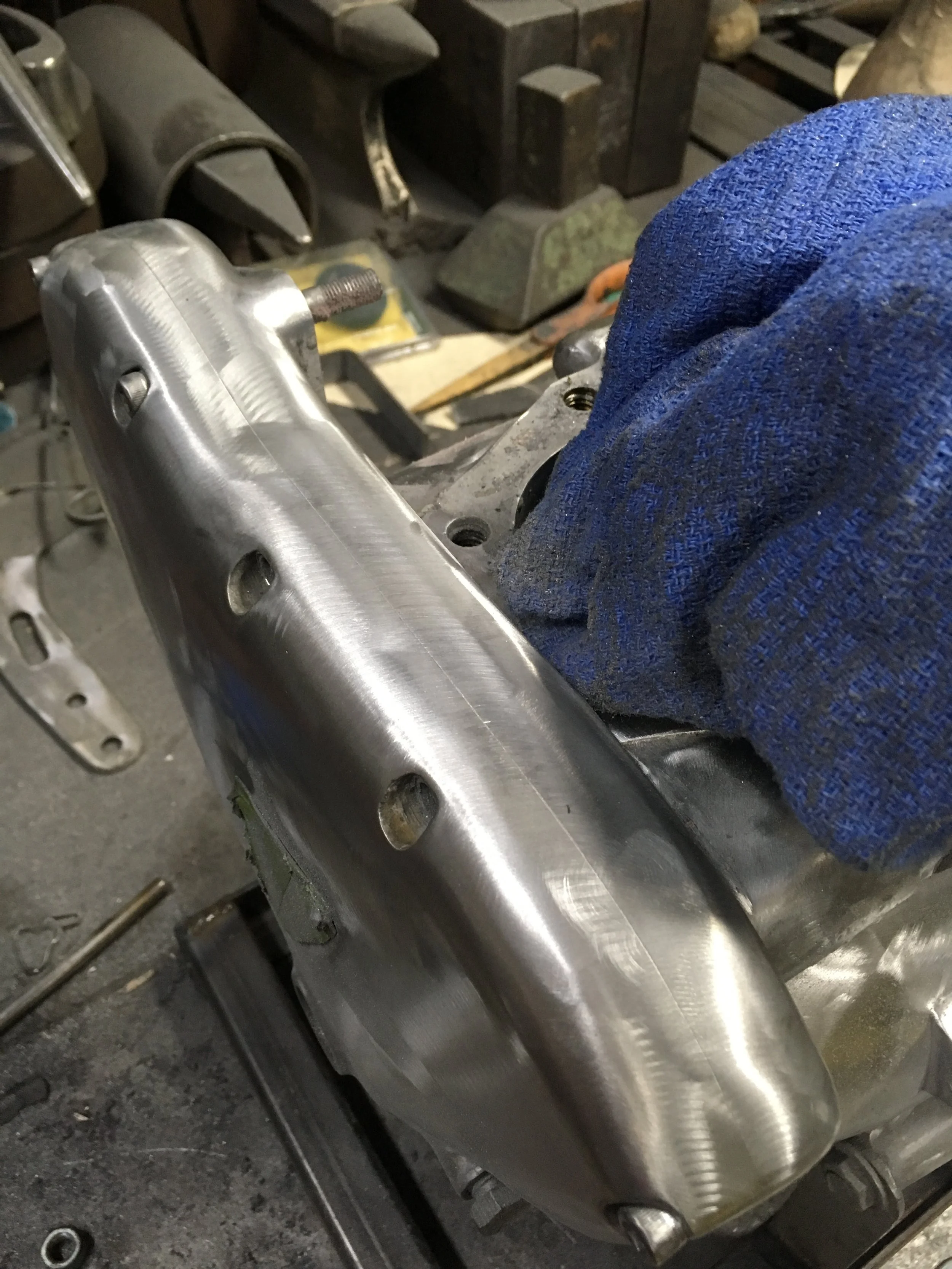
Getting into the engine on the 1957 Triumph Freebird project. The side covers were matched up on the primary, clock case engine case halves and transmission covers. The rough original castings do not match from the factory, with differences on the m…

Getting into the engine on the 1957 Triumph Freebird project. The side covers were matched up on the primary, clock case engine case halves and transmission covers. The rough original castings do not match from the factory, with differences on the mating surfaces that have to be evened up. This work needs to be done with the halves bolted together, so it was done prior to disassembly.

There are two covers on the tranny, stacked on each other. I wish there were some before pics of this. The lines between the cases are almost invisible. The casting lines and rough texture will also be polished out. The reason this was done at this …

There are two covers on the tranny, stacked on each other. I wish there were some before pics of this. The lines between the cases are almost invisible. The casting lines and rough texture will also be polished out. The reason this was done at this stage was to get the parts needing chrome and cadmium plating off the tranny and engine.

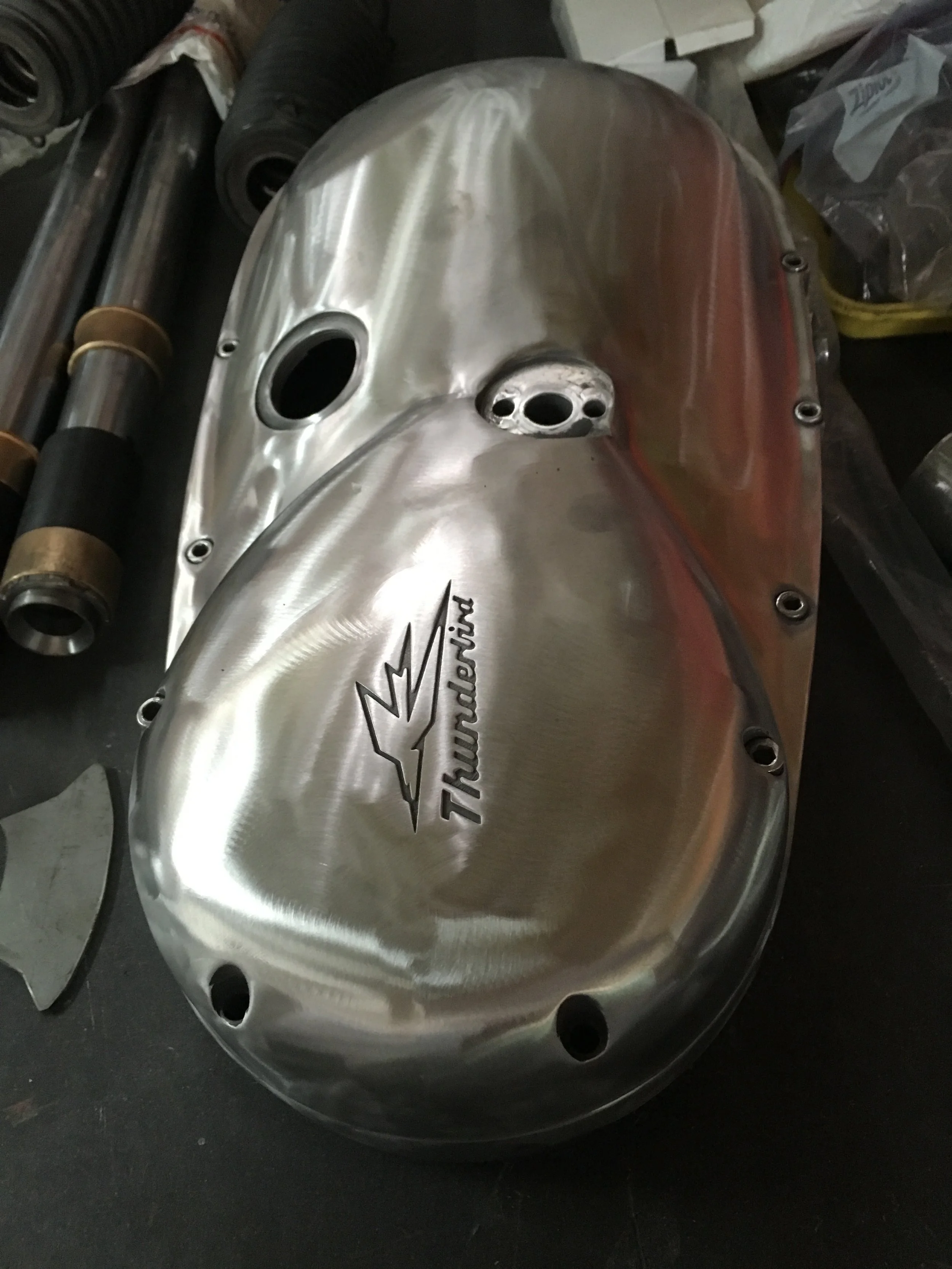
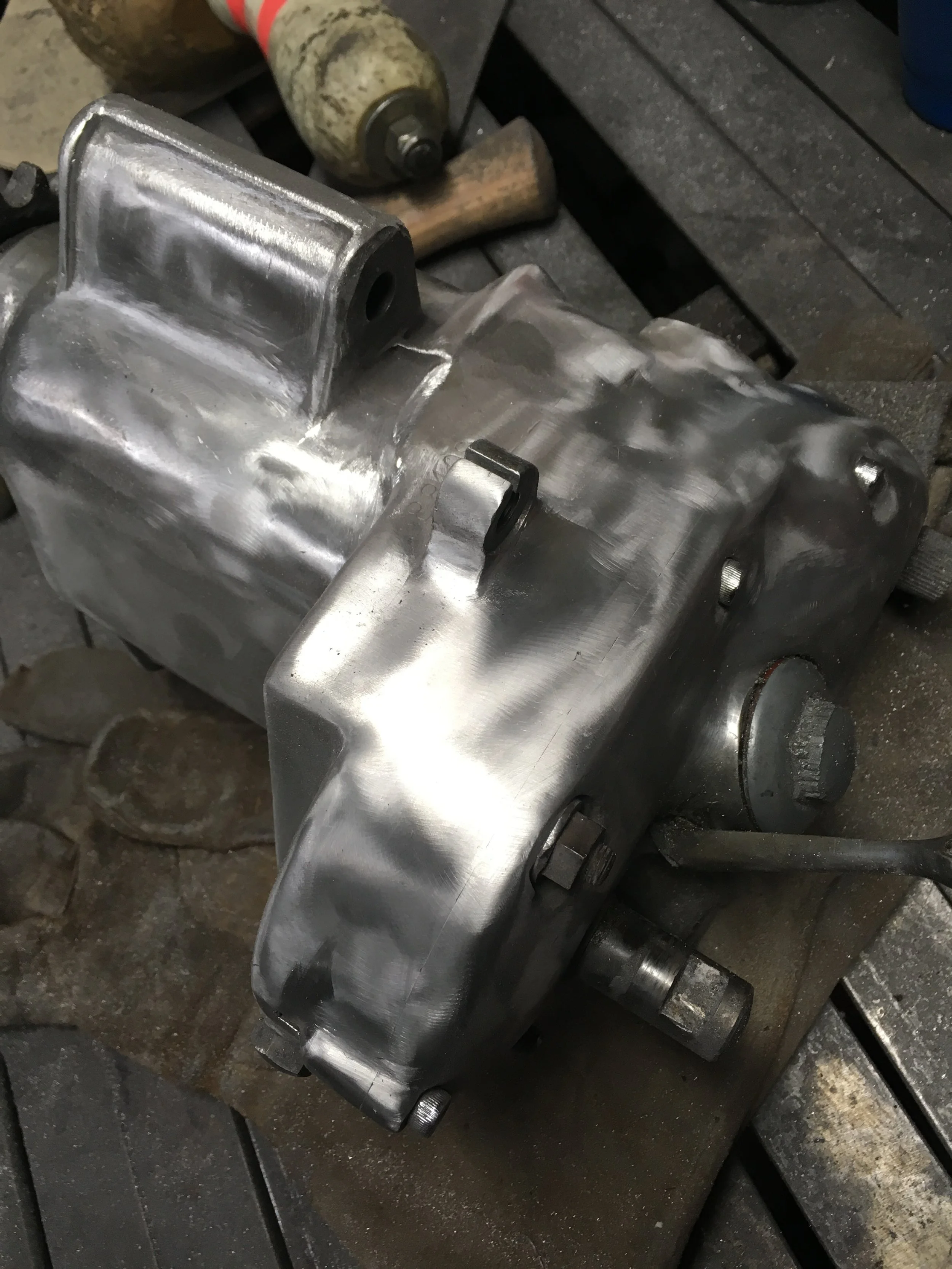
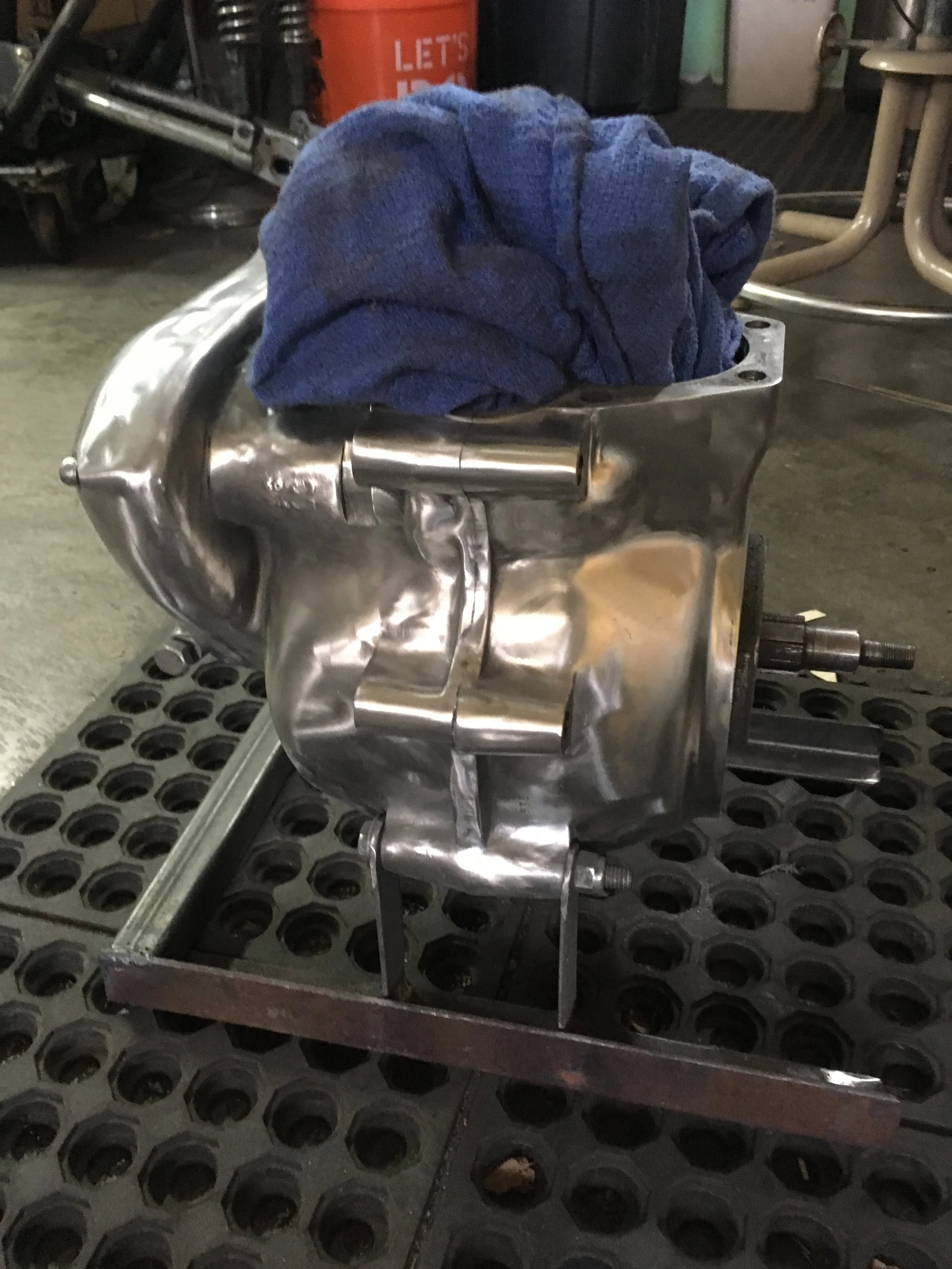
Getting the case halves and clock case covers evened up. There is a flare on the middle motor mount that will not be evened out, leaving it as a place to pound when splitting the case halves. A simple engine stand was made to get this part of the jo…

Getting the case halves and clock case covers evened up. There is a flare on the middle motor mount that will not be evened out, leaving it as a place to pound when splitting the case halves. A simple engine stand was made to get this part of the job done.

Some of the before ugliness. The flare on the case half on the right side is easy to see in this picture.

Some of the before ugliness. The flare on the case half on the right side is easy to see in this picture.

The clock case cover all evened up.

The clock case cover all evened up.

Still getting the chrome parts prepped prior to plating. Sometimes you get a pleasant surprise. The original plating was flaking off, revealing a brass fixture and some copper plating left from the plating process. With all the brass going on this b…

Still getting the chrome parts prepped prior to plating. Sometimes you get a pleasant surprise. The original plating was flaking off, revealing a brass fixture and some copper plating left from the plating process. With all the brass going on this bike, it will be left as-is.

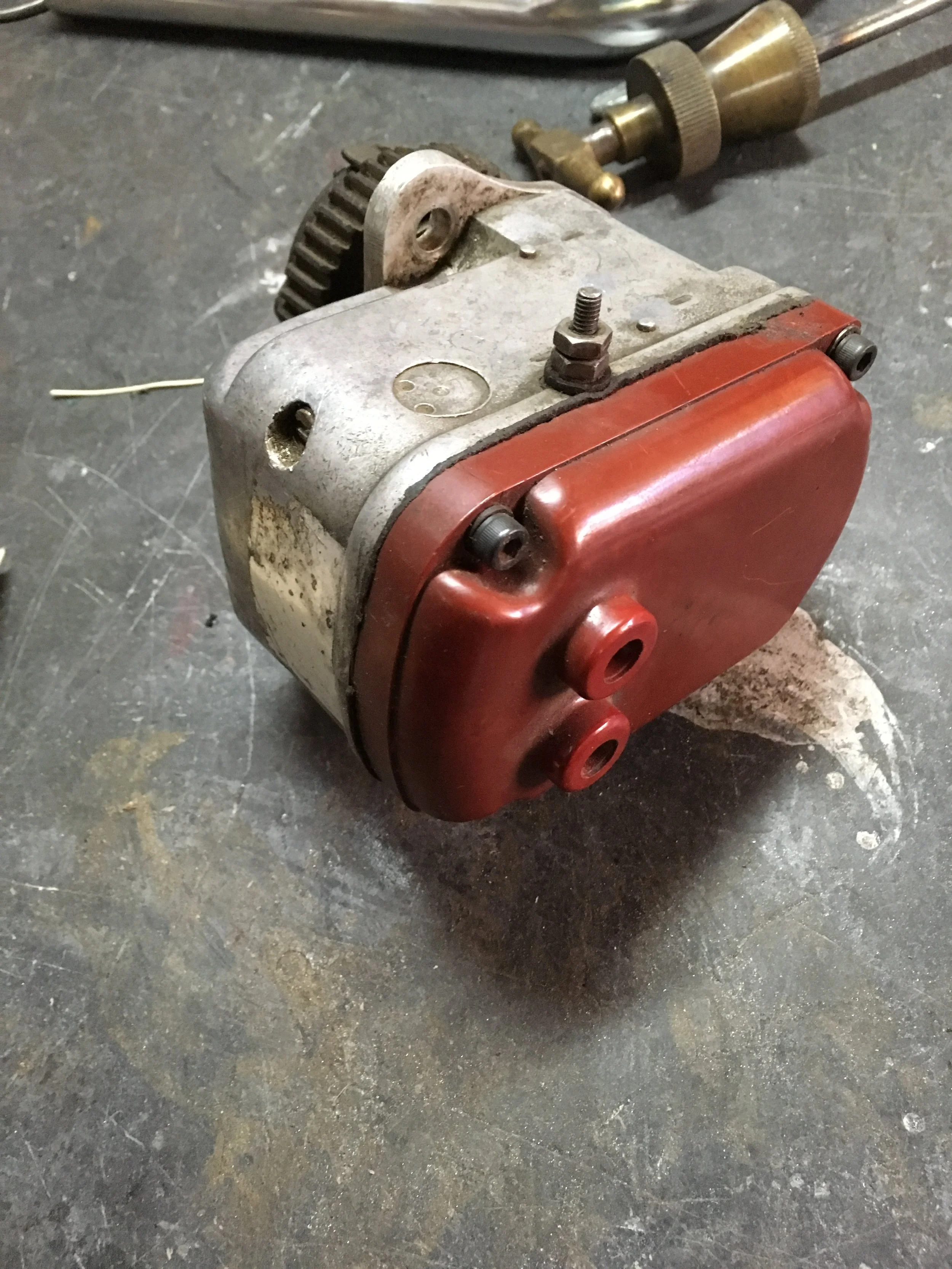
Getting ready to send this vintage Joe Hunt Magneto back to California for a factory rebuild. Though the patina is beautiful, it will be refinished to show quality aside from the original Bakelite cover.

Getting ready to send this vintage Joe Hunt Magneto back to California for a factory rebuild. Though the patina is beautiful, it will be refinished to show quality aside from the original Bakelite cover.

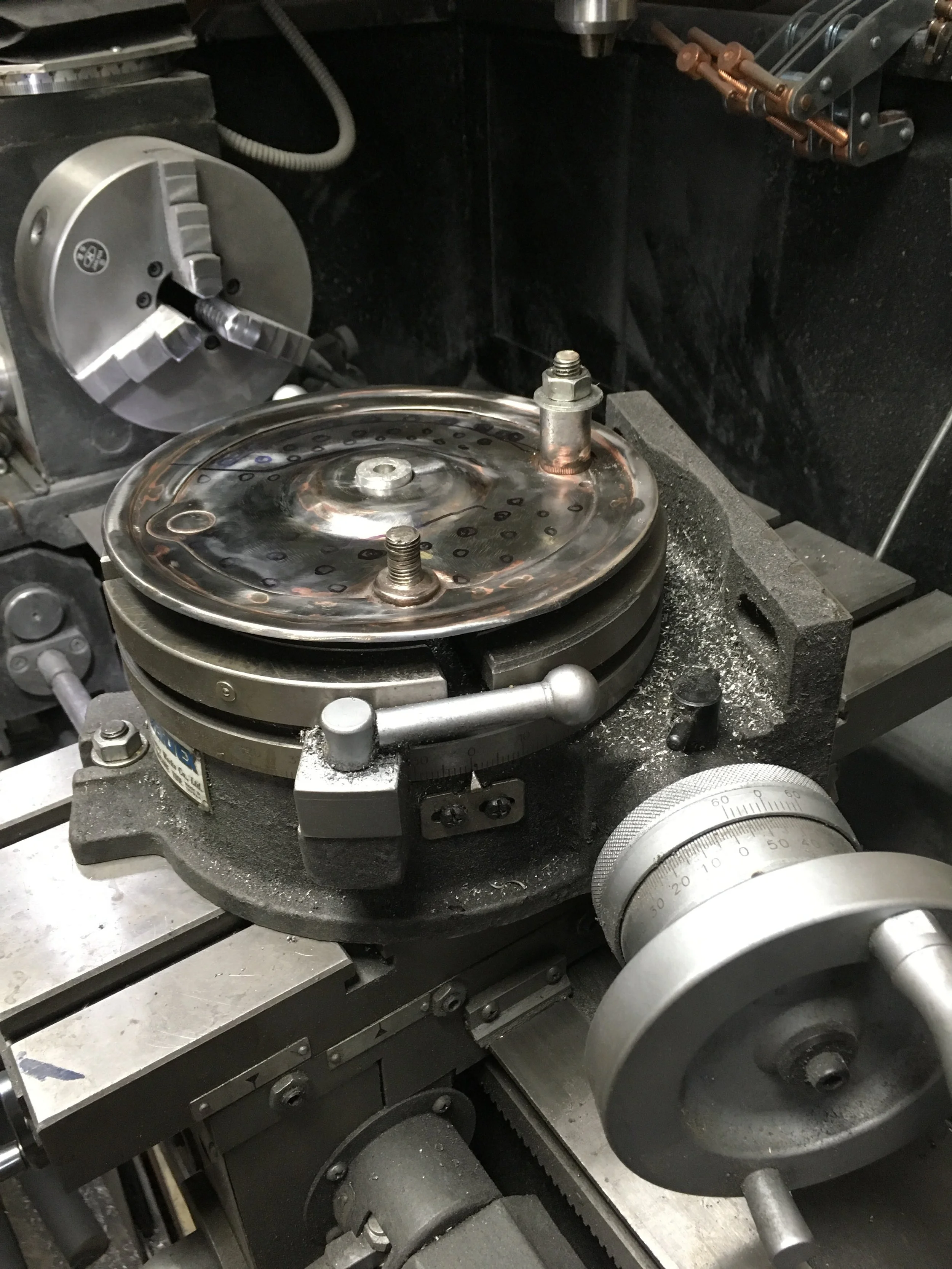
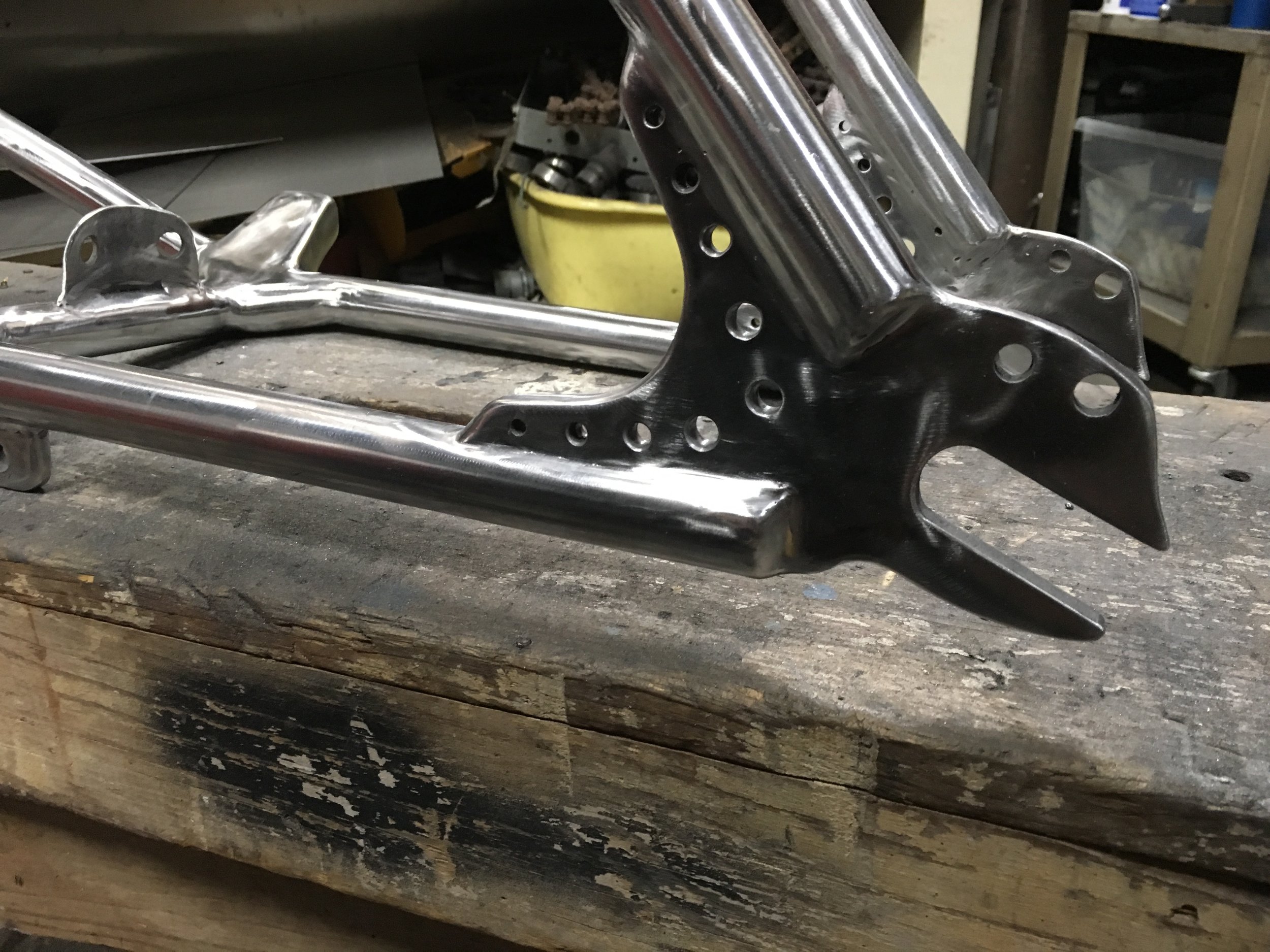
The rear brake plate on the rotary table getting ready for some speed holes.

The rear brake plate on the rotary table getting ready for some speed holes.

A couple vintage Webco pieces to choose from for the rocker oiler. The arched one in the back will replace the one that originally came with the bike.

A couple vintage Webco pieces to choose from for the rocker oiler. The arched one in the back will replace the one that originally came with the bike.

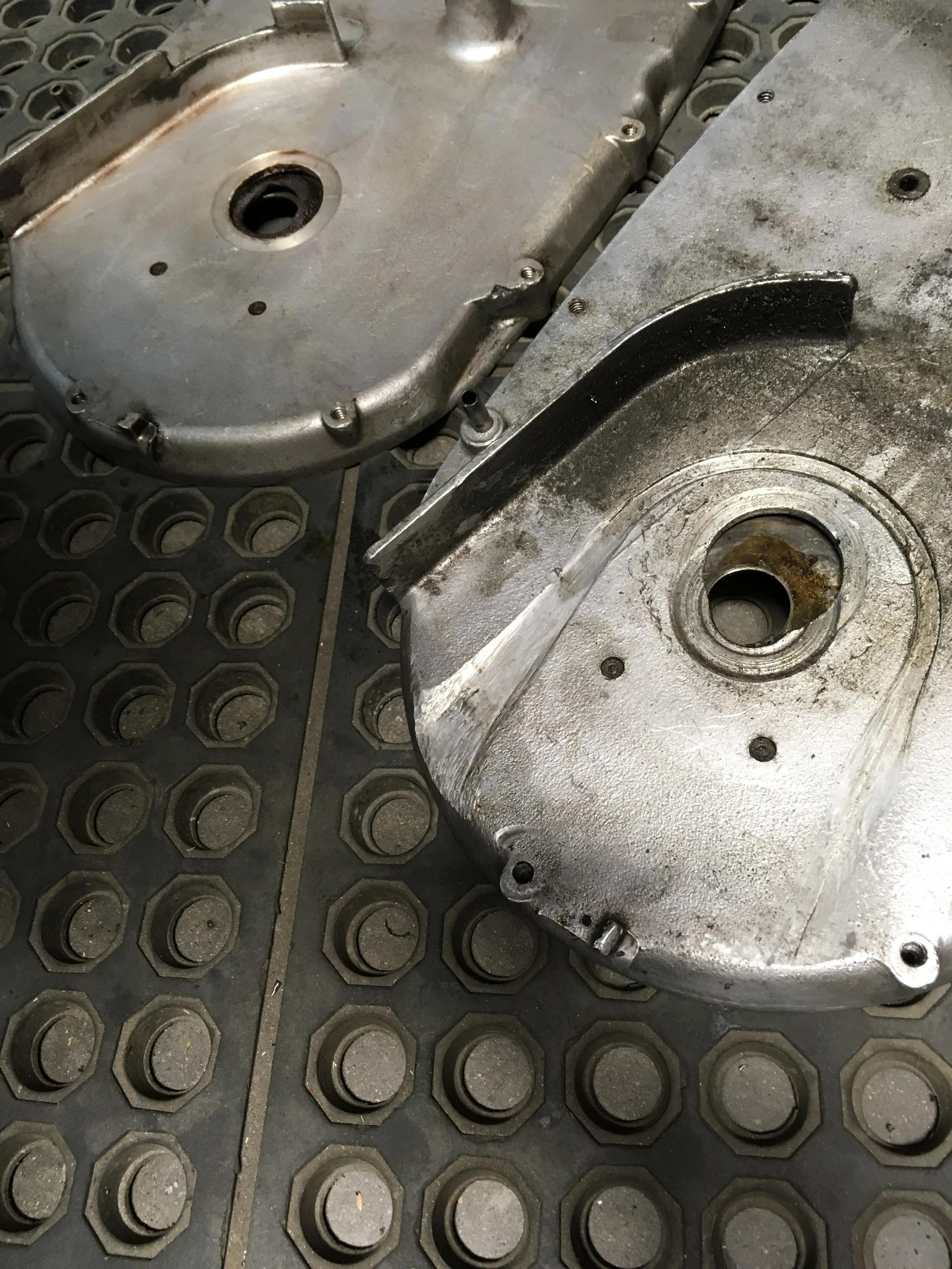
The back of the original primary cover and some of the chain rash. The other cover in the background will be used in its place.

The back of the original primary cover and some of the chain rash. The other cover in the background will be used in its place.

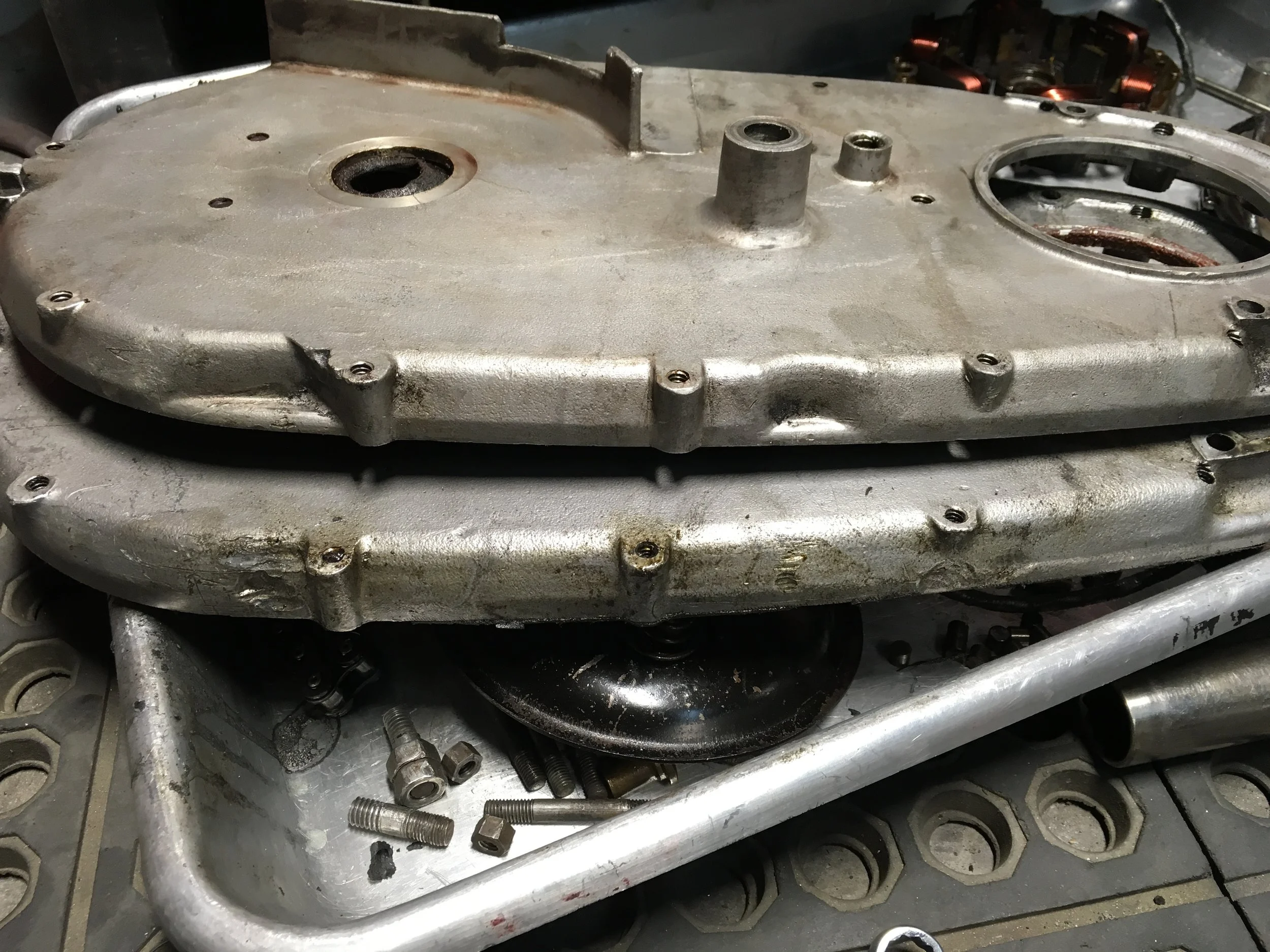
One last thing. One of the interesting things to take notice of is the progress of the manufacturing process. On the original 1957 cover (the bottom one in the picture,) there are some gouges on the bottom where it meets up with the frame. In the la…

One last thing. One of the interesting things to take notice of is the progress of the manufacturing process. On the original 1957 cover (the bottom one in the picture,) there are some gouges on the bottom where it meets up with the frame. In the later cover, there are recesses cast in to overcome this defect. There is also a notch cut into the chain guard that was not on the original cover…not sure why that mod was made.