The 1955 Norton Norsaki and 1967 Triumph Mountain Cub builds nearing completion

The 1955 Norton “Norsaki” build, a featherbed frame with a Kawasaki 400 triplets been painted, and assembly will begin shortly. The 1967 Triumph Mountain Cub is assembled and awaiting the oil and gas tanks to return from paint. The seat cover is done on the Norton, and the Cub seat is in the process of being upholstered in the original color scheme.

The seat and strap were done in Napa leather. A stainless thumb screw was carved for the tank strap anchor. Black sheepskin is sewn underneath, where it contacts the tank.

A simple pattern was chosen for the seat cover. Can’t wait to see it on the seat pan. The cover was made by Xtreme Upholstery in Denton, Texas.
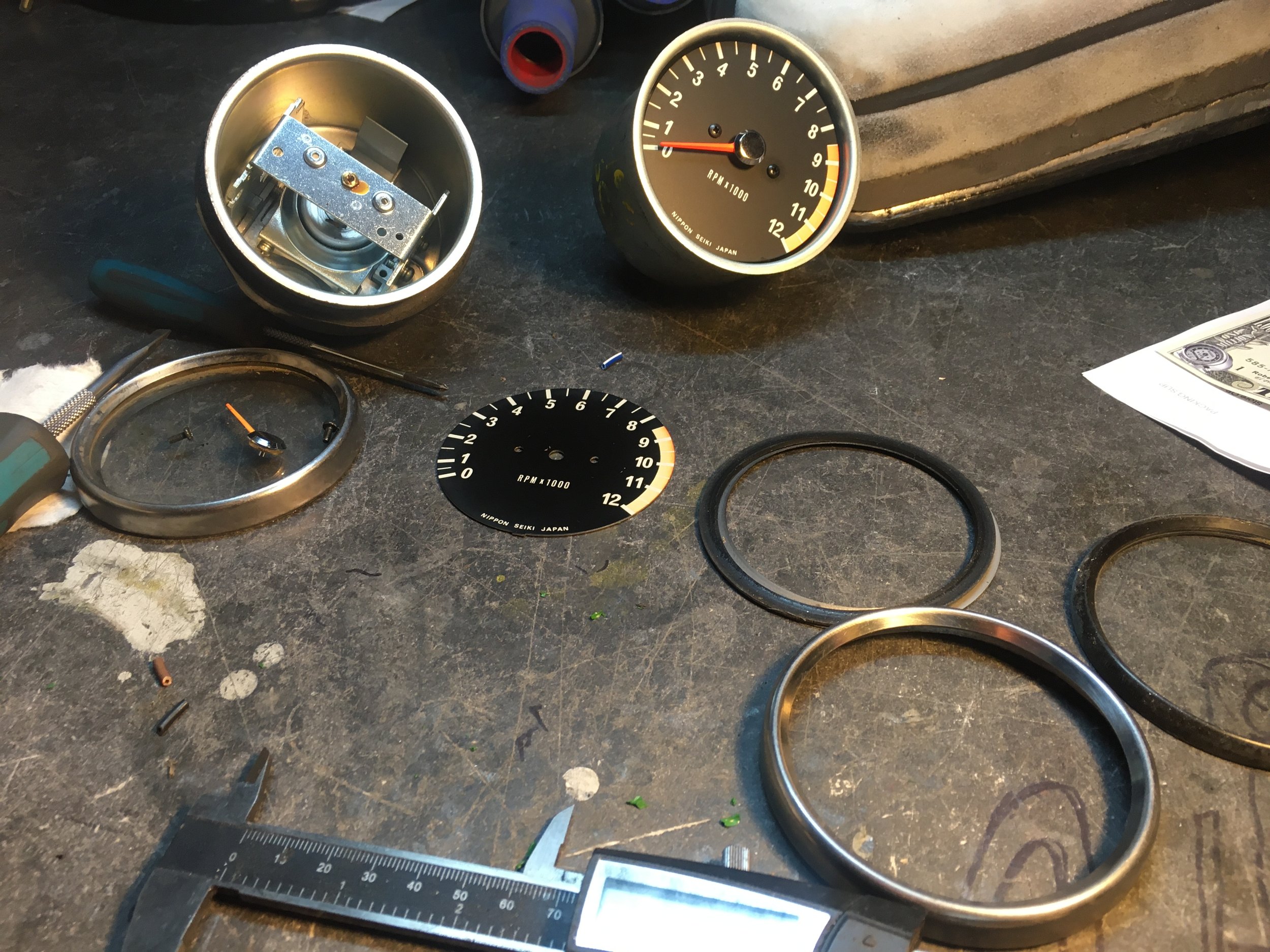
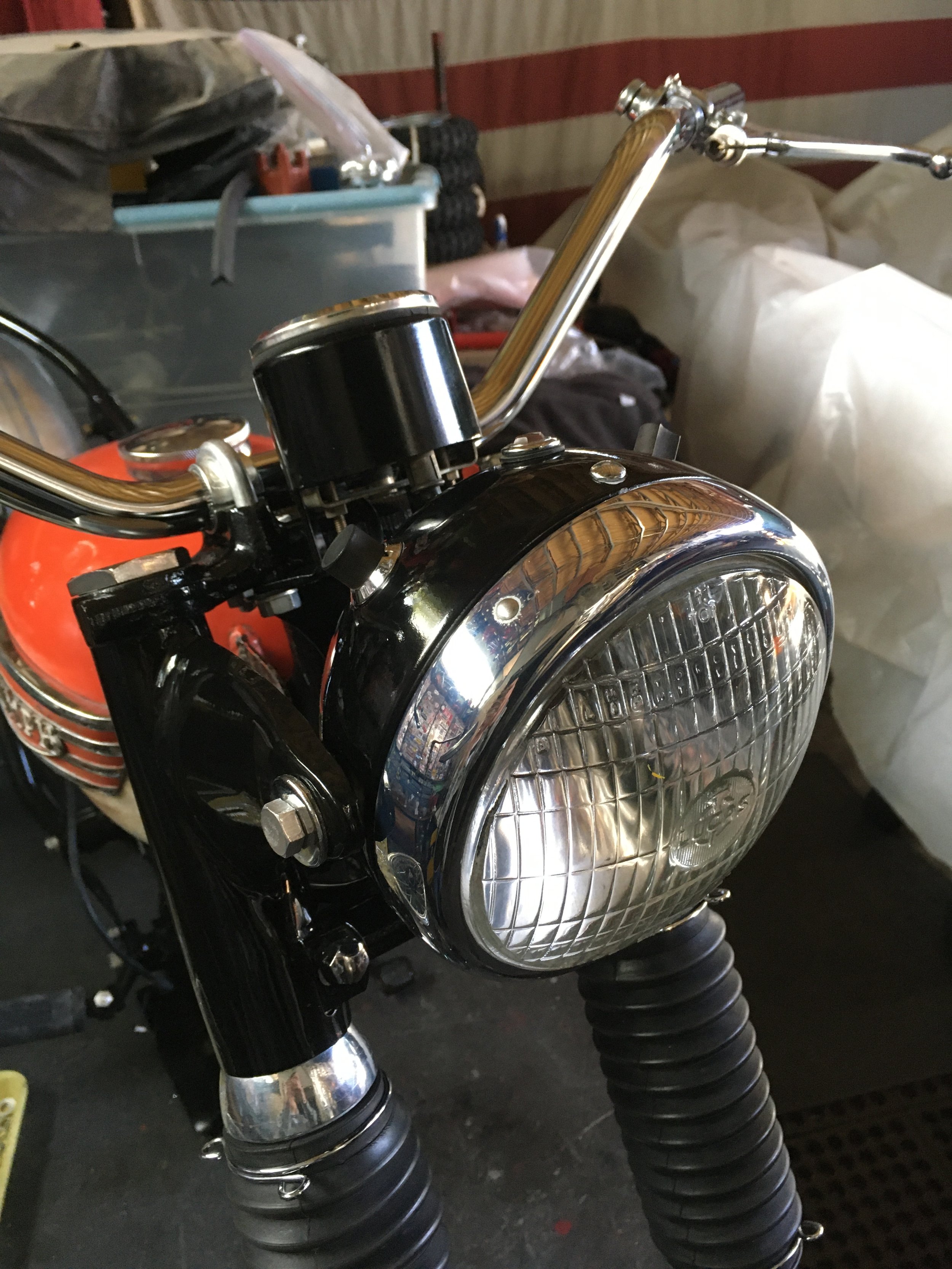
The original Kawasaki S3 tach fit perfectly in the Lucas headlight shell, but finding a working one that was also presentable proved difficult. In the search, three seperate units were sourced (one was returned as defective,) and a single unit with a restorable bezel and an intact output shaft was built. There is also a custom face being printed.
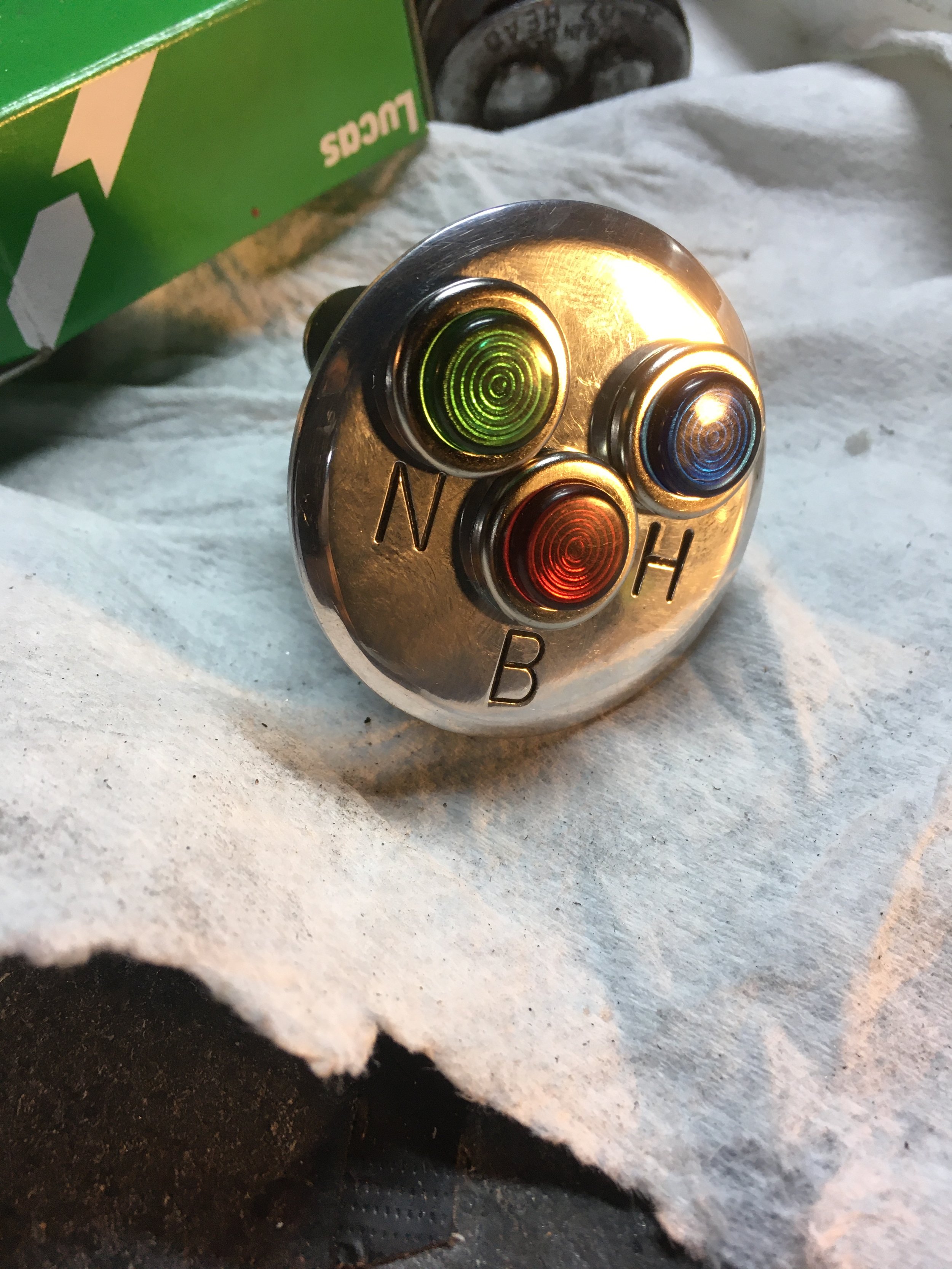
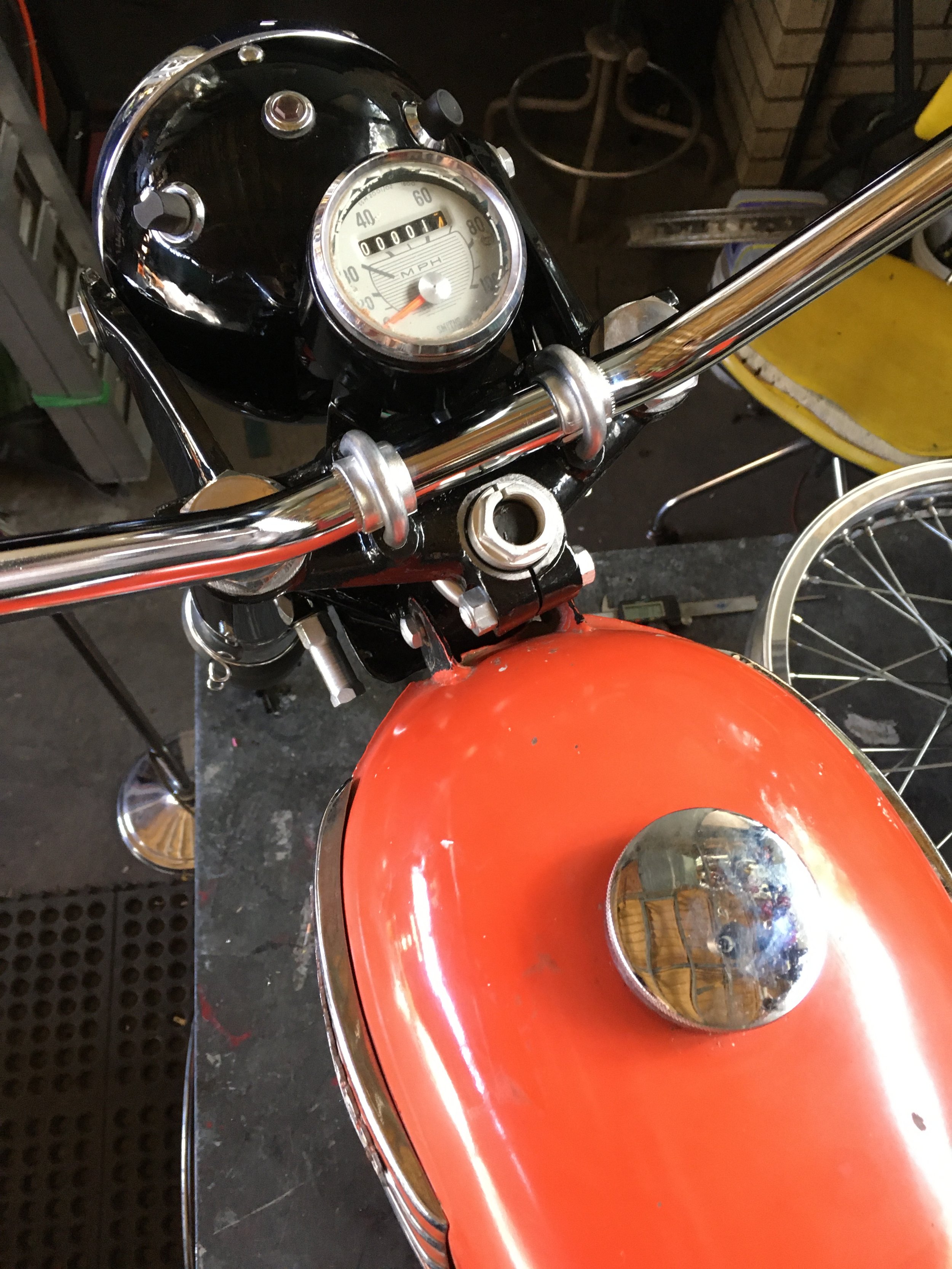
The ammeter hole in the Lucas headlight shell needed filling, so this panel with original Lucas jewel indicator lights was machined from aluminum.
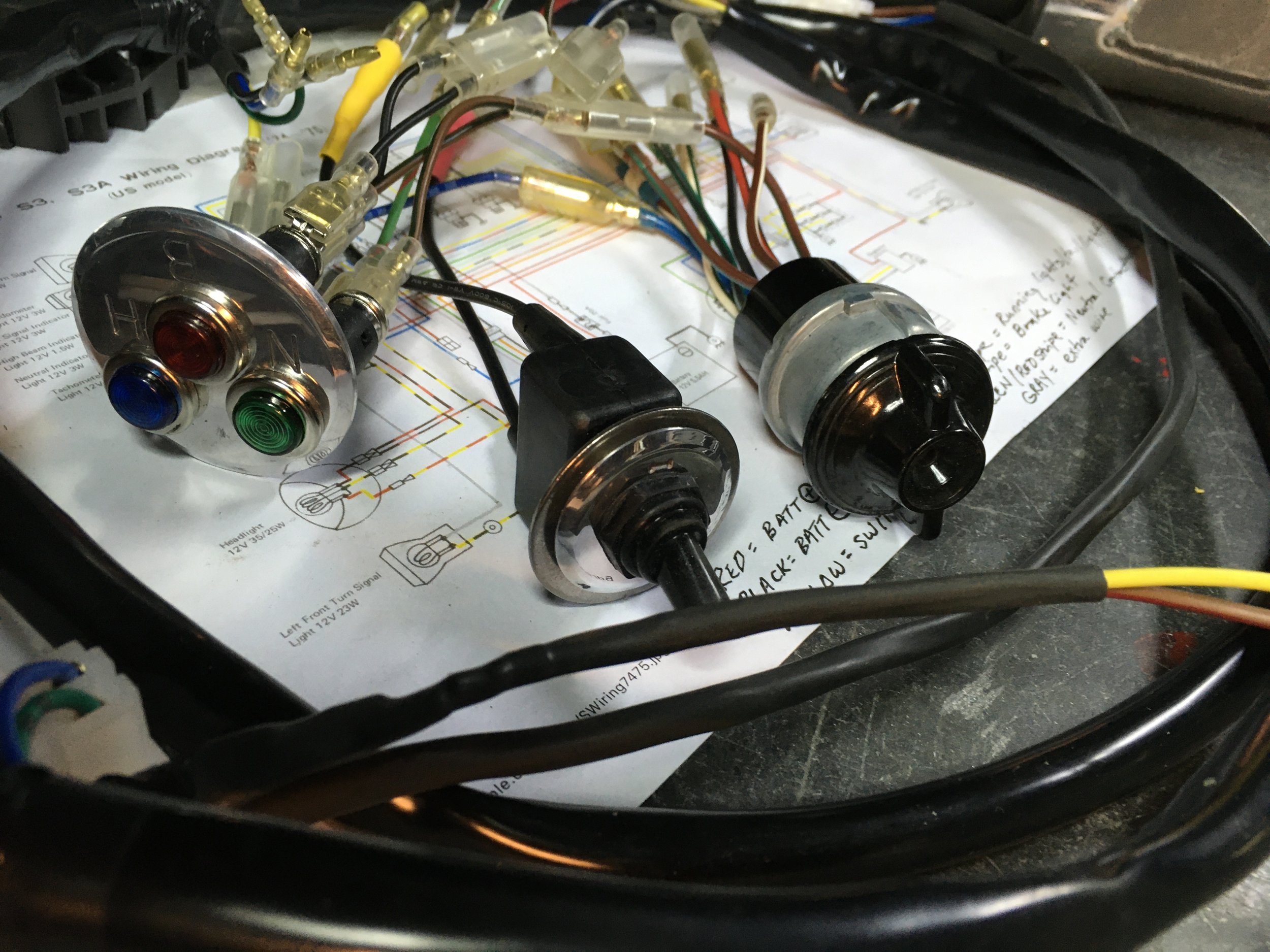
A special washer was made to mount the light switch, and another aluminum bezel was made for the ignition switch.
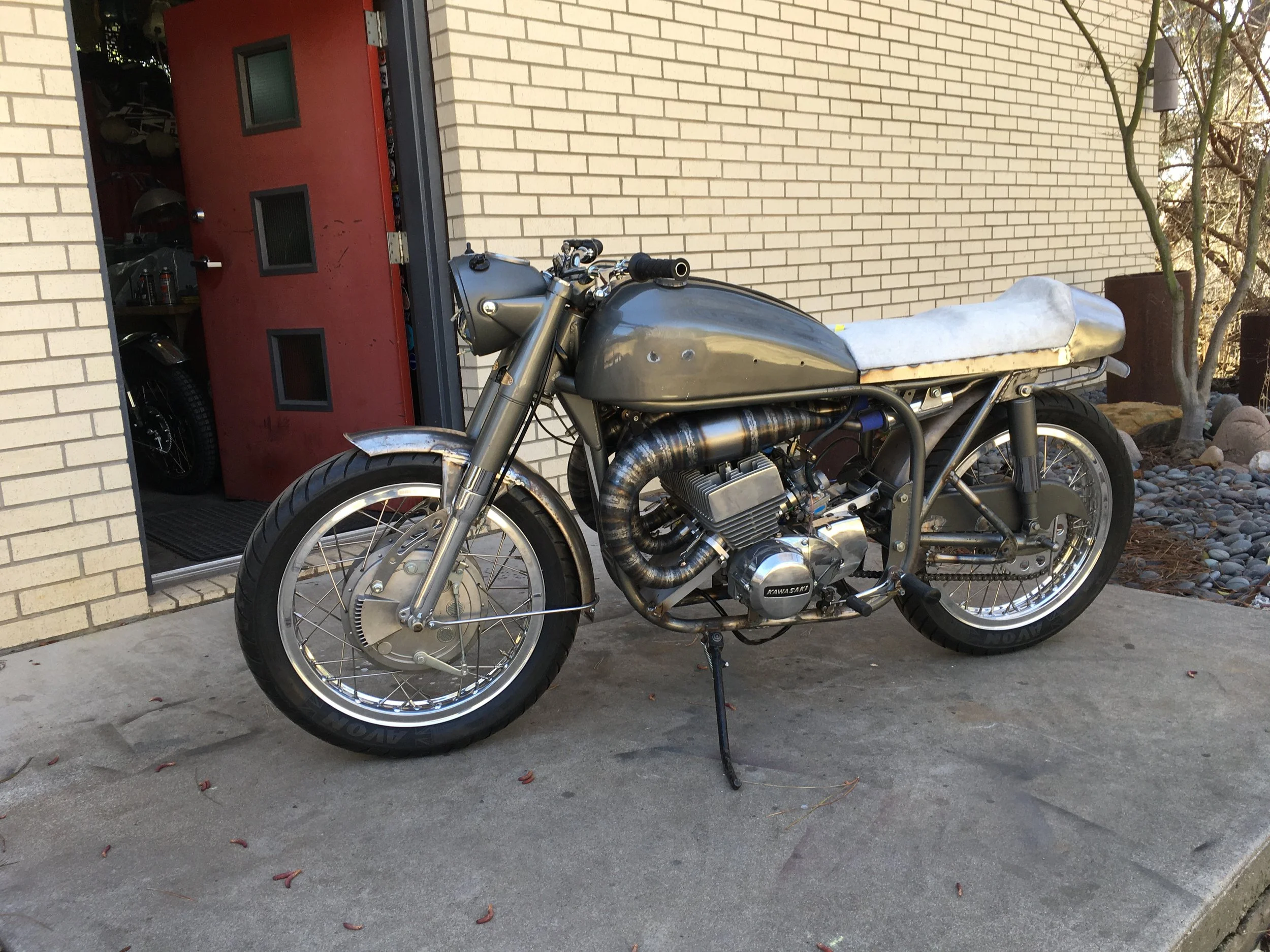
With everything mocked up, the lines are becoming a little more clear. The bike started life as a 1955 Dominator. When designing the custom parts, I tried to keep some of the original feel. The owner of the bike wanted a classic cafe racer style, with a straight tank-seat line, straight bars, and bobbed fenders (the original fenders are quite large and a little heavy.) Even with the cafe styling, the new seat is only slightly shorter than the original, retaining the ability to take a passenger.
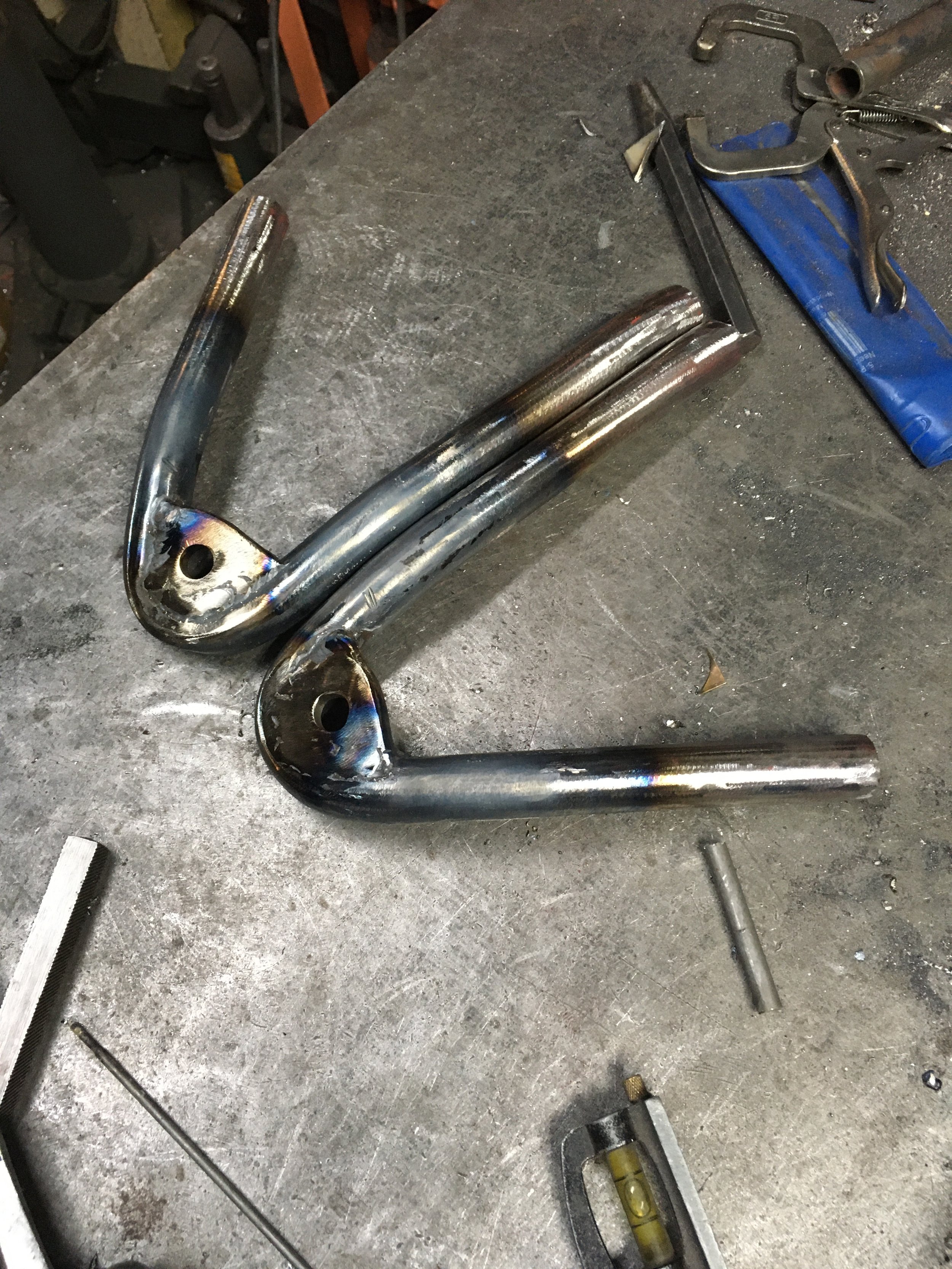
Some rear loops for the passenger pegs were made from 7/8” tube. Some old Harley Davidson pegs were the closest match to the rear-sets used in the front. Interestingly, they are made from some minibike handlebars, cut from the pullstart mini put together for Skratch’s Garage (seen in the December 31 post.)
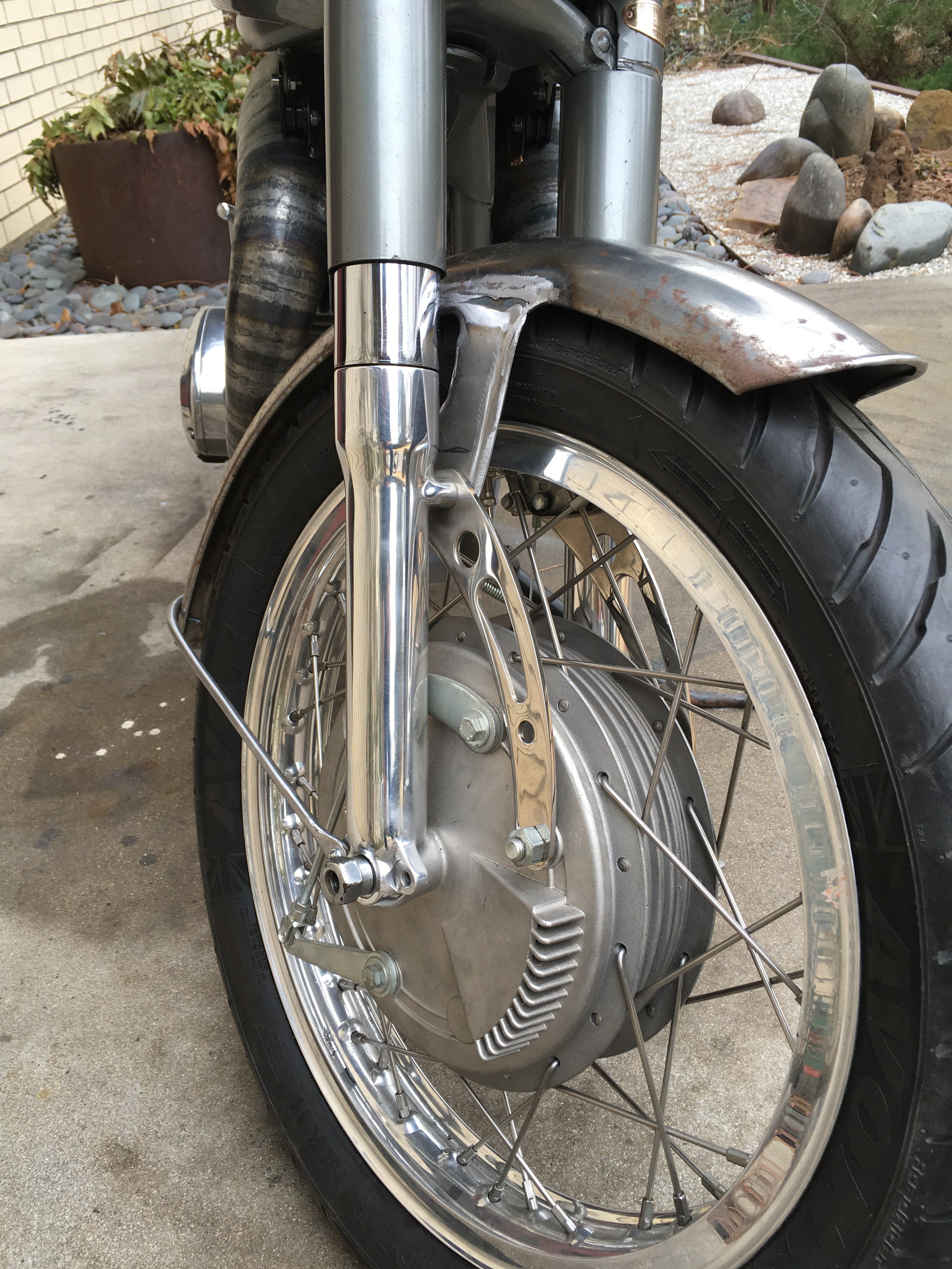
The front fender mounts and lower stay were added to an un-drilled vintage fender. The front hub is said to be a Grimeca, with 4 leading shoe brake pads. It will have some stopping power.

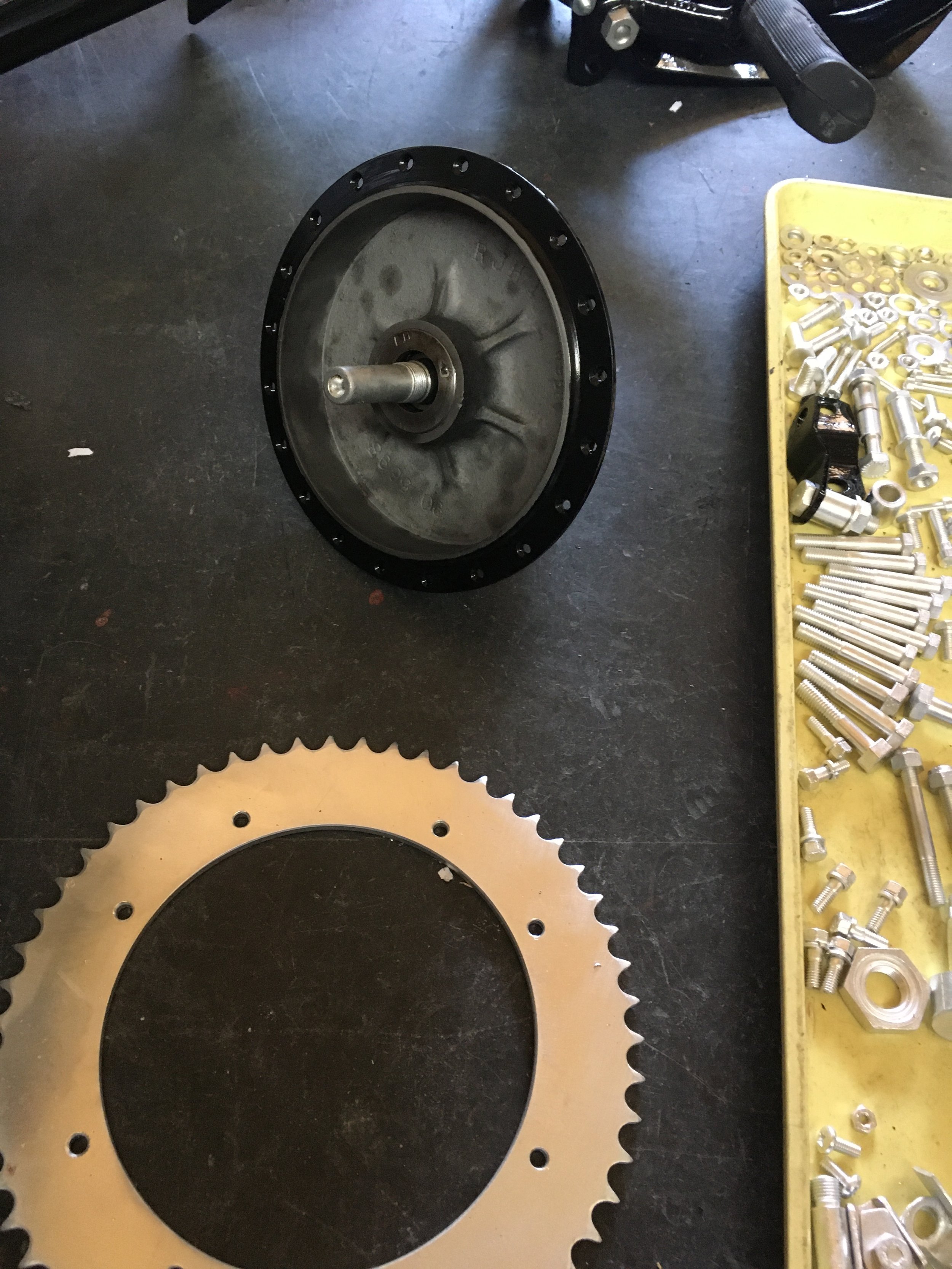
The tail end is looking pretty tight. The large wheel T-nut seen on the left side, and the rest of the wheel hub are from a Vincent Black Lightning, a bike of which only thirty-some odd were made. The parts were found by Big D Cycles, in Dallas, who built up the wheels, shocks and handlebars. They decided to go with the hub to solve the brake/sprocket configuration, and because it was just so cool. There is also a brake panel stay that releases by a spring-loaded slide, making the rear wheel removable without tools.
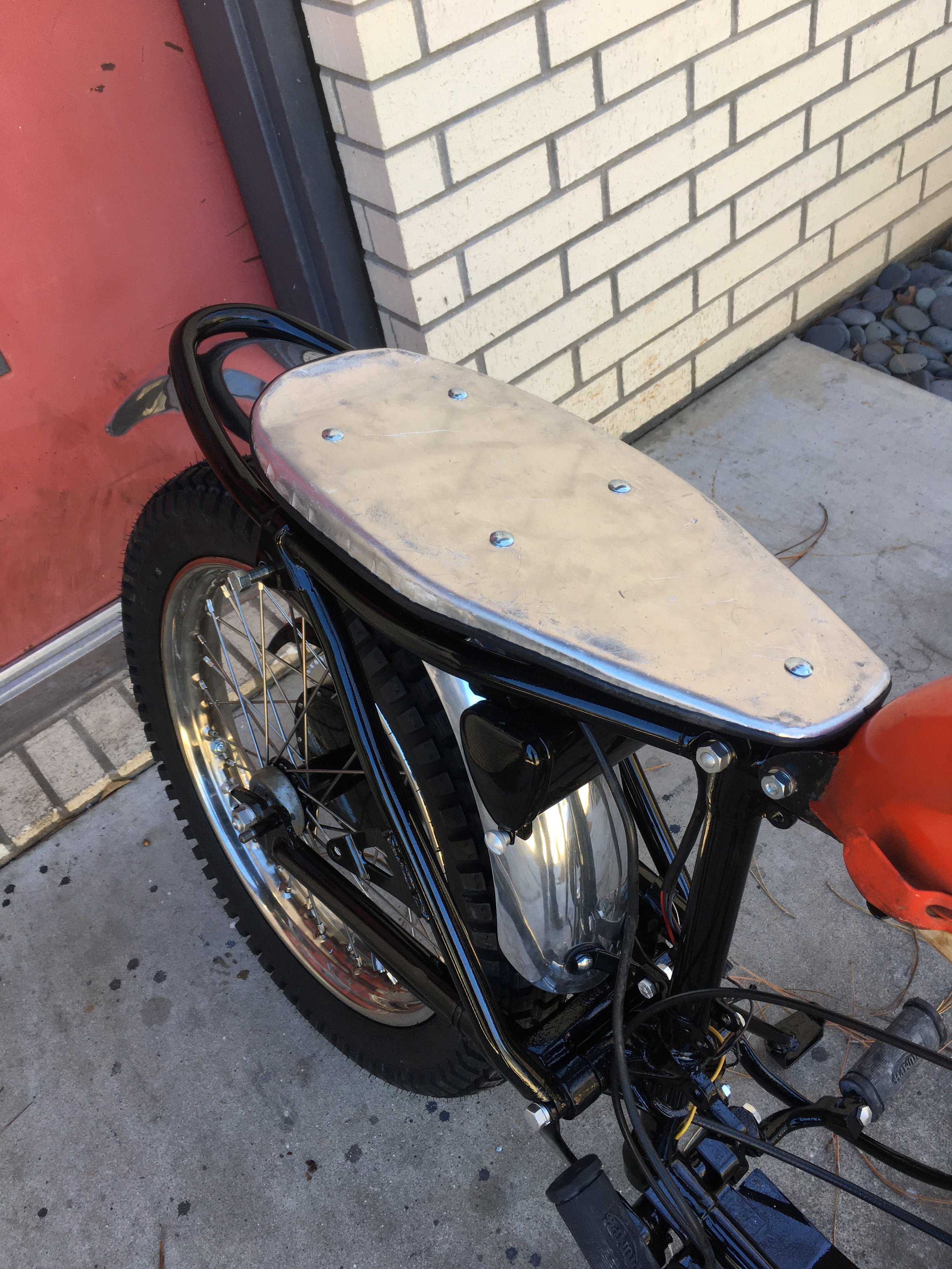
The seat pan on the 1967 Triumph Mountain Cub was made up. The lower bracket is made from 1/8” flat bar, with an aluminum pan made from .090 sheet. Mobtown Mike Smith will be taking care of it.
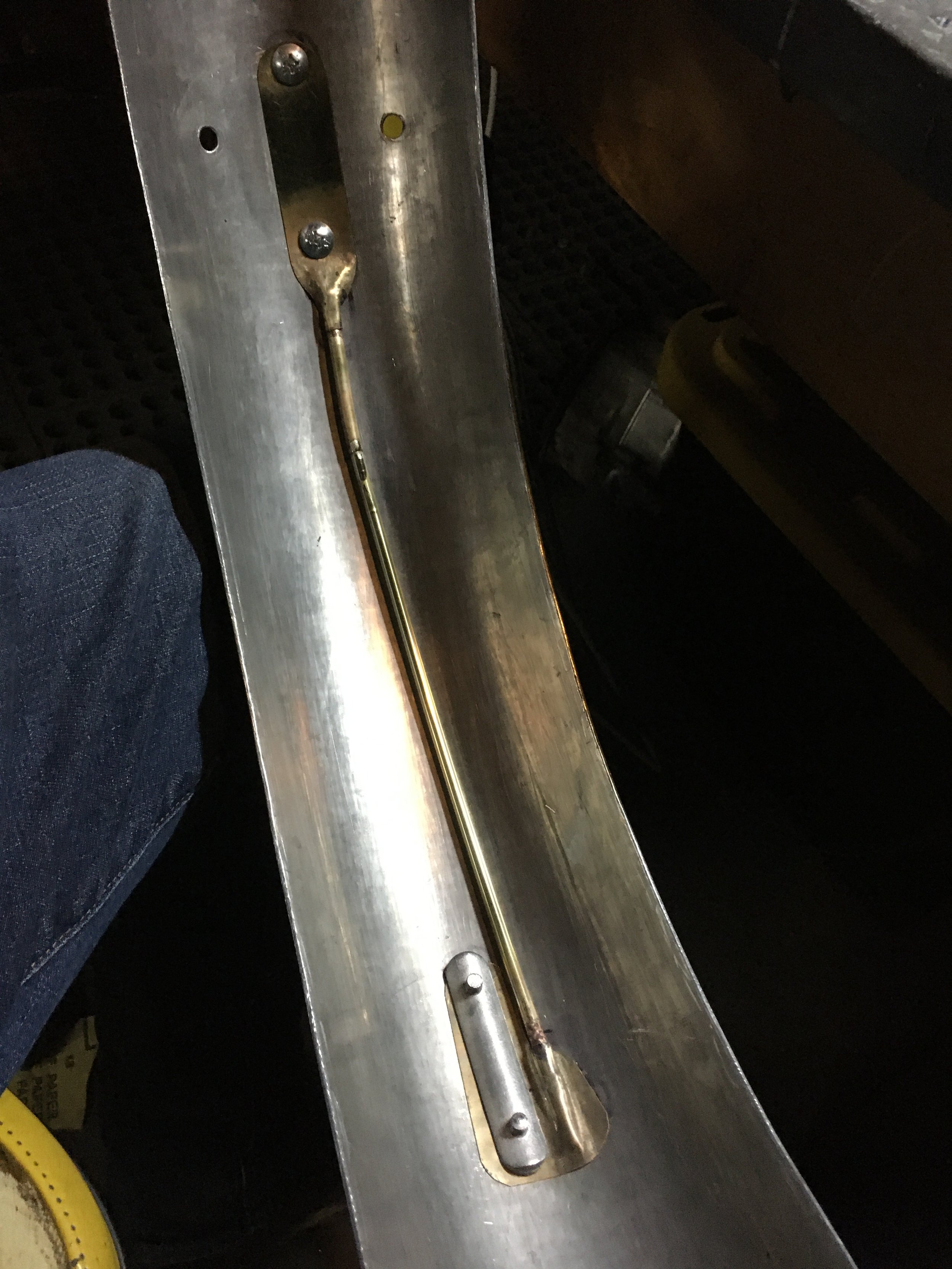
I like this technique for concealing wires under the fender. A brass tube connected between the entrance and exit holes, with small plates on each end that utilize the existing fender mounting holes to keep it in place.
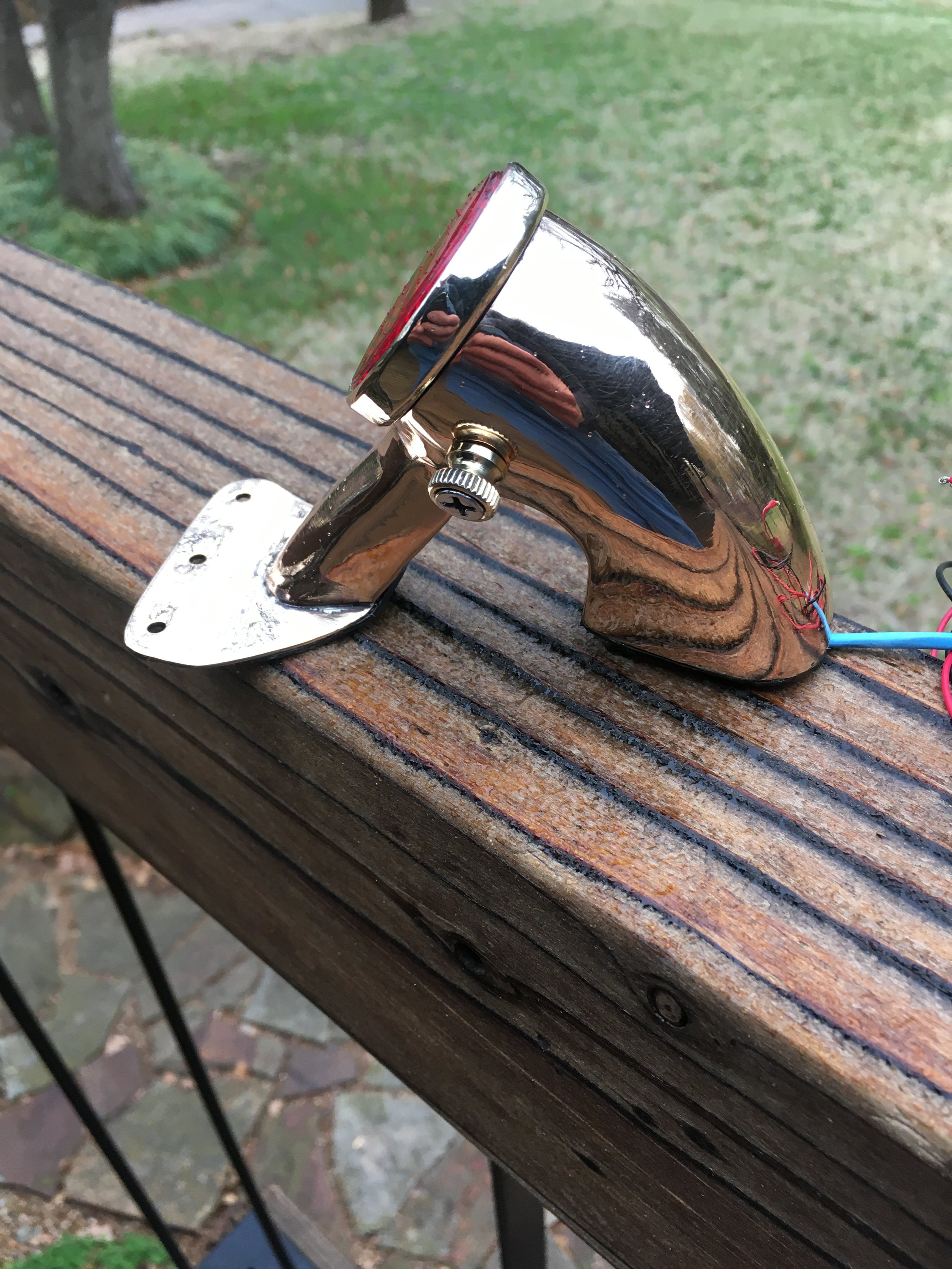
The tail light unit was made from an old cymbal, a busted minibike tail light lens, and a brass plumbing fixture. The design was inspired by the iconic Sparto “Limp dick” tail light mount that was on the original bike. With the bobbed fender, there was little room for the original, and it looked out of place. This one is scaled down, and crosses over the rear frame loop.
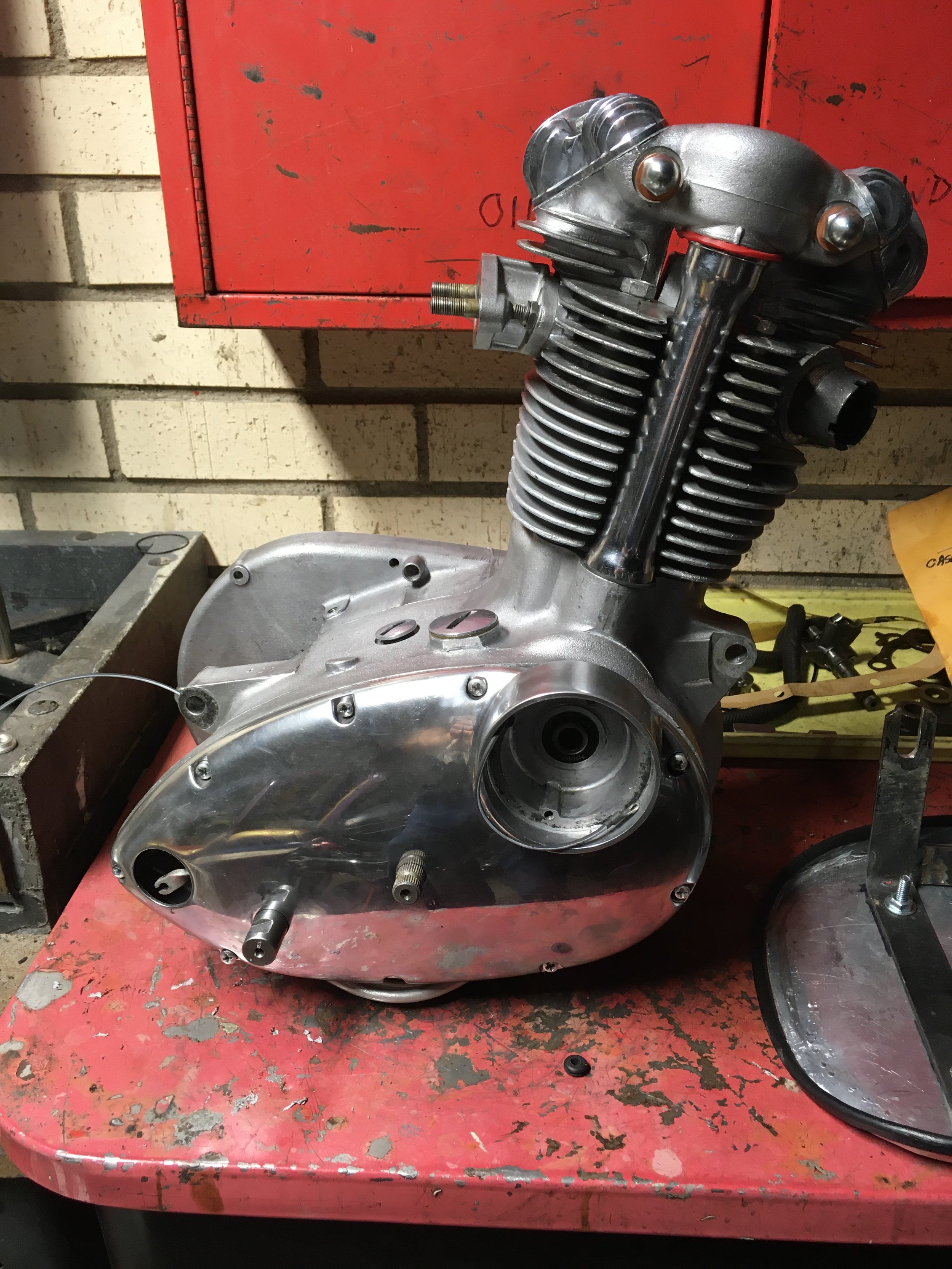
Such a beautiful engine, designed by Edward Turner. In this picture, the engine is awaiting the points assembly, prior to installation.
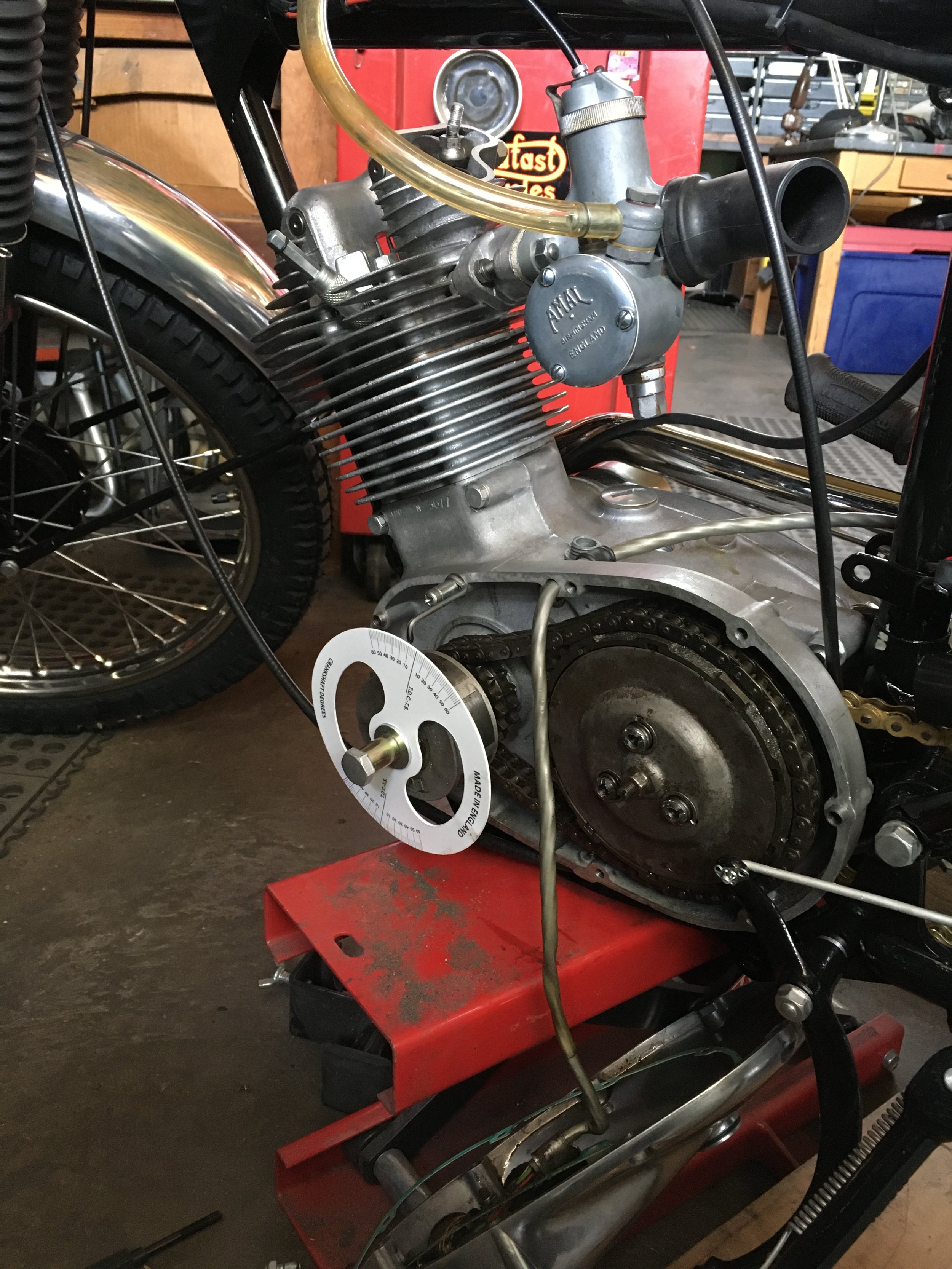
The timing degree wheel along with the spark plug gauge, feeler gauge, and a test light are all you need to time the engine. I think the JapaneseHonda system is a lot less complicated, and more precise.

Some of the grief of trying to rebuild a vintage foreign bike. This is a picture of the muffler sent to me after a nearly four month wait. Obviously the wrong one, it cannot be made to fit, and looks to be made for a dual low-pipe set up. Of course the vendor is unresponsive to emails. When it arrived, the muffler was in a plastic bag, with more than a little bit of rusty water inside the bag, covering the muffler. A sign of attention to detail and competence…not!
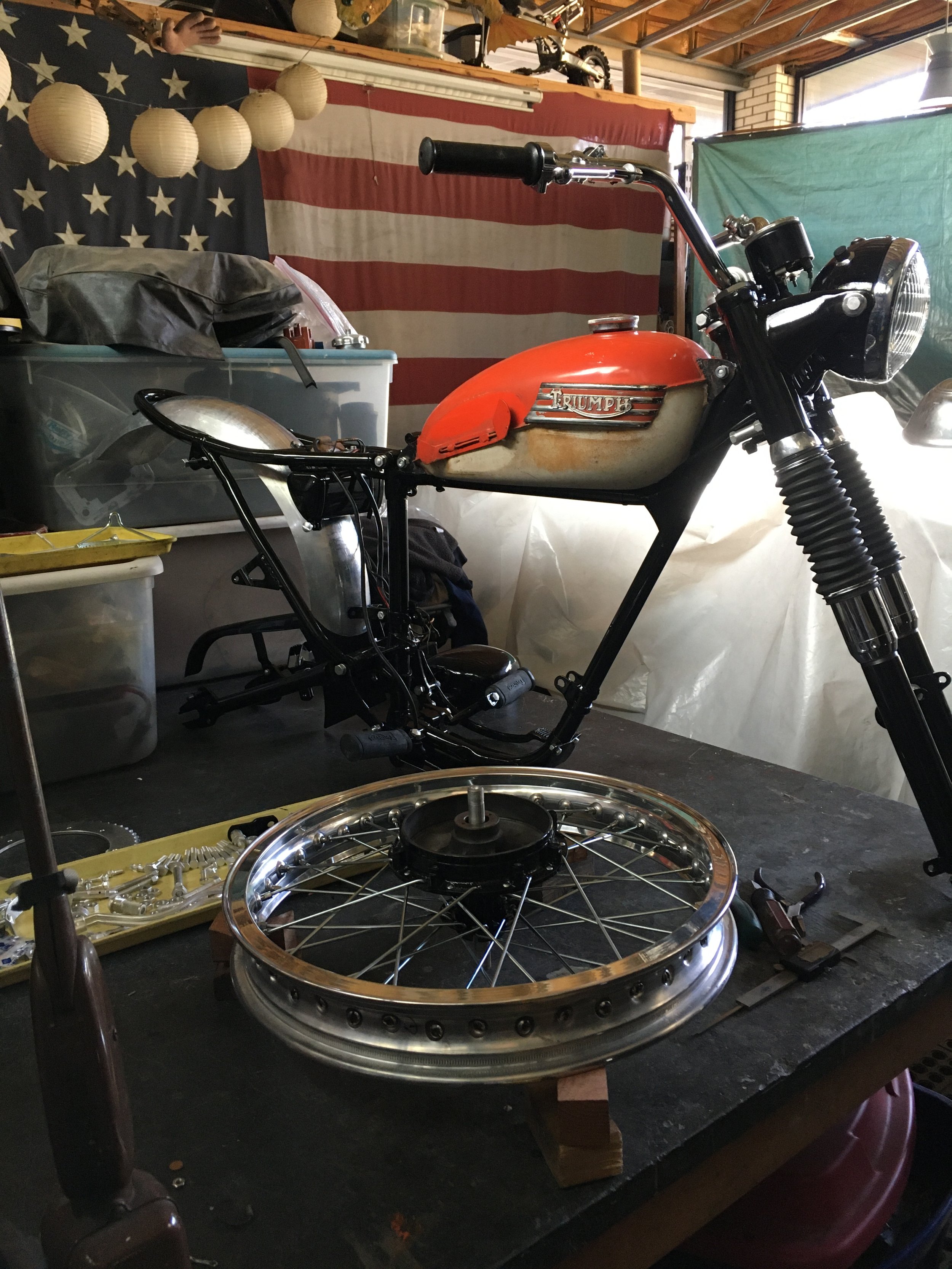
1967 Triumph Mountain Cub restoration update

Starting to assemble the 1967 Triumph Mountain Cub. Every nut, bolt, and body part has been taken down and addressed aside from the original tank paint. Still waiting on parts to get the engine back together. The wheels are another area of concern. The front fender needs to be worked out. Small touches like a light weight tail light assembly and solo seat are also planned.

Getting a little farther into the assembly. The rear wheel has been a headache. The Triumph Tiger Cub is a little harder to figure some of the part numbers if you do not know the actual model you are dealing with. The Mountain Cub variety is even harder to figure out because there is not a parts catalogue specific to it (at least that I can find.) Perhaps this is because the model was produced at the very end of the Tiger Cub run, or because it was a US only model, but whatever the reason, there is some guessing that I have had to do. The bike came with a WM-3 wide wheel. After checking the latest Sports-model parts catalogue from 1965, there were two different wheel possibilities, but only one for a WM-3 width. After purchasing that specific wheel rim and lacing it multiple times, there was no way to get the spokes to fit correctly. After more research and hunting, the correct rim turned out to be the WM-2 width one. It appears the rims of both wheels were switched out at some point, and the WM-3 rim was substituted. Fortunately the wider rim can be used elsewhere, as it fits 63-70 650’s and other models. The front rim spoke nipples were way too small for the rim holes, and were swimming around in them. A new set of front and back stainless rims and spokes is on its way.

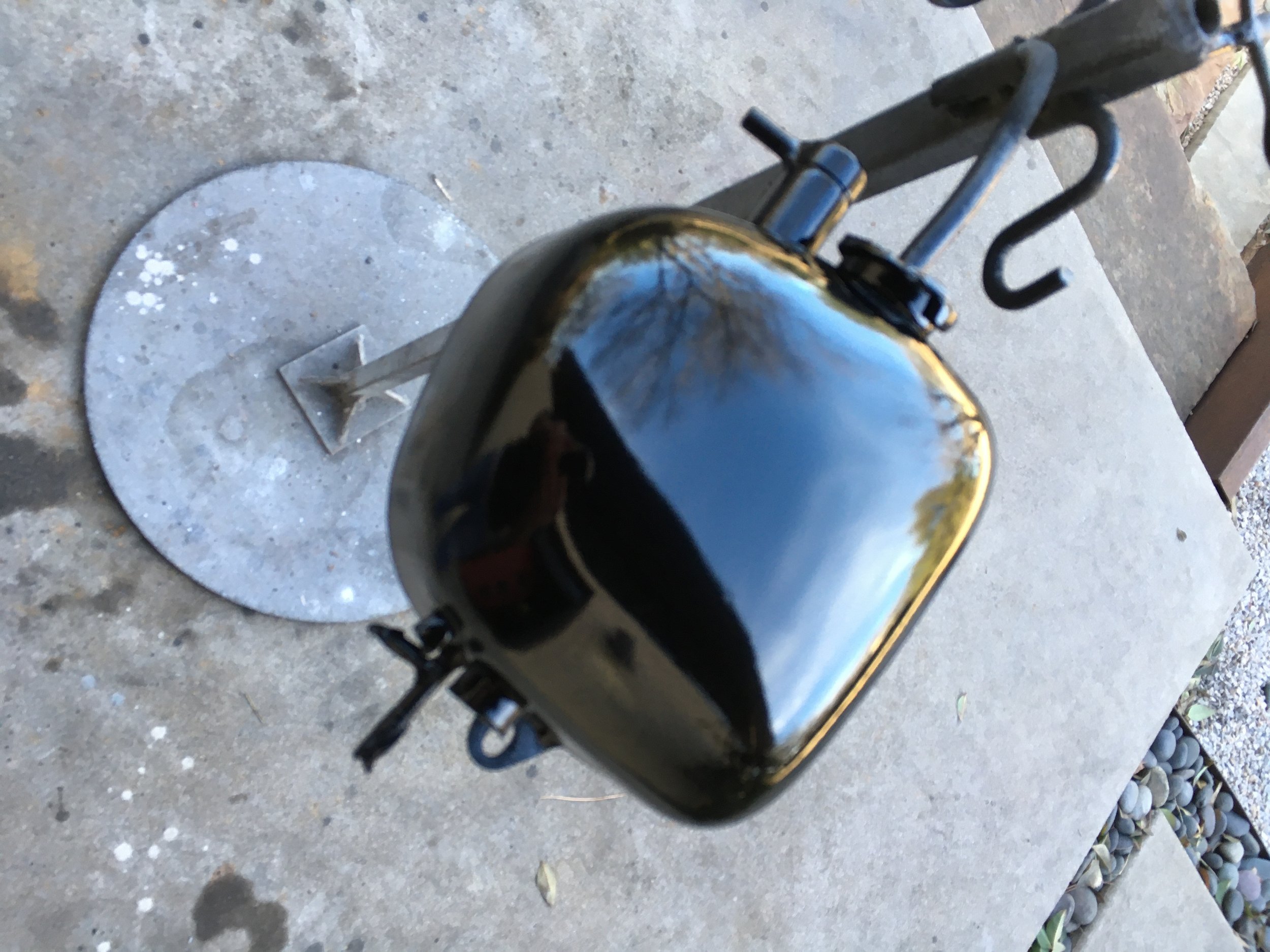
After the body work, the tank looks nice and smooth. It was primed and painted with rattle can enamel.

Nothing like fresh finishes on everything. Still not decided on the tank paint, but that decision can wait till the front fender is made, as it will probably get some paint as well. All the switches were cleaned and greased, connections were freshened up, and the wiring harness was restored. Some new sheathing and some missing connectors were replaced. The handlebar switches were also restored, and the wiring hidden inside the bars. A mounting bracket for the horn is all but invisible hidden behind the headlight. It uses the handlebar mount bolts to secure it. Since the original bracket was absent, and pictures showing it look like it was made for a different horn than the one with the bike, I just made something that worked in the space allowed. The wiring harness was modified to have a single sheath of five wires passing from under the tank to the headlight. Usually, there are connectors from the horn and kill switch that pass separately along side the main wiring harness. Instead, the ignition wire was added to the harness bundle, and routed to the headlight, where the horn and kill switch connections were made.

This tray was packed with hardware. As it dwindles in size, it makes me happier and happier.

Awaiting an oil level decal, and a final coat of clear on the oil tank. The air filter assembly and rear brake plate are ready to go. The air cleaner is another item that was different on the multiple Tiger Cub models. This one was also used on some pre-unit bikes. There are at least three different types used, as far as I can tell.

Only a few of the black parts were painted: the headlight bucket, horn bracket, speedo mount, and oil tank. The powder coating was done by Triad Product finishing in Lewisville, Texas, and is the best job ever! Not just hyperbole, the masking was impeccable, there were no runs, sags or bare spots, and the thickness was just right. In the past, I have used the powder coating as a base coat, and cleared over it, but this job was so good there is no need. The difference between the powder and painted parts is indiscernible.

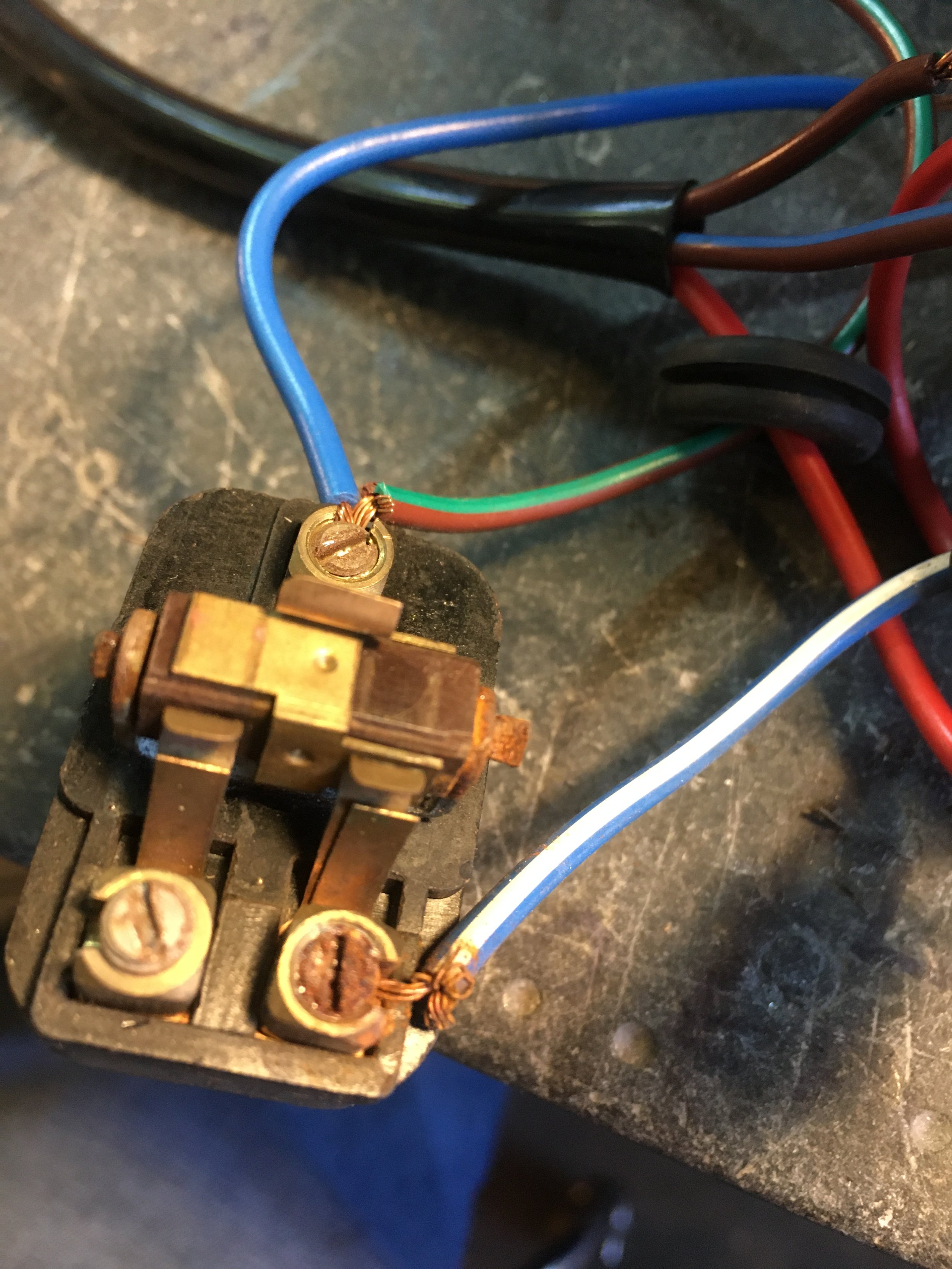
An example of the wiring harness condition. Poor connections were cleaned, and the wire ends were freshened and tinned with solder. Dielectric grease was used on unexposed terminals as well as the bullet wire connectors on the wiring harness.

The wheel assemblies were taken down completely. The hubs and rear brake plate were powder coated, all the bearings were replaced, and the fresh hardware to finish it off.

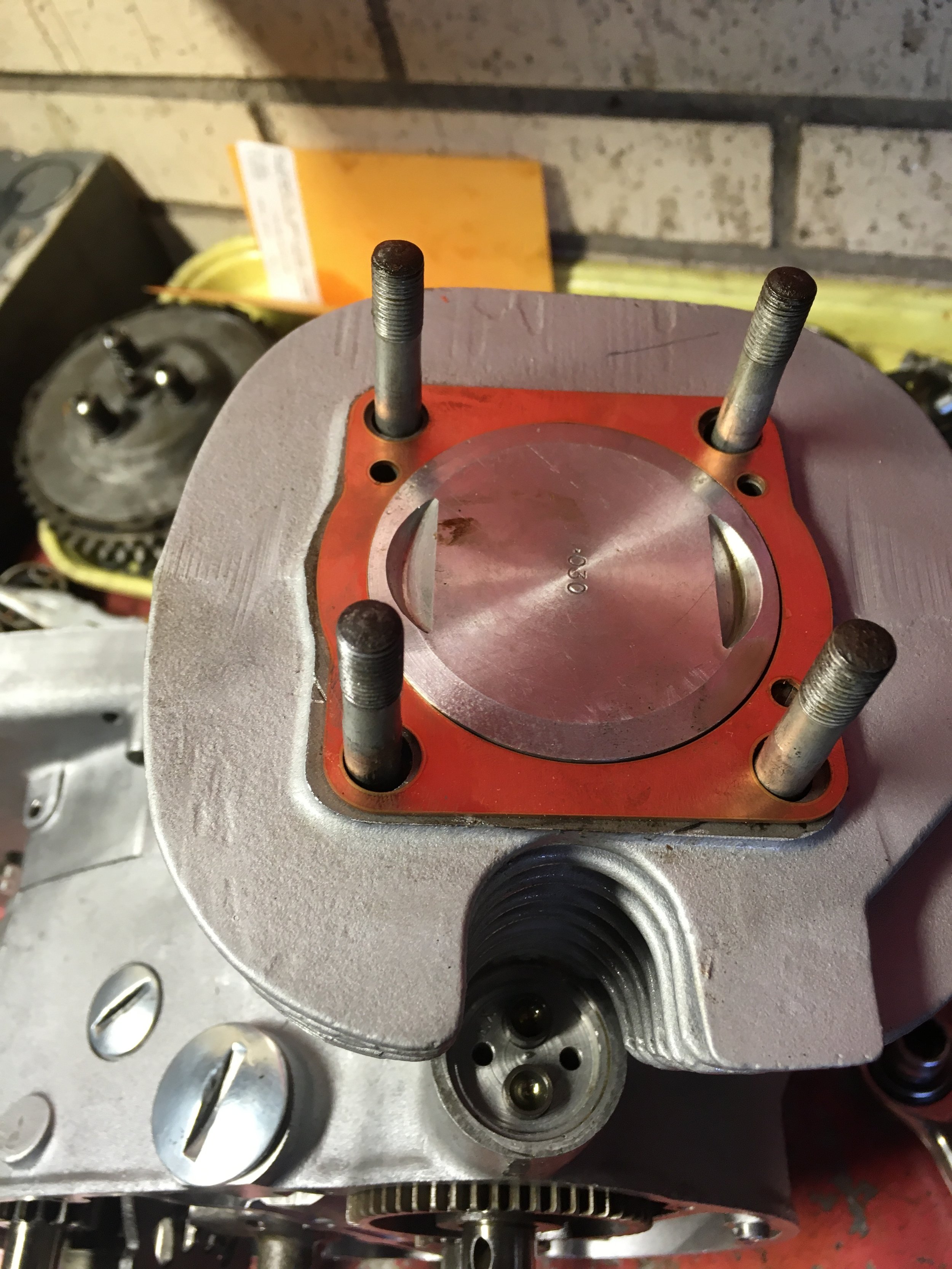
The thirty-over piston is in place with new gaskets. Still waiting on the head.

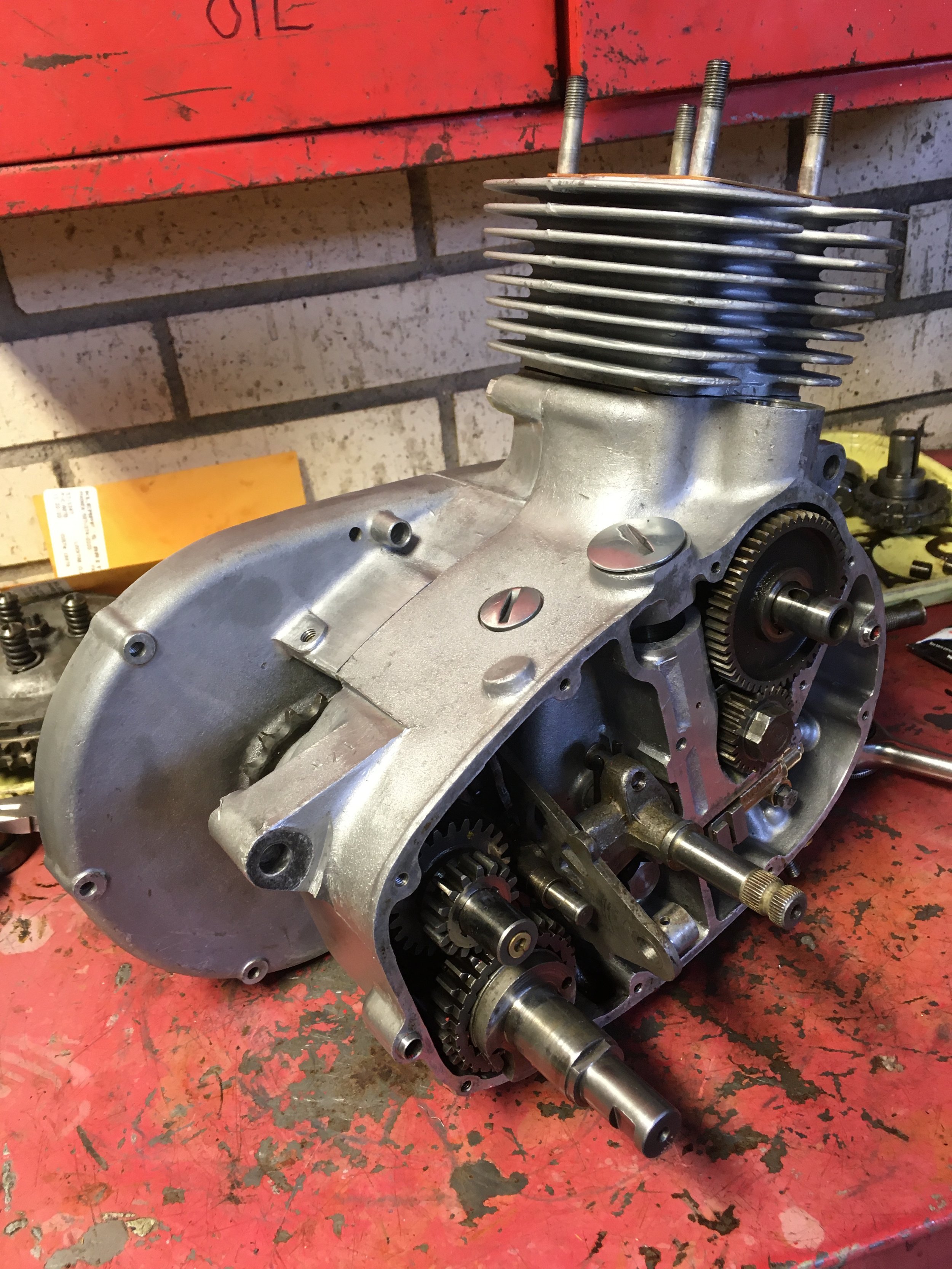
A transmission main shaft bushing is back ordered from the UK, and the right side covers can’t be put on without it. The rest of the engine block is assembled. The clutch hub bearings and rubber cushions were replaced. The primary drive installation is waiting on the transmission assembly.

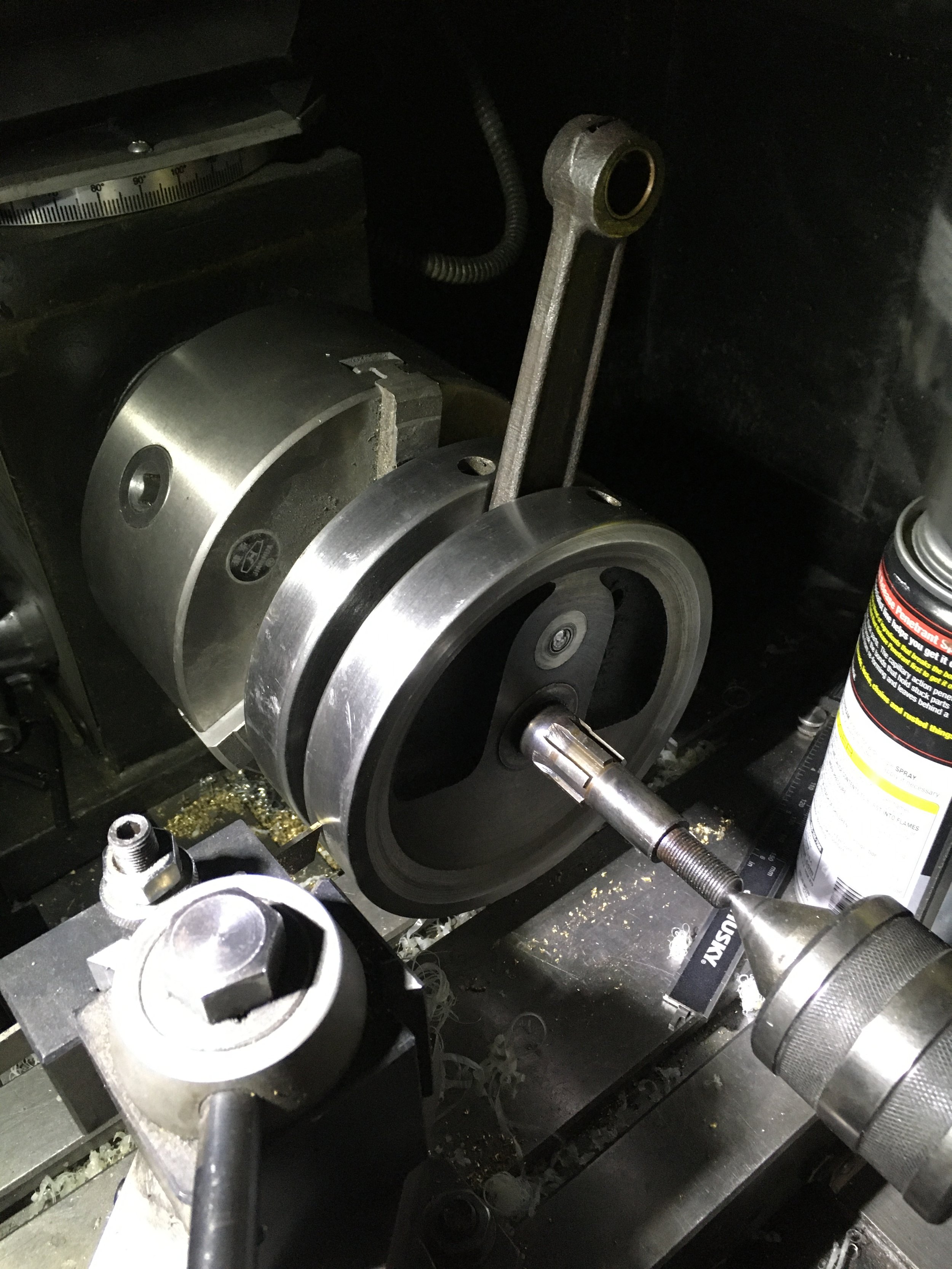
The crank shaft assembly was pressed together and then trued on a lathe. The roller bearing on the big end of the connecting rod ended up getting the nod after two successesive bronze bearings gave too much side play.

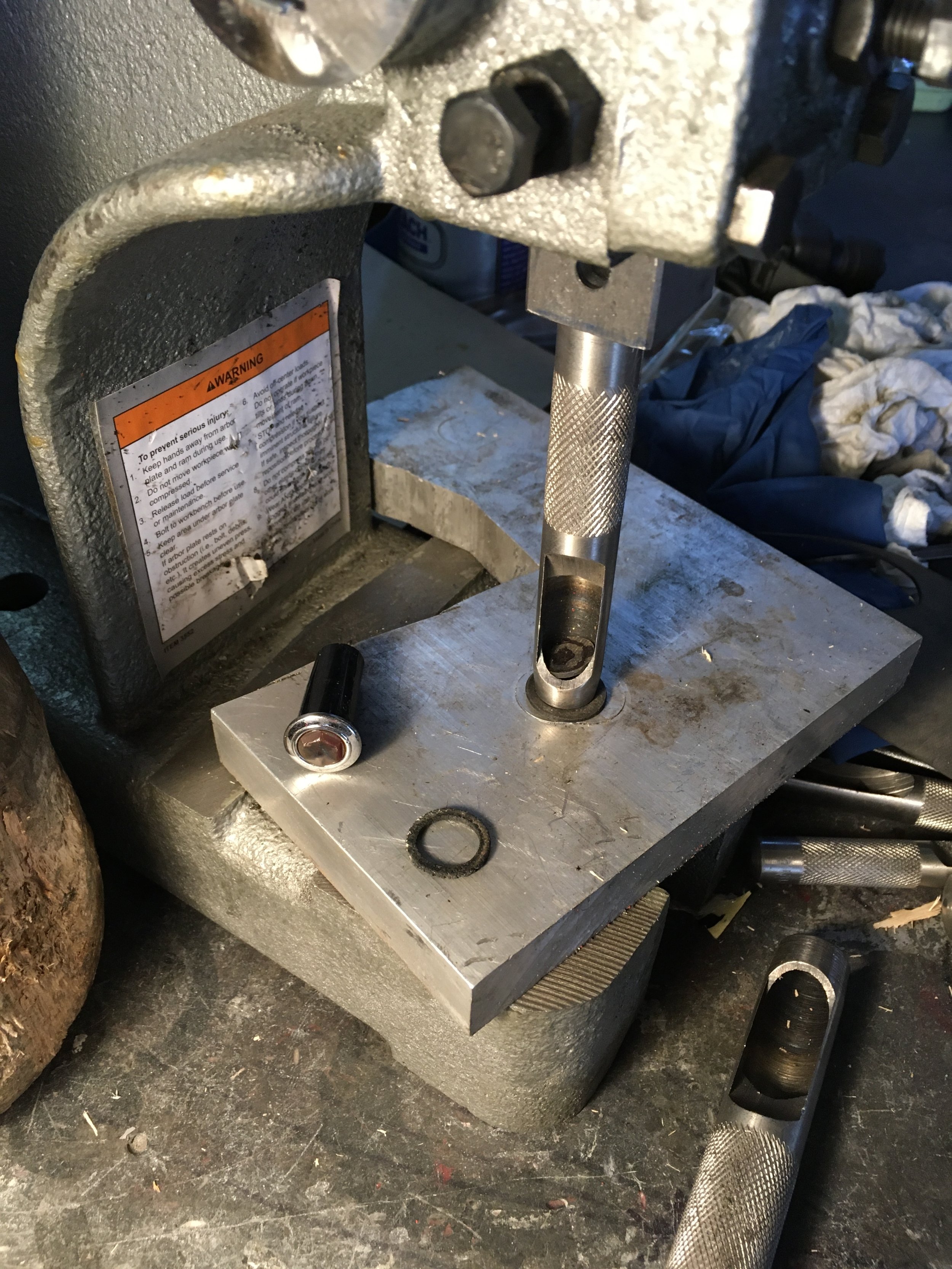
Making a rubber washer for the high beam indicator light, using an arbor press and punches.

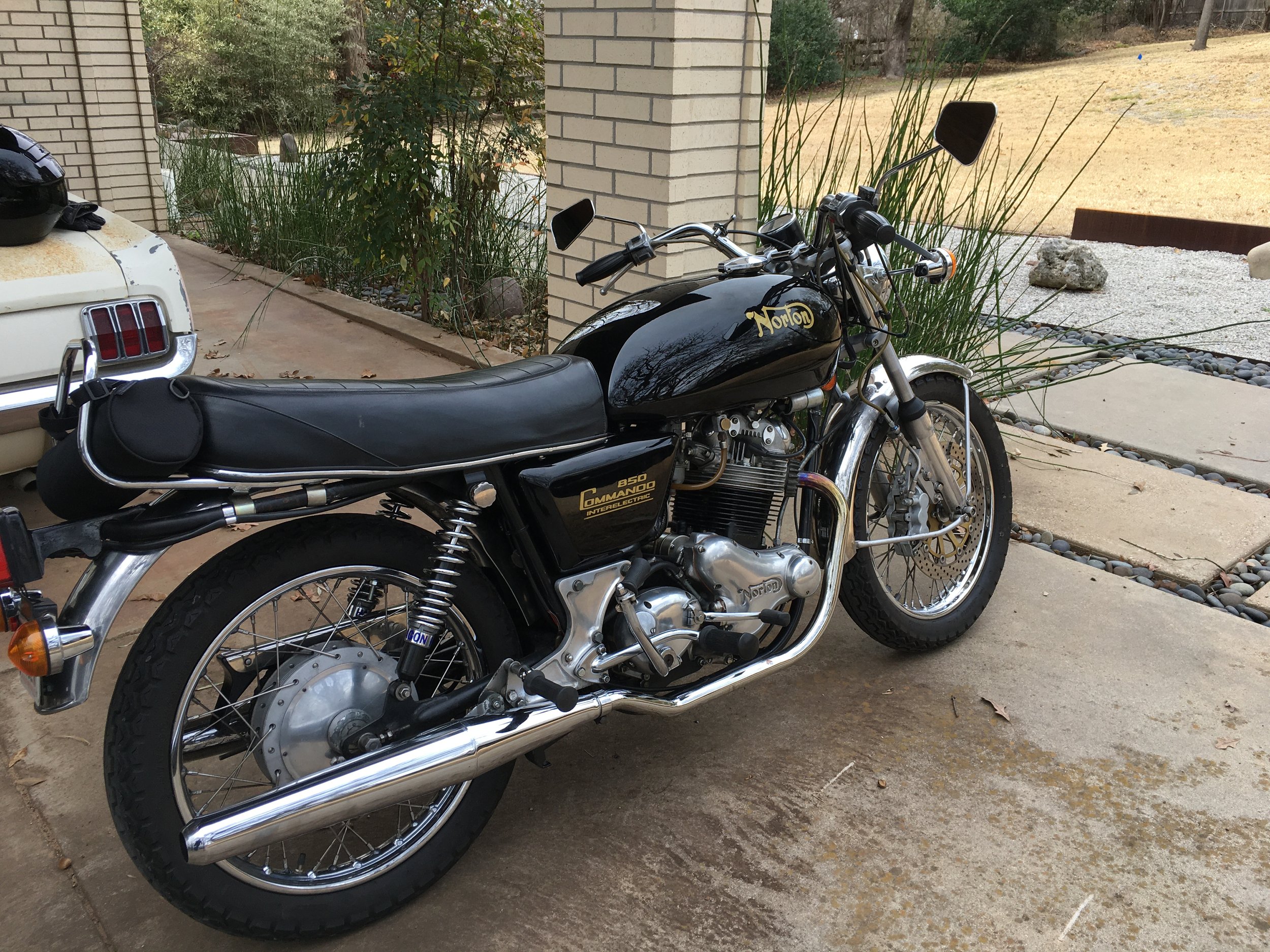
And finally. My Buddy, Clinton rode up from Dallas, trying to get some miles on a fresh engine rebuild on his Norton Commando 850. Such a beautiful bike!

Rebuilding Honda Z50 Carburetors, and a pull start minibike for Skratch's Garage.

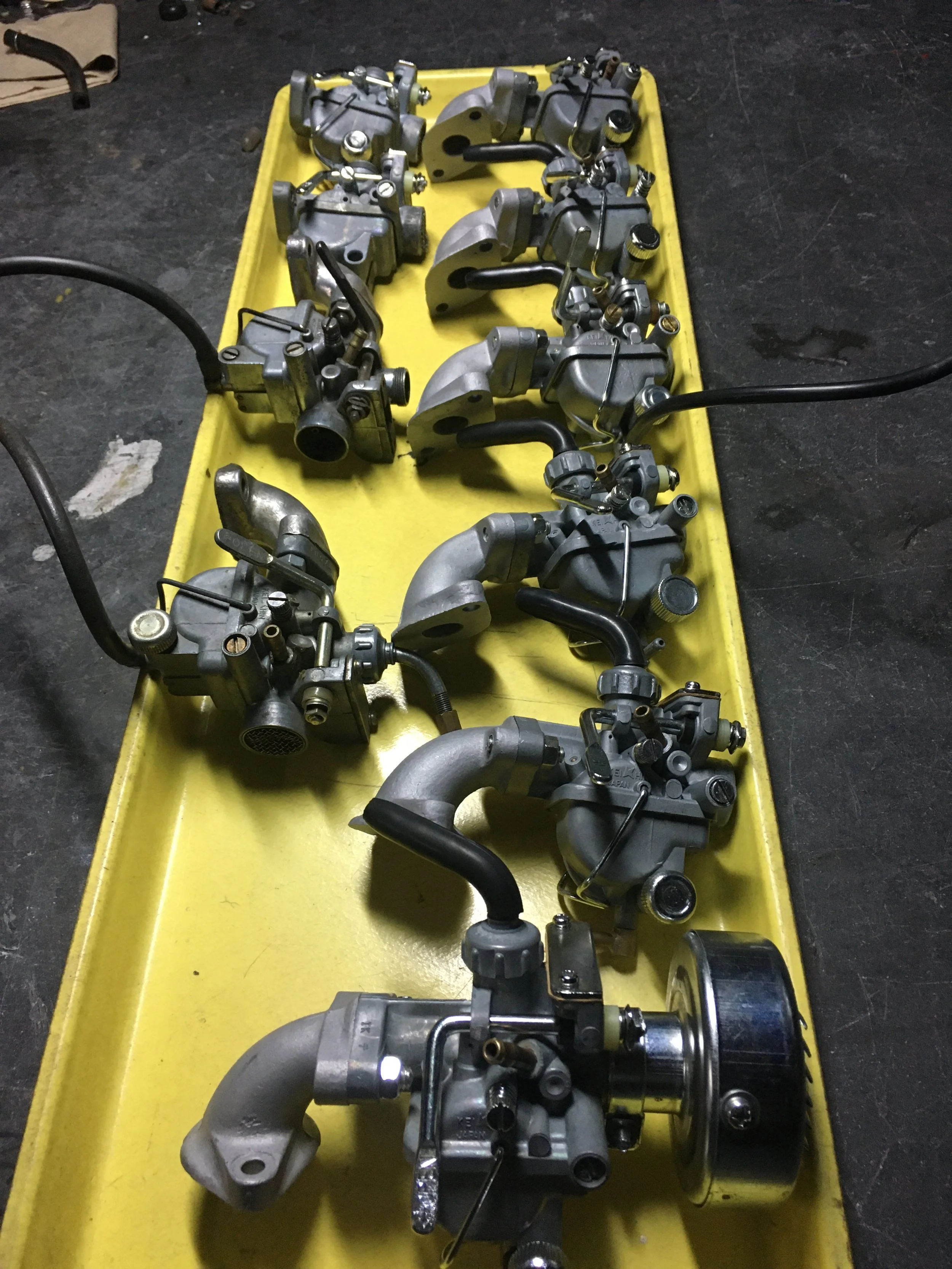
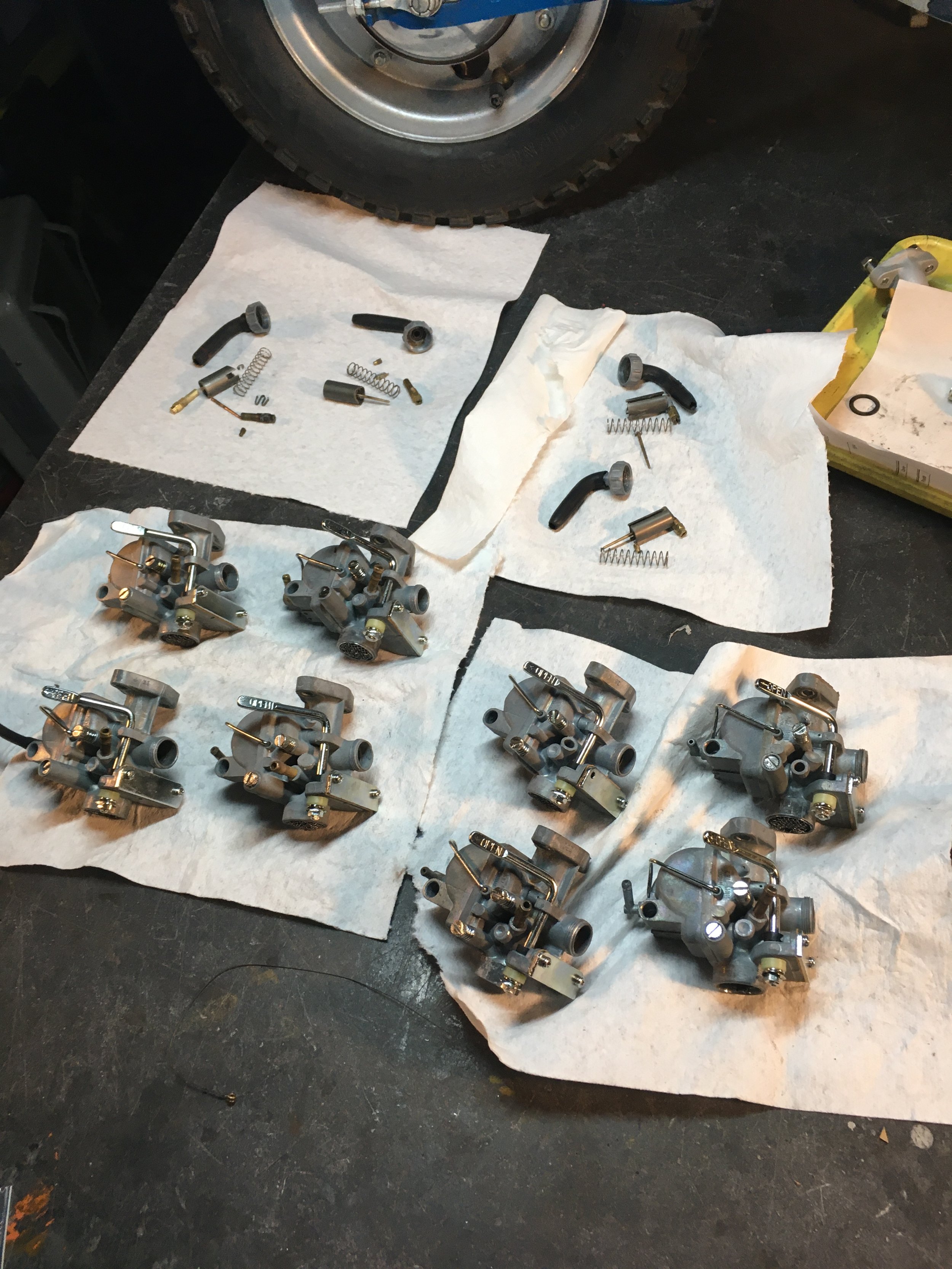
Two Honda 1970 Z50 minibikes were in need of a carburetor. With as many minis as there are around here, it pays to have one ready. Eight original carbs were worked over, with six of them completed, and a couple still needing parts.

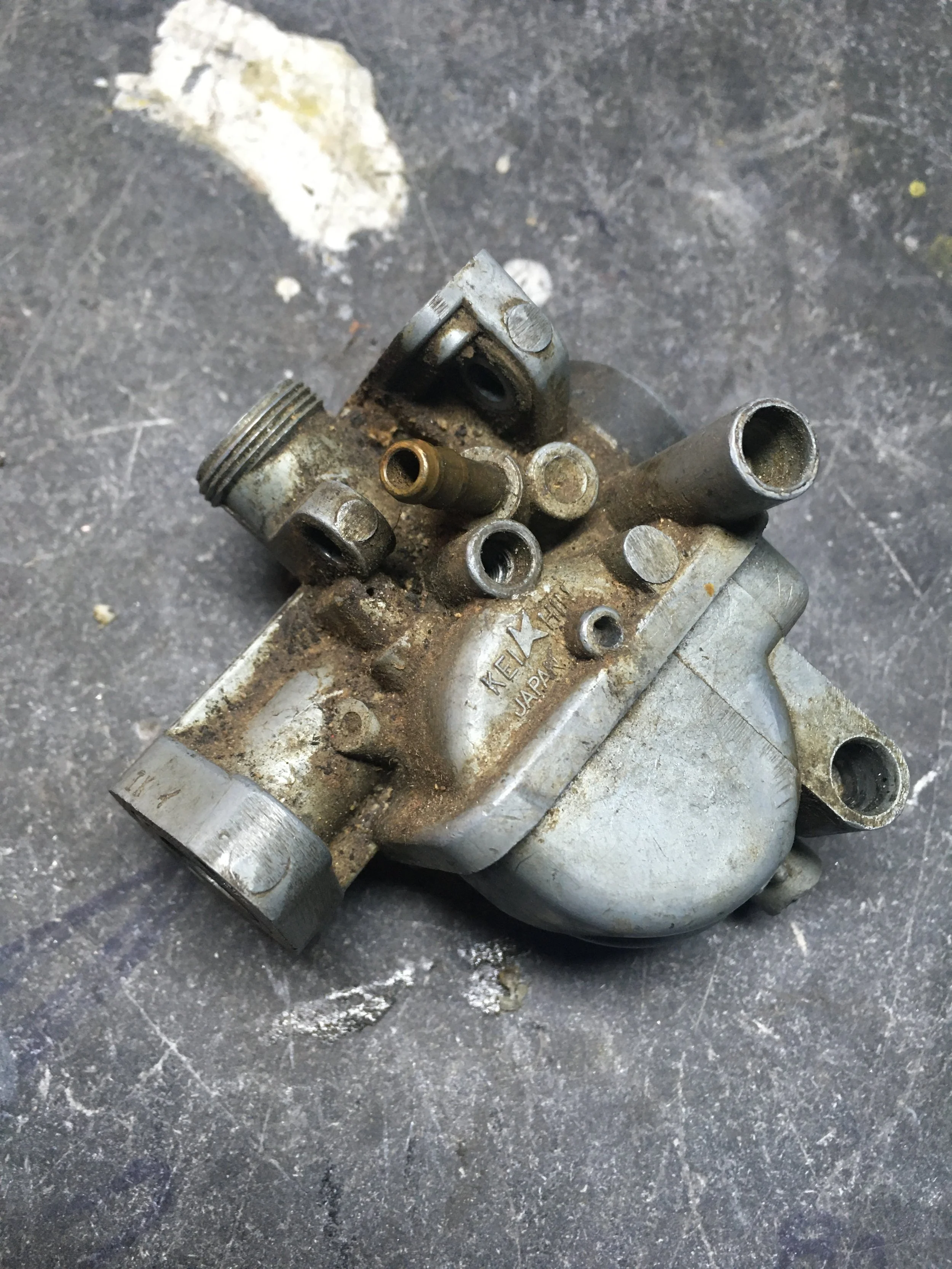
This is a typical before picture. The choke assembly and any other steel parts have been stripped from the carb and sent out for zinc plating. The carb body is cleaned in an ultrasonic cleaner, with hot degreaser. Everything gets blown out, and put back together with new seals and gaskets. Some of these carbs were incomplete, missing floats, slides and fuel hose spigots. Replacements will be found, or they will stay as parts carbs.

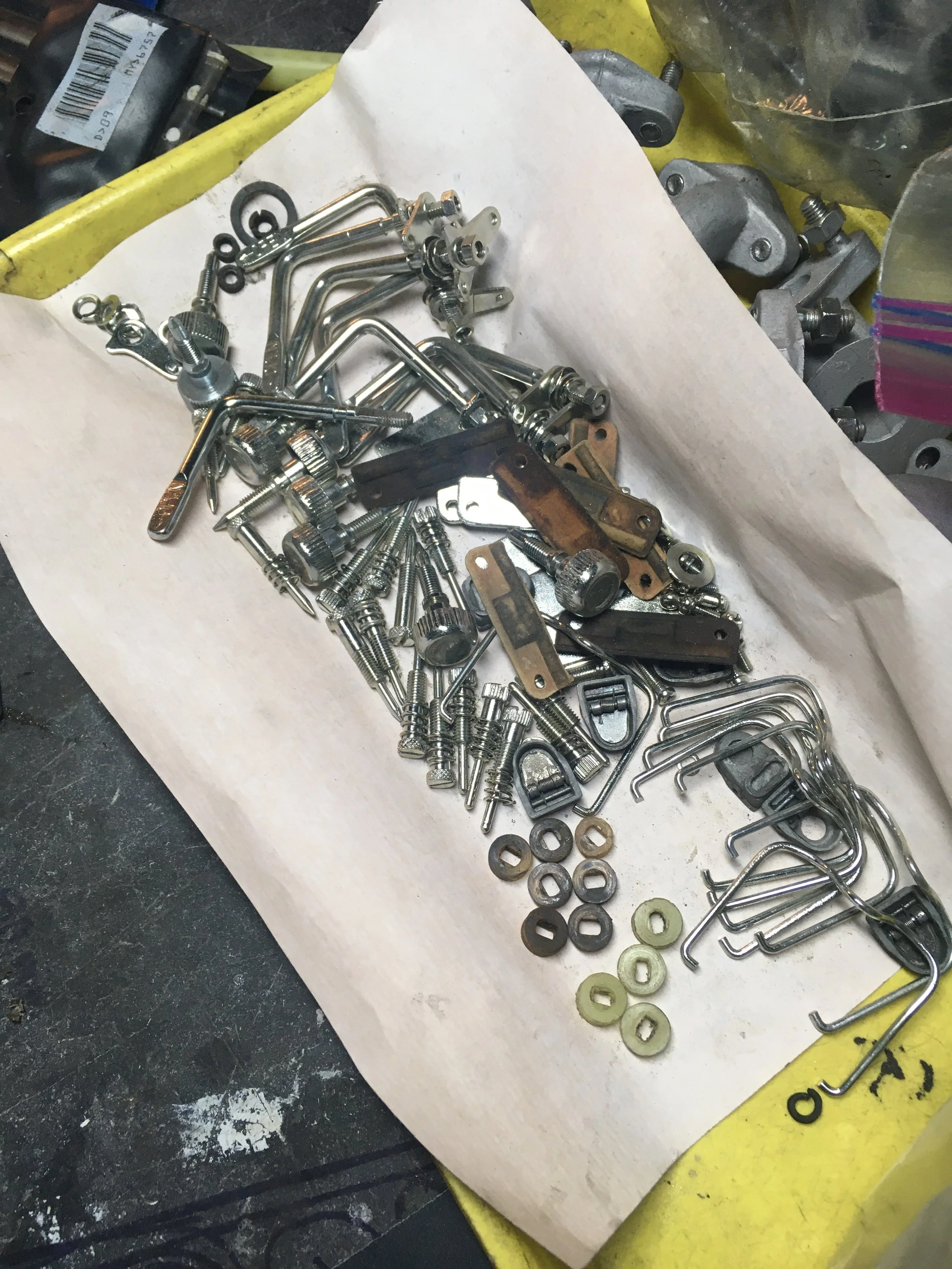
All the parts ready for rebuild. The paper gaskets were replaced with new, and the nylon and rubber seals were replaced. The original paper gaskets are in remarkable shape for being over fifty years old, but the nylon and rubber sealing washers are cracked and need replaced..

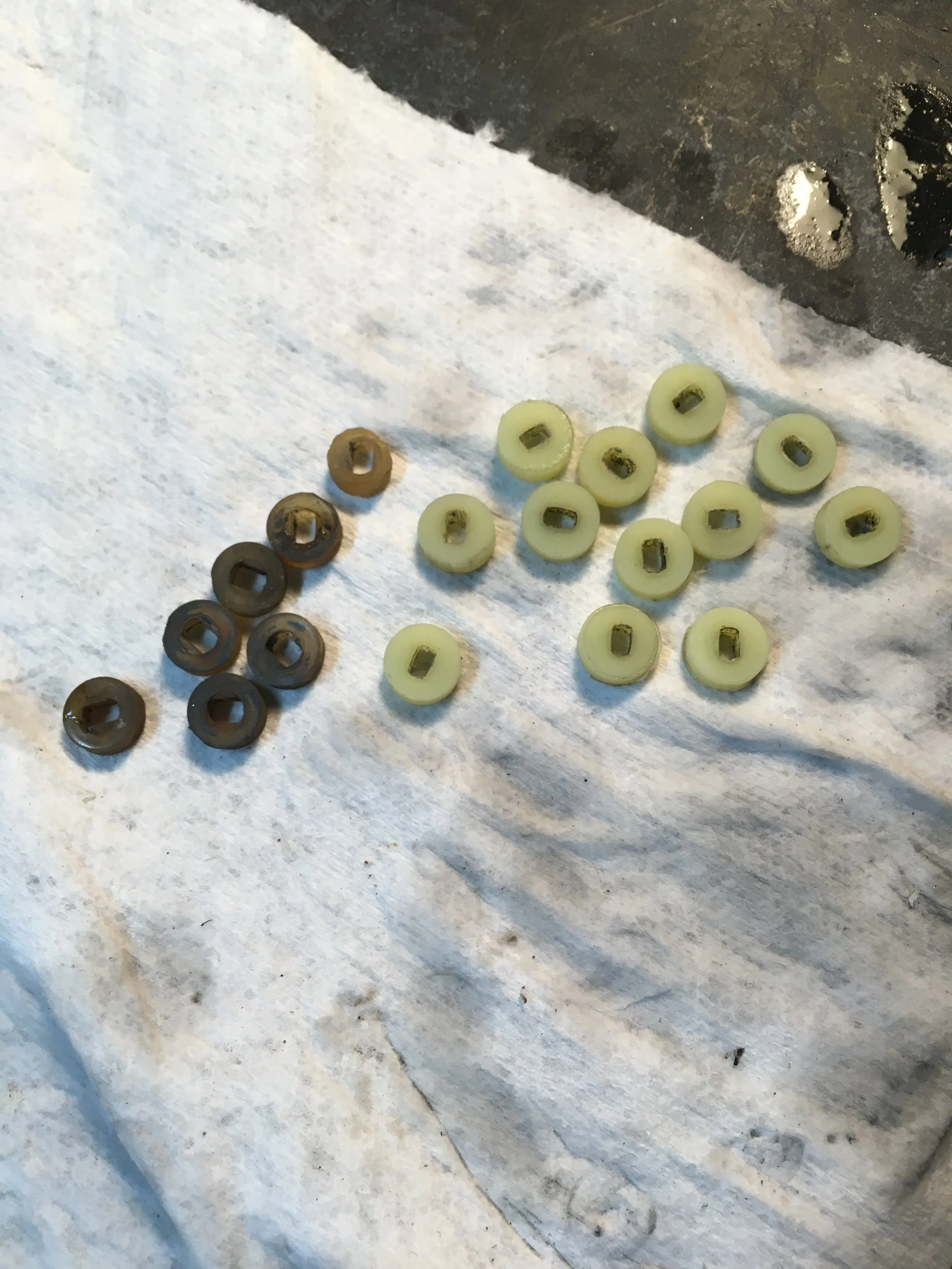
The original plastic sealing washer on the choke lever is one of the impossible parts to find. Pictures of the part online look like it is made of natural nylon. The used washers, seen on the left, are somewhat puckered on the edges, suggesting they have shrunk after all the years, heat, and fuel. A piece of nylon rod was turned down on a lathe to a size slightly larger than the largest original one I could find (there were a total of ten measured to get the size.) Individual plugs were cut from that rod, with a 7/64” hole drilled in the center.

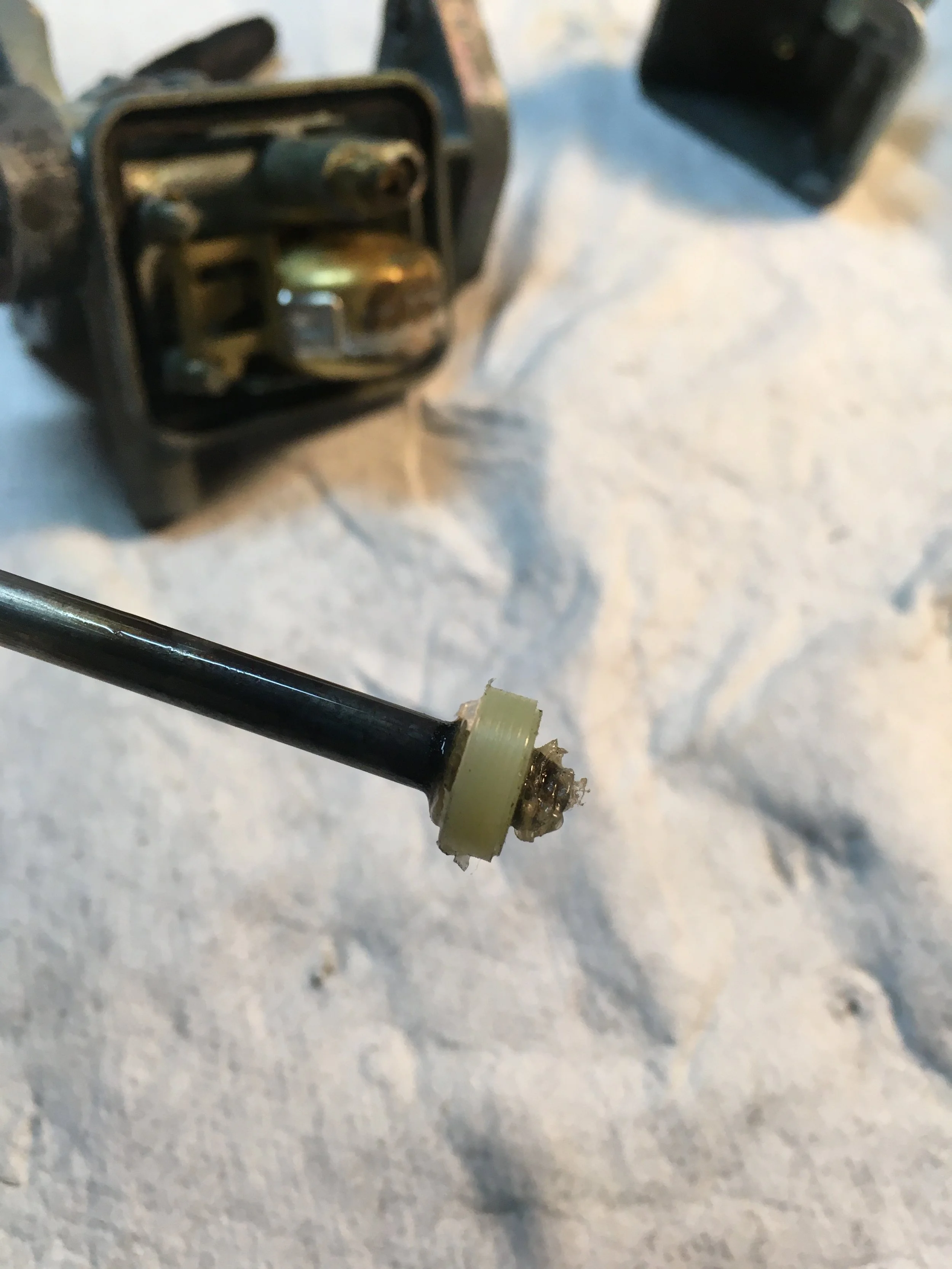
Getting the keyed opening in the nylon turned out to be easier than anticipated. Drilling the center hole is easy enough, but getting the exact dimensions needed to make for a tight seal around the shaft of the choke lever took a little figuring. A piece of steel rod slightly smaller than the shaft was ground down on the sides to the same dimensions as the original shaft. The end of the shaft was tapered to help it center on the pilot hole in the center of the nylon plug. After heating to cherry red, the rod is plunged through the plug until it pops out the other side( I did this over a slightly open vise, that allowed the rod end to poke through the opening.) After a quick quench in water, the nylon is solid and the flashing can be trimmed off with a sharp blade. Keeping the plug on the rod while trimming makes for more crisp edges.

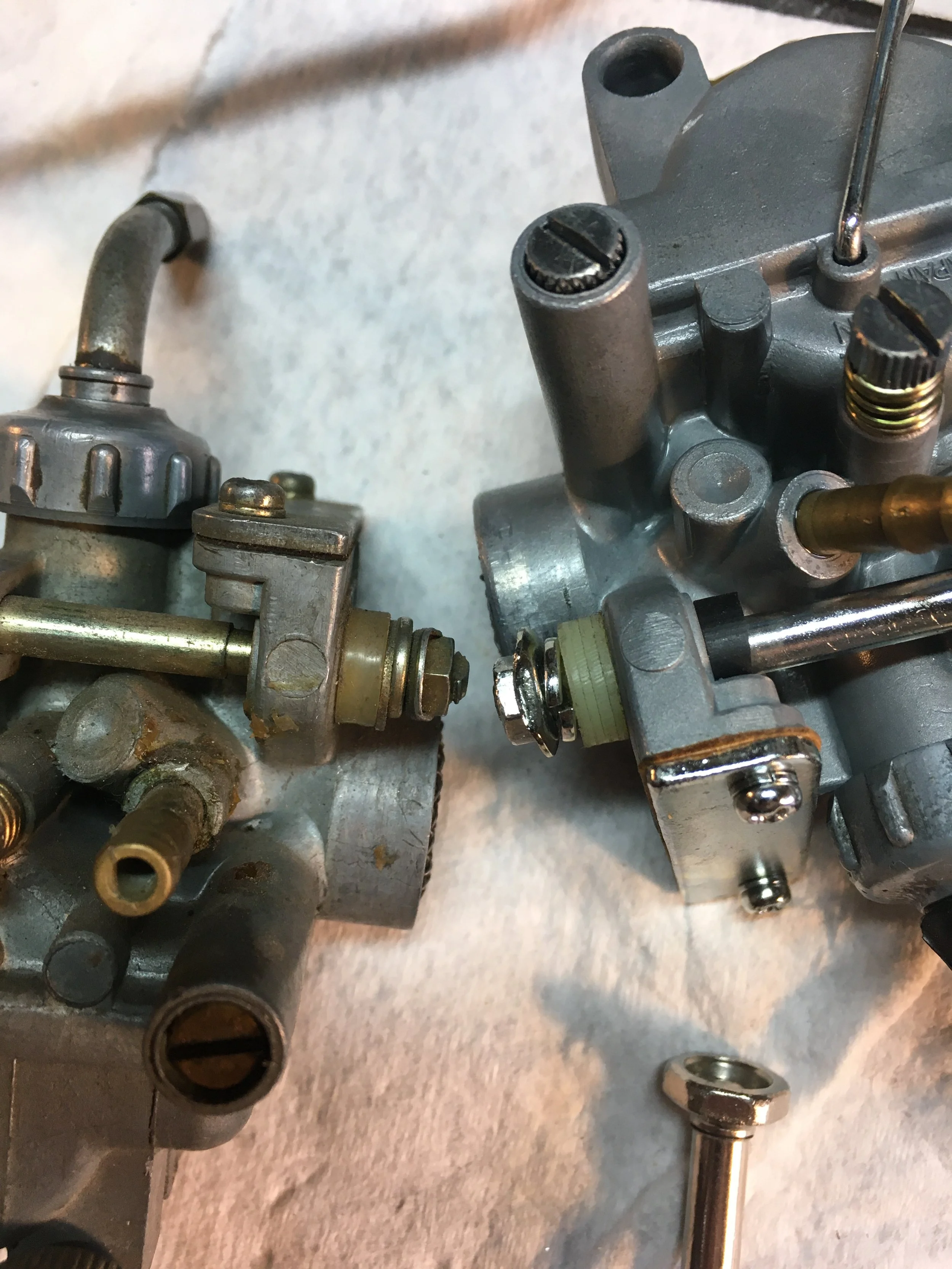
The nylon washer on the left was the largest original I could find. The one on the right is one of the new ones.

Small sections of Honda tubing were cut to replace the rubber seal on the shaft, another part that is impossible to find in new shape.

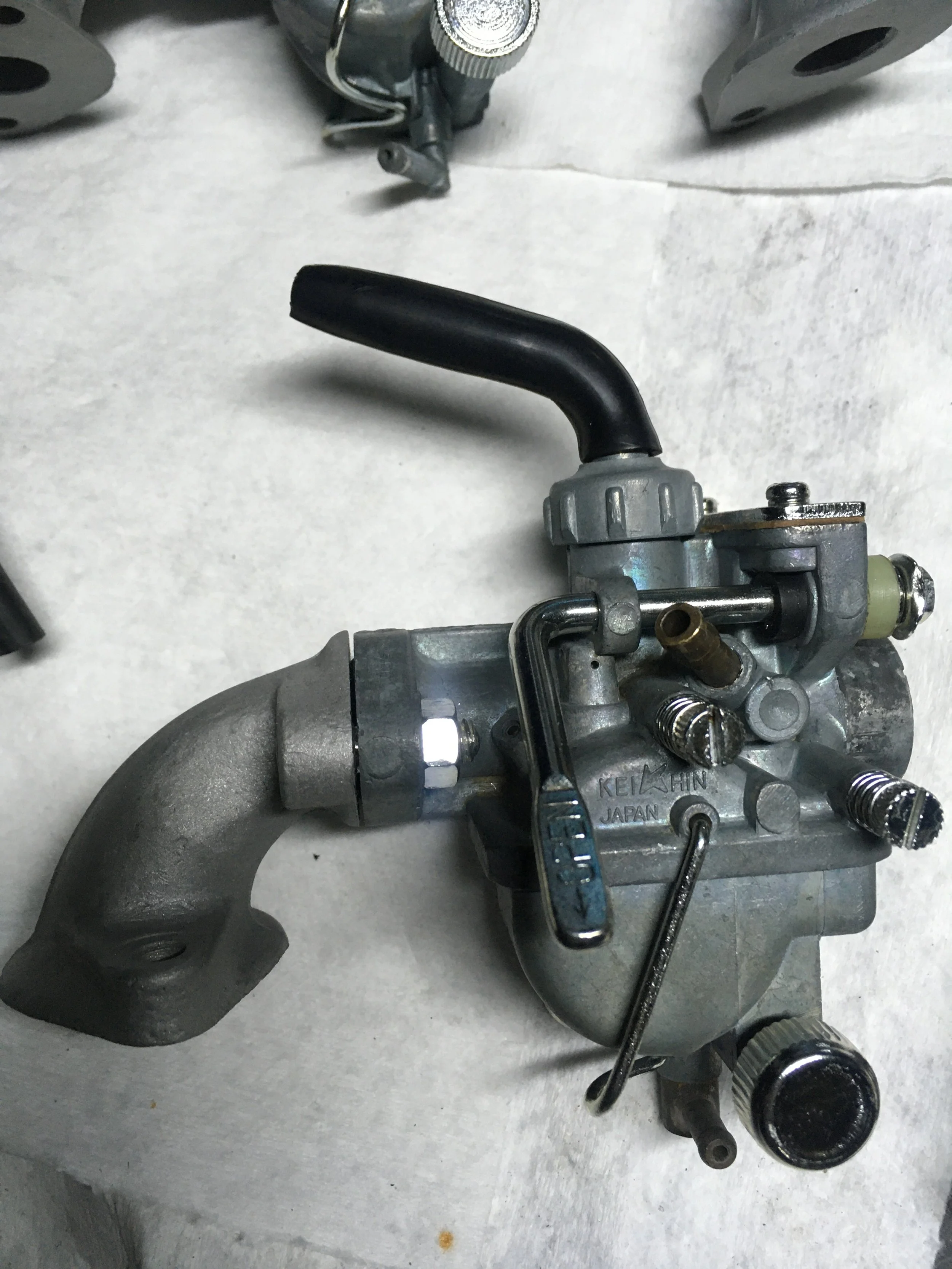
Part of the way through the process. The bodies of the carbs were not refinished aside from the ultrasound cleaning. Some still had a fairly good original surface, but most were in some state of oxidation. Vapor honing gives a beautiful finish, that looks even better than original. That may be the way in the future, but for now, this will do.

The intake manifolds were bead blasted, and the studs and nuts were re-plated. New O-rings were used for the fuel drain needle, and manifold.

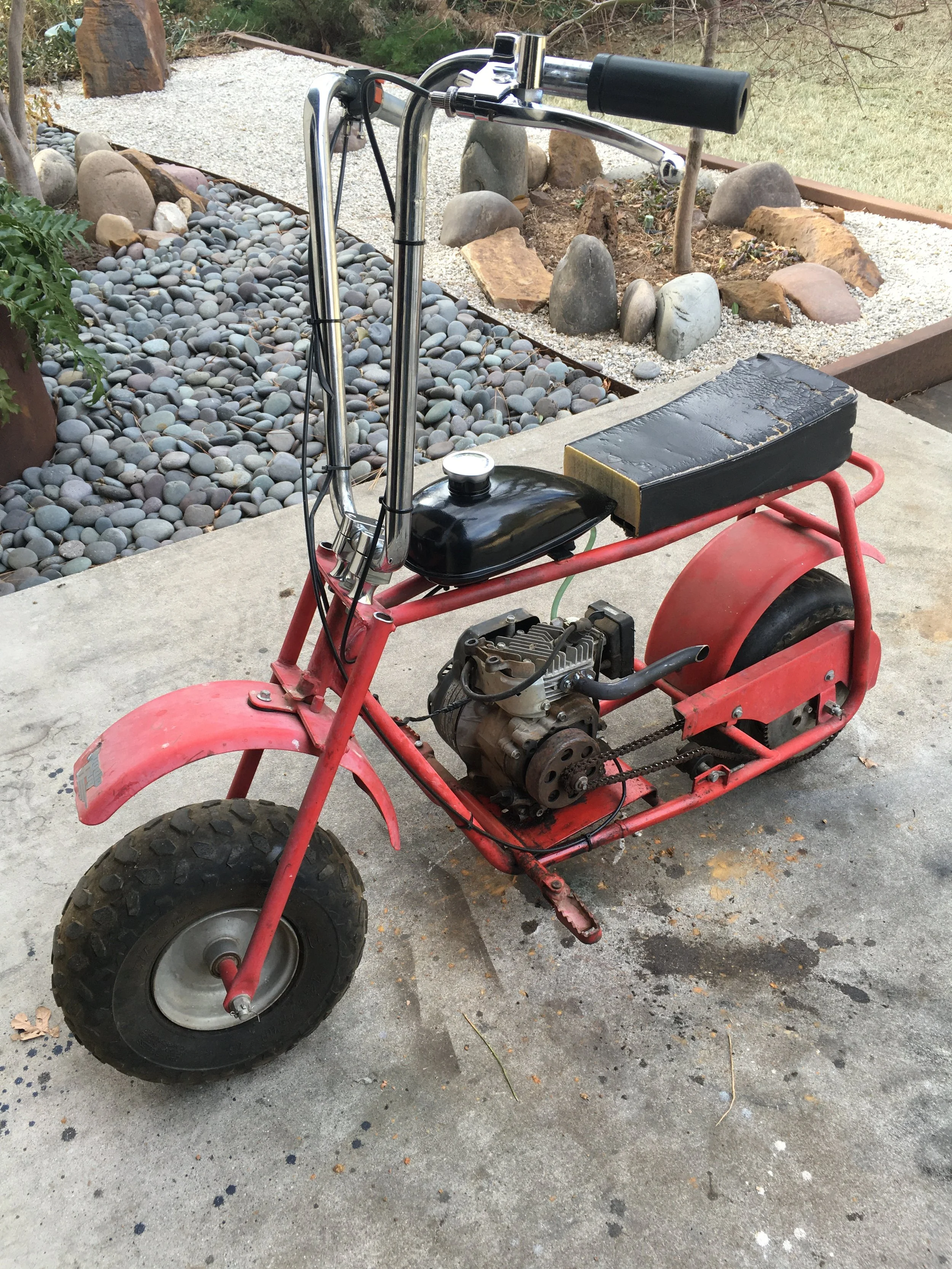
An finally… This DoodleBug minibike came from the same family as the 1967 Triumph Mountain Cub. It was hanging around the shop over at Skratch’s Garage in Haltom City, Texas, and I took it to do some mods and maintenance. It is being given a little refresh, with new bars, a mini Whizzer style tank, straight exhaust pipe, tires, chain, cables, and hand controls. She is a runner and rider, with a pretty mild engine. There may be an engine upgrade in the future…