!972 Honda Z50 Cafe Racer

Sometimes bikes are built around here for no particular reason. This was a build that started like a lot of others…make one part and the rest just pour out after it, when you only intended to make the first part. Most everything for this build was sitting on the shelf aside from the tires and hand levers. The starting point was a 1972 Z50 tank and frame. The forks came from another ‘72, but the patina was about the same. There will be only minimal painting on this one, mostly graphics and enough paint to cover bare steel parts.

A hodge-podge of different parts. Aside from the 1972 frame and tank, there are CRF50 wheels and engine cases, 1964 CL77 rear-set footpegs, XR75 swingarm, CT70 heat shield parts, an early hardtail Z50 fork top clamp, SL70 headlight bucket, and Kawas…

A hodge-podge of different parts. Aside from the 1972 frame and tank, there are CRF50 wheels and engine cases, 1964 CL77 rear-set footpegs, XR75 swingarm, CT70 heat shield parts, an early hardtail Z50 fork top clamp, SL70 headlight bucket, and Kawasaki KLX110 exhaust parts.

The stripes are just electrical tape mock-ups.  The side covers, seat, front fairing, and chainguard are all hand formed aluminum pieces. There are a lot of Takegawa parts on the bike, The engine is a 125cc, with Takegawa crankshaft, top end, Specia…

The stripes are just electrical tape mock-ups. The side covers, seat, front fairing, and chainguard are all hand formed aluminum pieces. There are a lot of Takegawa parts on the bike, The engine is a 125cc, with Takegawa crankshaft, top end, Special clutch, Super oil cooler, forged aluminum kickstarter, and Keihin PE24 kit with long intake. The muffler is a BBR D-section that has been shortened on both ends.
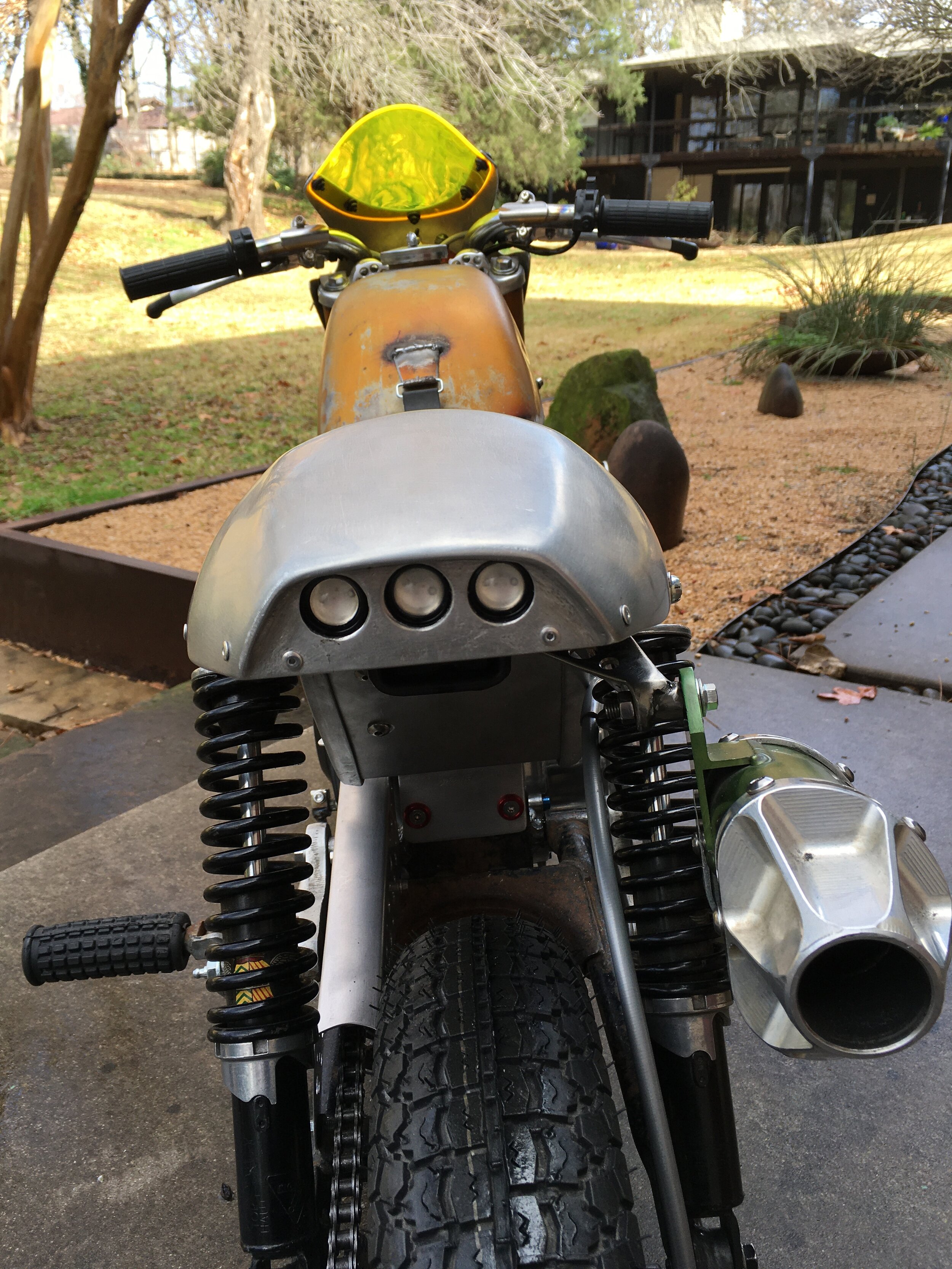
Since there is a 12 volt system with a lighting coil, I decided to go all-in on the lighting. The rear LED lights also can function as turn signals in addition to running and brake lights. There is a set of vintage KONI shocks on the rear end. The r…

Since there is a 12 volt system with a lighting coil, I decided to go all-in on the lighting. The rear LED lights also can function as turn signals in addition to running and brake lights. There is a set of vintage KONI shocks on the rear end. The rear fairing is made from a single piece of aluminum, with no welding on any of it. Getting the recess for the light was the most difficult part.
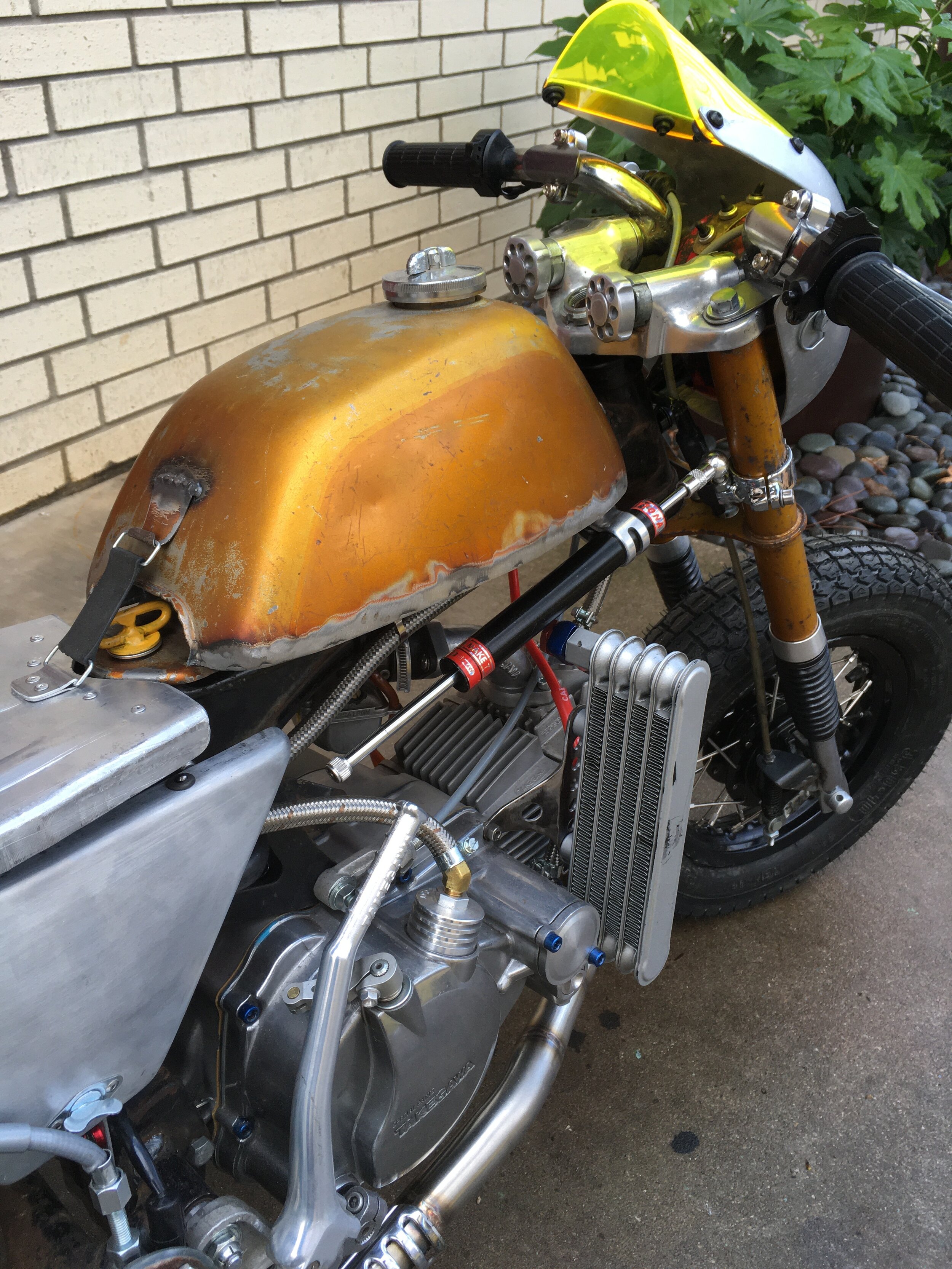
Some of the mounting system for the side covers, front fairing, and tank can be seen here. The tank, front fairing, side covers and handlebars can be stripped from the bike in seconds, without tools.

Some of the mounting system for the side covers, front fairing, and tank can be seen here. The tank, front fairing, side covers and handlebars can be stripped from the bike in seconds, without tools.

The cockpit switches are mil-spec C&K, with waterproof covers, sitting on a piece of brass. If anyone is paying attention, many of  my builds have custom brass pieces, going back to the 1970’s! A special nut was cut for the steering tube cap. Th…

The cockpit switches are mil-spec C&K, with waterproof covers, sitting on a piece of brass. If anyone is paying attention, many of my builds have custom brass pieces, going back to the 1970’s! A special nut was cut for the steering tube cap. The handlebar knobs are custom, made from some re-pop pieces.

The Tomaselli- style hand levers are a little over-sized for the scale of the bike, but I dig how they look and function. While kind of funky, the neon yellow windscreen is growing on me. Originally intended to be plain yellow or green, the neon one…

The Tomaselli- style hand levers are a little over-sized for the scale of the bike, but I dig how they look and function. While kind of funky, the neon yellow windscreen is growing on me. Originally intended to be plain yellow or green, the neon one was an online purchase that looked yellow in the picture.

The inner fender on the rear end helps enclose the side covers into a space housing a Kitaco carbon fiber oil vapor can, Tokyo Mods ignition,  TrailTech full-wave regulator/rectifier, and a Speedcell lithium battery.

The inner fender on the rear end helps enclose the side covers into a space housing a Kitaco carbon fiber oil vapor can, Tokyo Mods ignition, TrailTech full-wave regulator/rectifier, and a Speedcell lithium battery.

IMG_2541.JPG
IMG_2493.JPG
Mocking up graphics. The “MK” is for monkey killer. The 61 is the age of the builder. Not that I dig killing monkeys, just referring to the new Honda Monkey bikes. This bike was nick-named “Pony Boy” by my daughter.

Mocking up graphics. The “MK” is for monkey killer. The 61 is the age of the builder. Not that I dig killing monkeys, just referring to the new Honda Monkey bikes. This bike was nick-named “Pony Boy” by my daughter.

Since the pictures, the graphics have been started and the chainguard was painted black. Not completely happy with the chainguard appearance in bare aluminum, maybe the black will help.

Since the pictures, the graphics have been started and the chainguard was painted black. Not completely happy with the chainguard appearance in bare aluminum, maybe the black will help.
IMG_2524.JPG

Finishing stages for the 1974 Norton Commando Cafe.

The

Another killer paint job by Jason Small of Dallas, Texas. Jason’s attention to detail and knowledge of correct original paint schemes is second to none.

Another killer paint job by Jason Small of Dallas, Texas. Jason’s attention to detail and knowledge of correct original paint schemes is second to none.

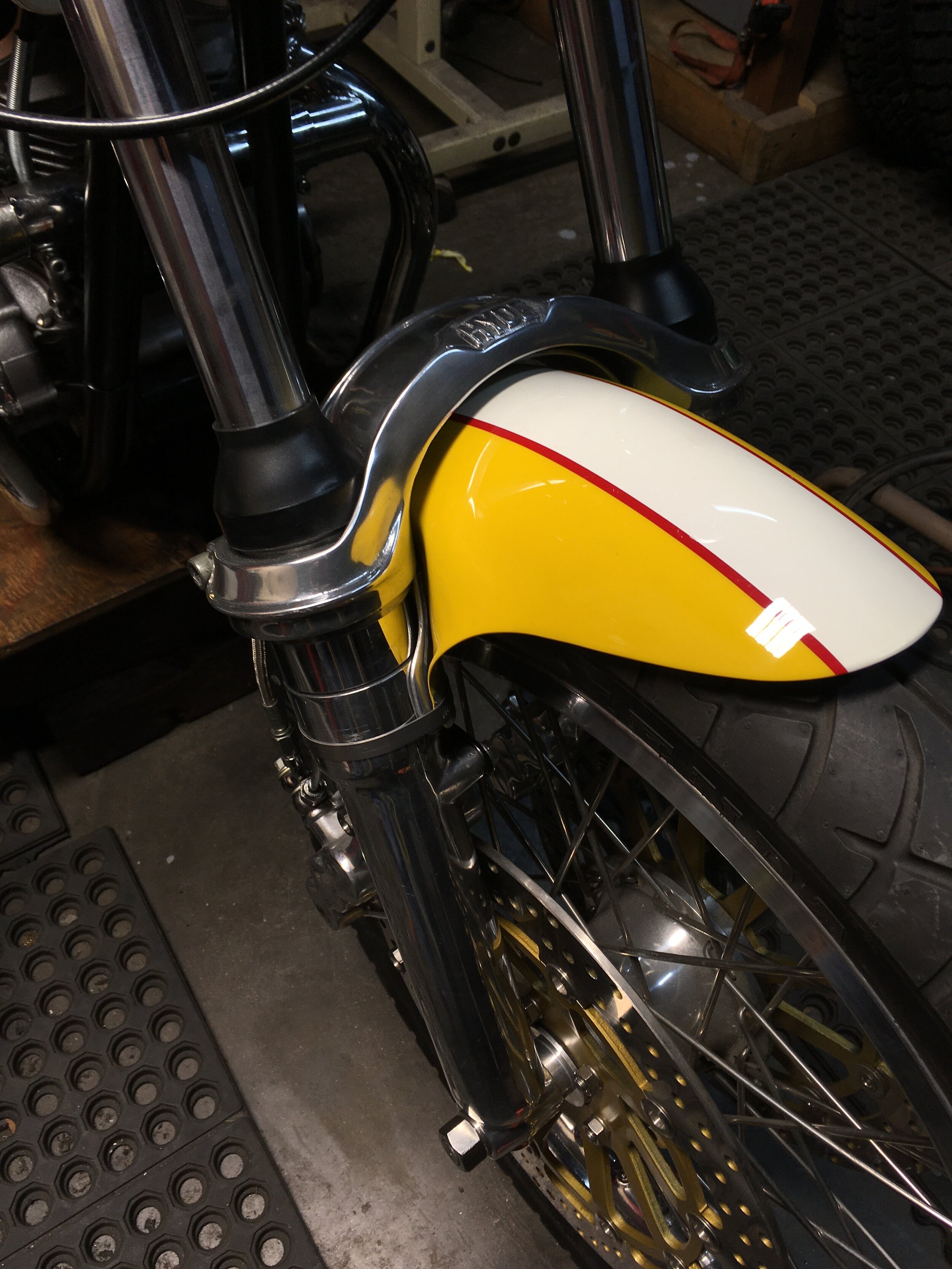
Quite happy with how the front fender fits with the Norman Hyde fork brace. The front wheel and brake assembly are from Don Pender.

Quite happy with how the front fender fits with the Norman Hyde fork brace. The front wheel and brake assembly are from Don Pender.

The color scheme and pallet was chosen by the owner. The lighting makes it look lighter and brighter in this picture. The actual color is a strong, deep yellow and red.

The color scheme and pallet was chosen by the owner. The lighting makes it look lighter and brighter in this picture. The actual color is a strong, deep yellow and red.

Still need some final fitting and the seat, but getting there!

Still need some final fitting and the seat, but getting there!

IMG_1984.JPG
Because of my limited aluminum welding skills, all the parts are made from a single piece. In the case of the front fairing, the edges are rolled over a steel rod sub-structure, making it very light.

Because of my limited aluminum welding skills, all the parts are made from a single piece. In the case of the front fairing, the edges are rolled over a steel rod sub-structure, making it very light.

New bezels and glass were put on the clocks. In order to roll the bezel edges, a jewelers burnisher and a C-clamp were used to get it flattened out nicely..

New bezels and glass were put on the clocks. In order to roll the bezel edges, a jewelers burnisher and a C-clamp were used to get it flattened out nicely..

The tach dial looks better with the hand re-painted fluorescent orange.

The tach dial looks better with the hand re-painted fluorescent orange.

I have only sent aluminum out for polishing twice, but probably never again. This time, not only did there do a sub-par job, they completely obliterated the timing marks on the primary cover. This one is a replacement.

I have only sent aluminum out for polishing twice, but probably never again. This time, not only did there do a sub-par job, they completely obliterated the timing marks on the primary cover. This one is a replacement.

There is an inner brace that runs on the outside of the front fender. Because the mounting point is on the lower ears of the fender, there would be a lot of potential for vibration and flexing, and the inevitable stress cracking that follow. The bra…

There is an inner brace that runs on the outside of the front fender. Because the mounting point is on the lower ears of the fender, there would be a lot of potential for vibration and flexing, and the inevitable stress cracking that follow. The brace hugs the sides of the fender all the way to the crown of the fender, with rubber to soften vibrations. The result is a rigid fender mount that should resist cracking.

Z50 Engine building part three. The top end.

Once the primary drive is assembled on the other side of the engine, it is flipped over and the case screws put in. A single bolt holds the chain tensioner arm in place. It should move freely when tightened. The mainshaft and shift shaft seals can b…

Once the primary drive is assembled on the other side of the engine, it is flipped over and the case screws put in. A single bolt holds the chain tensioner arm in place. It should move freely when tightened. The mainshaft and shift shaft seals can be pressed in place with a socket and a hammer.

The special washer and bolt that hold the transmission shift drum in place are installed.

The special washer and bolt that hold the transmission shift drum in place are installed.

The timing chain tensioner roller is simply dropped in place. It is held in place by the stator plate. The plunger and spring are placed in the bore till they contact the chain tensioner arm. There  is a flat side on this particular tensioner plunge…

The timing chain tensioner roller is simply dropped in place. It is held in place by the stator plate. The plunger and spring are placed in the bore till they contact the chain tensioner arm. There is a flat side on this particular tensioner plunger, where the locking screw contacts with it. The hole down and to the left of the shifter shaft is where the locking bolt and nut go.

Two of the three chain tensioner plunger styles. The lower one is the earlier one, and the upper one came after, followed by another steel plunger with holes perforating it.

Two of the three chain tensioner plunger styles. The lower one is the earlier one, and the upper one came after, followed by another steel plunger with holes perforating it.

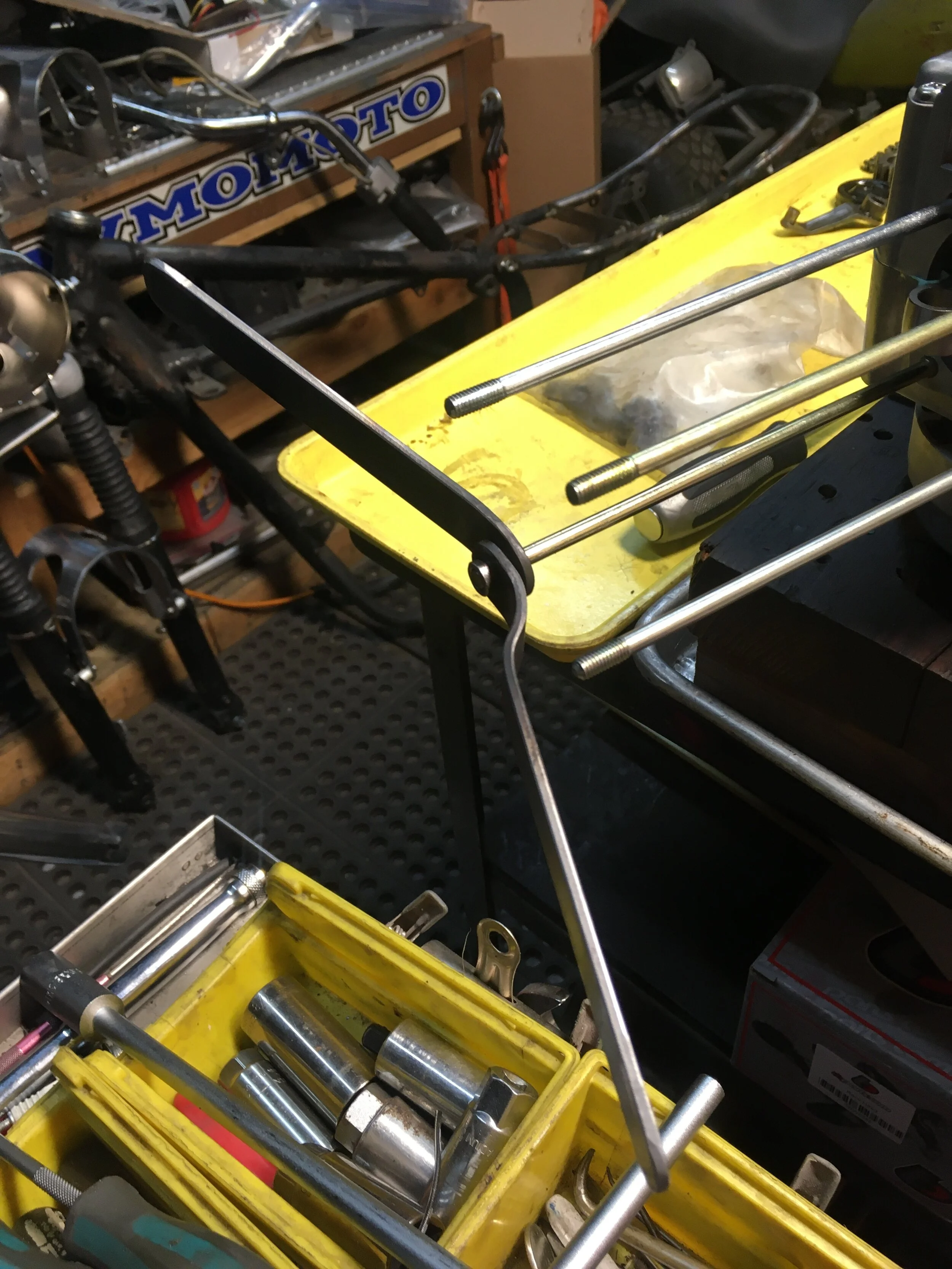
There are two lengths of engine head studs. The longer ones go on the left side of the engine, with the engine dowels at their base. The studs can be snugged up using two nuts tightened against one another. These are some homemade levers with the bo…

There are two lengths of engine head studs. The longer ones go on the left side of the engine, with the engine dowels at their base. The studs can be snugged up using two nuts tightened against one another. These are some homemade levers with the bolts welded on to avoid having to use a pair of wrenches.

With the studs and locator dowels in place, the paper cylinder base gasket goes on along with the flat o-ring that fits in the round opening on the right of the picture.

With the studs and locator dowels in place, the paper cylinder base gasket goes on along with the flat o-ring that fits in the round opening on the right of the picture.

The piston rings need to be put on. The shiny one on the right goes at the top of the piston, the dark one in the middle, and the three-piece oil ring goes on the bottom. They are put on starting with the wavy oil ring followed by the skinny rings t…

The piston rings need to be put on. The shiny one on the right goes at the top of the piston, the dark one in the middle, and the three-piece oil ring goes on the bottom. They are put on starting with the wavy oil ring followed by the skinny rings that go on each side of it. The middle ring goes on next, and the top shiny ring last. The gaps at the end of the rings should be staggered so they do not all lie in the same location.

Once the rings are on, the piston can be joined to the crankshaft. It is easier to place the wrist pin clip into one side of the piston before putting the wrist pin in. Be sure to place the piston with the intake side toward the top of the engine. T…

Once the rings are on, the piston can be joined to the crankshaft. It is easier to place the wrist pin clip into one side of the piston before putting the wrist pin in. Be sure to place the piston with the intake side toward the top of the engine. There is usually a stamp with “IN” marked on the intake side, or an arrow is sometimes used to point it out. If neither of those marks are there, the side with the larger valve recess is the intake side.

There is a small flat o-ring that goes around the lower right engine stud and fits into the head gasket. There is a second larger flat o-ring that goes in the larger opening seen at the upper right of the picture.

There is a small flat o-ring that goes around the lower right engine stud and fits into the head gasket. There is a second larger flat o-ring that goes in the larger opening seen at the upper right of the picture.

To set the valve timing, the flywheel needs to be placed on the shaft and the crank rotated until the “T” mark lines up with the notch at the top of the engine case.

To set the valve timing, the flywheel needs to be placed on the shaft and the crank rotated until the “T” mark lines up with the notch at the top of the engine case.

Using a screwdriver or round rod, the timing chain is pulled tight, keeping it between the studs. The place where it comes to a peak is the pin that will be lined up with the mark on the cam sprocket. The cam sprocket is placed on the chain and fed …

Using a screwdriver or round rod, the timing chain is pulled tight, keeping it between the studs. The place where it comes to a peak is the pin that will be lined up with the mark on the cam sprocket. The cam sprocket is placed on the chain and fed through the head to line up with the cam. The cam should be in the top dead center position. You can tell it is in the right position if the cam turns freely about a quarter turn or more. If it is in the wrong position, the valves will be engaged, and the cam will be difficult to turn.

The small mark on the cam sprocket should line up with the mark on the head, making sure the “T” mark on the flywheel is still aligned.

The small mark on the cam sprocket should line up with the mark on the head, making sure the “T” mark on the flywheel is still aligned.