Z50 engine building part two. Assembling the primary drive.

The clutch, primary drive gears, and gear selector assembly can be installed after the main engine cases are together. None of the engine case screws have been installed yet, and will be put in from the opposite side once the primary drive is done.

The kickstart return spring assembly should be put on first. The shaft should be turned fully clockwise till it stops, then the splined cog is slid partially down the shaft with the tip of the cog contacting the engine case as in the above picture. …

The kickstart return spring assembly should be put on first. The shaft should be turned fully clockwise till it stops, then the splined cog is slid partially down the shaft with the tip of the cog contacting the engine case as in the above picture. Using a screwdriver or a hook, the return spring is pulled so the end loops around the engine case boss. Once the spring is there, the cog can be pushed down fully till the groove for the C-clip can be seen on the kick shaft.

The high volume oil pump used for this build has a collar that must be fitted in the drive shaft hole to support the drive shaft. Don’t forget to use a new gasket.

The high volume oil pump used for this build has a collar that must be fitted in the drive shaft hole to support the drive shaft. Don’t forget to use a new gasket.

The oil pump is installed being careful to make sure the shaft and pump mesh. The drive sprocket can be turned to get them to mesh correctly. The three larger screws are the ones securing the pump. The gear selector assembly goes on next, with the s…

The oil pump is installed being careful to make sure the shaft and pump mesh. The drive sprocket can be turned to get them to mesh correctly. The three larger screws are the ones securing the pump. The gear selector assembly goes on next, with the shaft dropping in the hole, the end of the arm contacting the gear selector star pins, being sure the spring that goes on the shaft is contacting the engine stud correctly. The extended ends of the spring should be on opposite sides of the shaft. The shift star can be put on now, or before placing the selector arm in the case. Lastly, the small arm with the roller on it (the shift detent arm) can be put on, making sure it moves freely once its securing bolt has been tightened. Notice that the C-clip for the kick shaft assembly is in place, and the return spring around the engine case boss.
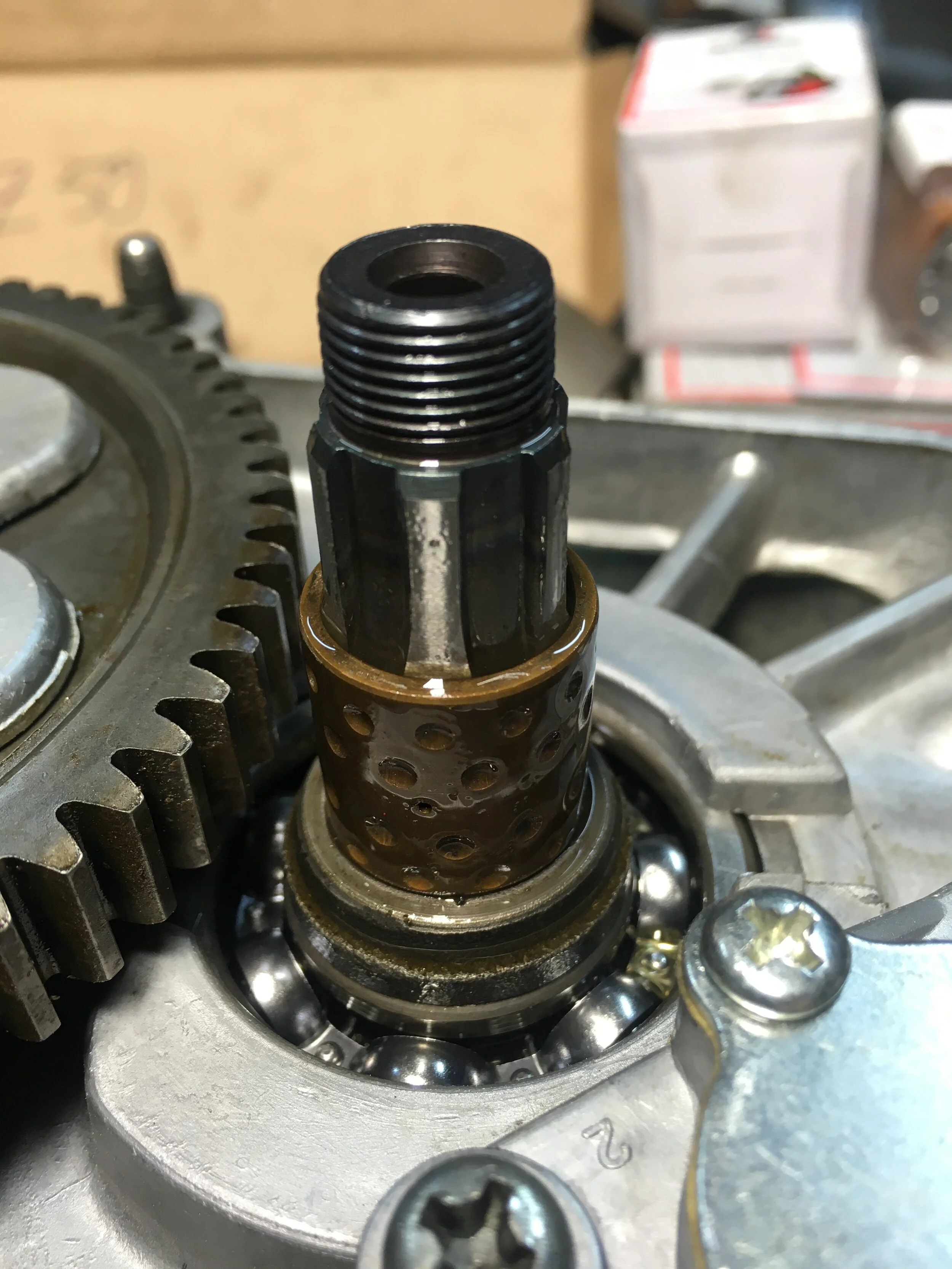
If your crank is new, you will need to put the spacer and bronze bushing on before the clutch and drive gear are put on. Use plenty of oil assembling these parts.

If your crank is new, you will need to put the spacer and bronze bushing on before the clutch and drive gear are put on. Use plenty of oil assembling these parts.

The clutch drive gear drops in place, and the larger primary gear slips over the shaft, secured by a C-clip. The oil filter screen can be put in place.

The clutch drive gear drops in place, and the larger primary gear slips over the shaft, secured by a C-clip. The oil filter screen can be put in place.

The clutch drops onto its shaft, making sure the gear beneath it meshes with the backside of the clutch, the large primary gear, and the clutch/crankshaft splines. It will be necessary to turn the clutch and large gear while wiggling the clutch to g…

The clutch drops onto its shaft, making sure the gear beneath it meshes with the backside of the clutch, the large primary gear, and the clutch/crankshaft splines. It will be necessary to turn the clutch and large gear while wiggling the clutch to get it all to mesh correctly. The clutch nut is put on after the locking tab and special domed washer.

This picture was from the disassembly, but using it to show the clutch cover in place.

This picture was from the disassembly, but using it to show the clutch cover in place.

This is the auto clutch actuator assembly in place. Usually I will wait to put these parts on till after the opposite side of the engine is done. The reason is that once these parts are on, the outer engine side cover has to be put on to keep them i…

This is the auto clutch actuator assembly in place. Usually I will wait to put these parts on till after the opposite side of the engine is done. The reason is that once these parts are on, the outer engine side cover has to be put on to keep them in place. Having the cover in place makes it harder to work on the stator side of the engine because of the roundness of the cover. This engine stand secures the engine even with the cover in place, but will contact the cover, marring a newly painted cover. The actuator assembly just floats until the cover is on, and centering it so the cover contacts it correctly is much more difficult if the engine is upright.

This is the clutch adjuster screw assembly. It fits on the inside of the cover with the screw passing through the center hole, and the post in the blind hole. On the opposite side, an O-ring, washer and nut will be placed to secure and seal it.
This is the clutch adjuster screw assembly. It fits on the inside of the cover with the screw passing through the center hole, and the post in the blind hole. On the opposite side, an O-ring, washer and nut will be placed to secure and seal it.

The Festival of Engines 2020. Honda Z50 and CT70 6 Volt engine rebuilding Part One

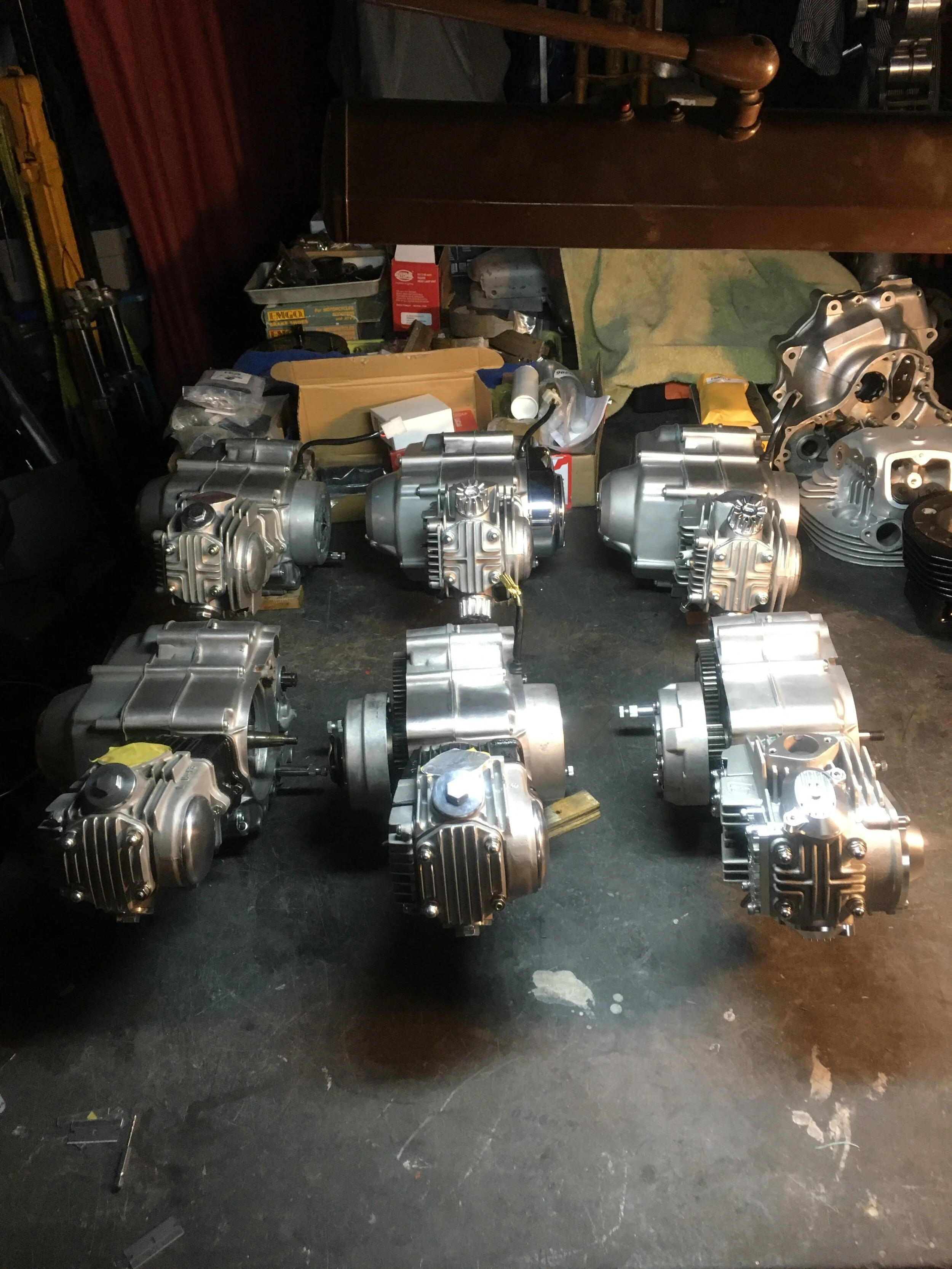
Once again it is time to do engine building around the shop. It is a lot faster to do multiples, so six rebuilds were undertaken. A number of people have asked for info, so I am going to put out a light guide for getting an early (1968-1979) engine rebuilt. Not meant to be a definitive guide, you would still want to get one of the Clymer or Haynes manuals for the details.

Everything gets rebuilt, replaced, or re-plated. All seals , gaskets, and bearings get replaced. All hardware is re-plated or new. There are four 108cc stroker engines, two with 4 speed trannys, one with a rolling rocker head. All four were given ne…

Everything gets rebuilt, replaced, or re-plated. All seals , gaskets, and bearings get replaced. All hardware is re-plated or new. There are four 108cc stroker engines, two with 4 speed trannys, one with a rolling rocker head. All four were given new heavy duty clutches. The two stock rebuilds have new pistons and rings, clutch plates and bearings. The stators and ignition components are restored, and any stripped screws are repaired (although in a rare case, there were no stripped holes on any of the engines.) All the cases were finished as close to the original finish as possible, refinishing any scratches or damage to the surfaces.

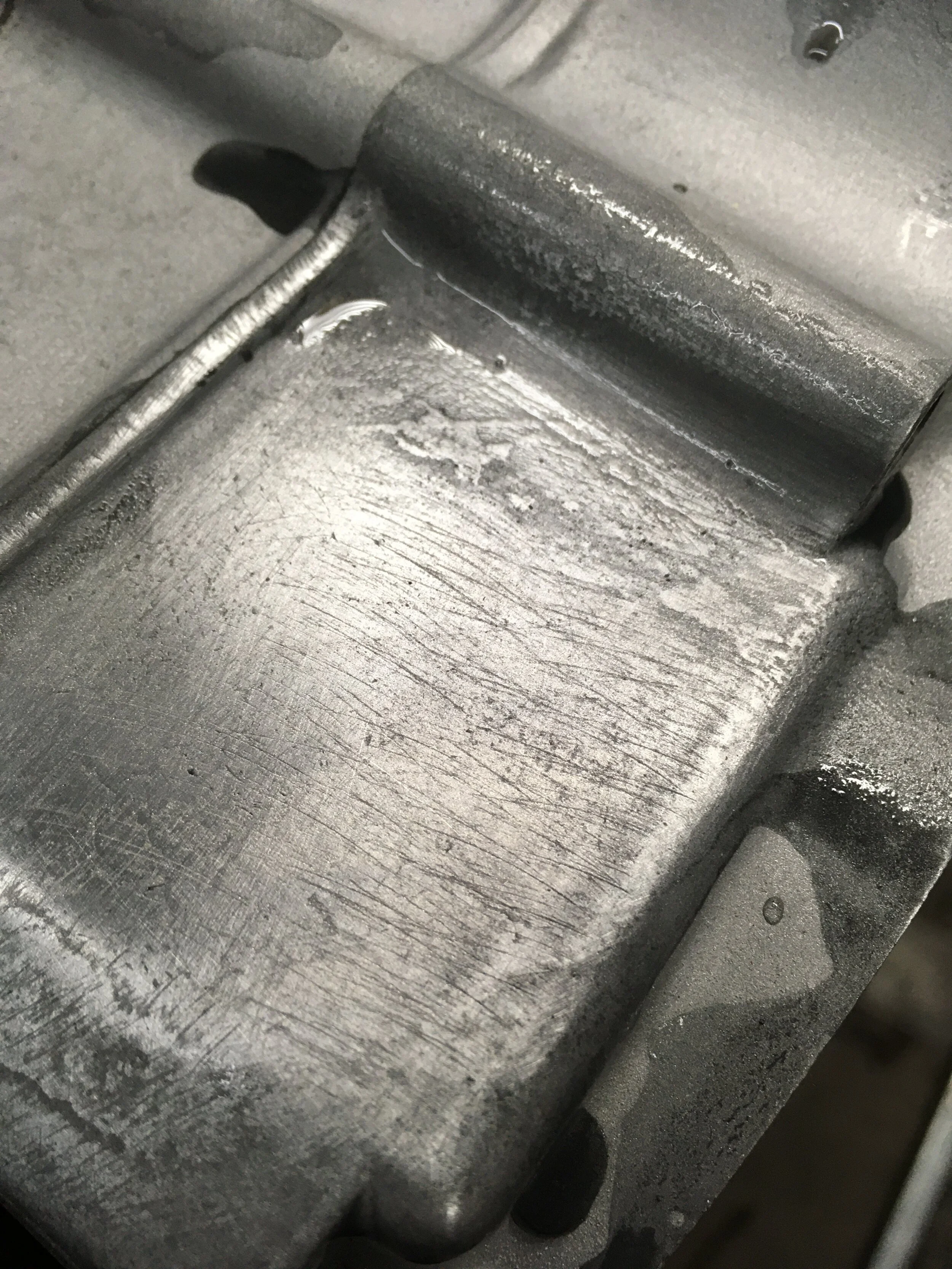
This engine case looks like it was hit by a wire wheel at some point, leaving deep scratches that were removed by hand wet sanding. There are not a lot of shortcuts in metal finishing if you are going to restore a smooth finish removing as little ma…

This engine case looks like it was hit by a wire wheel at some point, leaving deep scratches that were removed by hand wet sanding. There are not a lot of shortcuts in metal finishing if you are going to restore a smooth finish removing as little material as possible.

The clutch covers are painted with Cloud Silver paint from Honda. There are new kick and gear shift shafts used on all these engines.

The clutch covers are painted with Cloud Silver paint from Honda. There are new kick and gear shift shafts used on all these engines.

Soon these bikes will be going into some of the bikes in previous posts, and some yet to be seen!

Soon these bikes will be going into some of the bikes in previous posts, and some yet to be seen!

Some of the tools needed. In addition to these, a 6mm and 8mm tap, variable speed drill, an air compressor, and some JES screw drivers are needed. Tools: clutch nut tool, flywheel puller, 17, 14, 10, 9mm sockets, #2 and #3 phillips impact bits, impa…

Some of the tools needed. In addition to these, a 6mm and 8mm tap, variable speed drill, an air compressor, and some JES screw drivers are needed. Tools: clutch nut tool, flywheel puller, 17, 14, 10, 9mm sockets, #2 and #3 phillips impact bits, impact driver slip jaw pliers, crescent wrench, needle nose pliers, ring pliers, brass drift, rubber hammer, seal puller.

Somewhere around 60 Honda horizontal engine rebuilds done in the shop, most of them on this stand. You don’t need anything too fancy, but a way to elevate the engine off the bench to clear the shift shaft and kick shaft is needed. A couple pieces of…

Somewhere around 60 Honda horizontal engine rebuilds done in the shop, most of them on this stand. You don’t need anything too fancy, but a way to elevate the engine off the bench to clear the shift shaft and kick shaft is needed. A couple pieces of 4x4 lumber will work, or a box shape made of 2x4’s and screws that fits under the outer edges of the engine cases. The main reason this stand was built was to hold the engine firmly while extracting case screws. Because the screws are Phillips type screws usually frozen in the cases, the only reliable method I’ve found to get them out without damage is to use an impact driver, #3 Phillips impact bit, and a considerable amount of downward force. Without a solid base, the irregular surfaces on both sides make this a challenge. The engine will sometimes spin or even fall off the blocks during this process. The stand keeps this from happening and is easy to use, requiring no tools to mount the engine on it.

The actual tear-down is pretty fast and easy. This assembly guide can be done in reverse to disassemble. The time consuming part is cleaning grime and gaskets from the parts. The cases are cleaned first with citrus degreaser, scrapers, towels, and c…

The actual tear-down is pretty fast and easy. This assembly guide can be done in reverse to disassemble. The time consuming part is cleaning grime and gaskets from the parts. The cases are cleaned first with citrus degreaser, scrapers, towels, and compressed air, removing as much oil and grime as possible. They are washed and scrubbed in kerosene and all gaskets removed. They are then wiped down, blown out, and washed in warm soapy water. They are bead blasted after that, and then blown again, scuffed with fine Scotch-Brite pads, rinsed, and blown. Along the way, any stubborn deposits are scraped off with a razor or pick. Finally, the screw holes are all chased with a tap, and then blown out agian. Obviously, a lot of blowing going on, and some would argue not to do so much in between the steps, but degreasing is tricky in the sense that some processes don’t work as well in different situations. A common example would be thick oil and dirt deposits inside and outside the engine., that are not easily removed by any method, can trap glass bead from blasting, and interfere with trying to chase your threads. In that case, mechanical scraping and wiping are the only sure-fire low tech ways (you can always drop some coin for a large ultrasonic cleaning tank.) The other principle is that each stage in cleaning should bring the minimum amount of contaminants to the next, and blowing does this effectively. A word of caution: eye, face, hand, and ear protection are absolutely necessary for all the blowing, especially if you are using high pressure. Small particles of grime can fly out when blowing and hit you like a sand blaster to the eyes. The ear protection is for the ultra high-pitched whistling that is produced blowing across screw holes.

Once the cases are clean, the oil orifice is drilled out with a 1/16” bit. You can go as high as 2mm in diameter, and as small as 1.5mm. Blow out after drilling.

Once the cases are clean, the oil orifice is drilled out with a 1/16” bit. You can go as high as 2mm in diameter, and as small as 1.5mm. Blow out after drilling.

The transmission bearings need to be pressed in first. The cases can be heated with a small propane torch or heat gun to expand the hole size slightly, and then the bearing can be tapped into place easily with a drift and hammer, making sure only to…

The transmission bearings need to be pressed in first. The cases can be heated with a small propane torch or heat gun to expand the hole size slightly, and then the bearing can be tapped into place easily with a drift and hammer, making sure only to strike the outer ring of the bearing.

Next, the oil drive shaft and sprocket have to be put into the cases. The fat shaft is the original, the skinny one has been turned to clear the stroker crank, and came as part of a high-volume oil pump kit.

Next, the oil drive shaft and sprocket have to be put into the cases. The fat shaft is the original, the skinny one has been turned to clear the stroker crank, and came as part of a high-volume oil pump kit.

The screw end of the shaft has to pass though the case and into the sprocket. A small rod or screwdriver and a wrench are used to snug up the shaft. The center of either style shaft can be grabbed with vise grips to screw or unscrew it. It does not …

The screw end of the shaft has to pass though the case and into the sprocket. A small rod or screwdriver and a wrench are used to snug up the shaft. The center of either style shaft can be grabbed with vise grips to screw or unscrew it. It does not need to be super tight, the direction the pump rotates keeps it from unscrewing.

The three speed stock tranny with the last parts of the output shaft laid out in order, and the shift drum as it mates up with the shafts. Notice the small thin washer on the left end of the upper shaft, and laying on the far right of the picture. T…

The three speed stock tranny with the last parts of the output shaft laid out in order, and the shift drum as it mates up with the shafts. Notice the small thin washer on the left end of the upper shaft, and laying on the far right of the picture. Those special washers are sometimes overlooked, often staying stuck to the engine cases and even lost during disassembly.

The transmission ready for installation. The output shaft on the right of the picture fits into the bearing pressed into the case, the smaller end of the other shaft goes in the bronze bush in the case half, and the shift drum shaft through the top …

The transmission ready for installation. The output shaft on the right of the picture fits into the bearing pressed into the case, the smaller end of the other shaft goes in the bronze bush in the case half, and the shift drum shaft through the top hole in the case.

A small amount of oil needs to be squirted in the bronze bush in the engine case, and the transmission dropped in. If too much oil is used, it will keep the shaft from seating fully. The three main parts of the tranny need to be held together carefu…

A small amount of oil needs to be squirted in the bronze bush in the engine case, and the transmission dropped in. If too much oil is used, it will keep the shaft from seating fully. The three main parts of the tranny need to be held together carefully, making sure the thin washer is fitted between the shaft and the bronze bush.

To keep the shifting tight, the shift drum guide pins should be replaced. There is a small hairpin-like clip that holds them in that can be pulled out easily with a metal pick. The pin sometimes gets stuck in the hole, and a strong magnet while wigg…

To keep the shifting tight, the shift drum guide pins should be replaced. There is a small hairpin-like clip that holds them in that can be pulled out easily with a metal pick. The pin sometimes gets stuck in the hole, and a strong magnet while wiggling the shift fork will usually do the trick.

Once the tranny is in, the kickstart shaft is placed in the oiled case hole, making sure the arm goes into the groove on the side of the case.

Once the tranny is in, the kickstart shaft is placed in the oiled case hole, making sure the arm goes into the groove on the side of the case.

Dropping the crank in requires no tools, and should fit in easily with a little hand pressure and wiggling. The engine case dowels (always use fresh ones, trust me) and center case gasket  are the last thing needed before closing the cases back up. …

Dropping the crank in requires no tools, and should fit in easily with a little hand pressure and wiggling. The engine case dowels (always use fresh ones, trust me) and center case gasket are the last thing needed before closing the cases back up. Leave the piece of gasket paper that passes across the piston rod until after the case screws are in place.

The right side case should fit on the assembled left side easily, with only slight taps of a rubber mallet needed to coax it together. Look out for the oil drive shaft, transmission shafts and the shift drum to be aligned. They may need slight adjus…

The right side case should fit on the assembled left side easily, with only slight taps of a rubber mallet needed to coax it together. Look out for the oil drive shaft, transmission shafts and the shift drum to be aligned. They may need slight adjusting to hit their holes right. The remainder of this guide will be in installments, focusing on individual sections of the build for easier future reference. If anyone has questions, please ask on this site so others can perhaps benefit from the Q and A.

Honda Z50 Soft Tail builds, 1978 Triumph T140 inching along, and the 1974 Norton Commando Cafe Build.

A lot going on since the last post. A trio of first generation Honda Z50 soft tails were started. A lot of the parts for these bikes had been restored slowly over several years, waiting till enough parts were there to start throwing them together. A 1978 oil in frame Triumph T140 that has been sitting unfinished for years is getting some attention. A bunch of small bikes have been coming and going through the shop. The Norton Commando build has been broken down after the engine was fired up and the electrical system was worked out. Anyone following this blog (if there actually is anyone out there) will notice there have been only a couple posts this year after regular weekly posts in 2018 and 2019. Analytics on the site show a small number of hits for the blog, but a complete lack of comments, likes, and other interaction lead me to believe there is not a lot of point to regular posts, and few if any, regular readers. Perhaps someone reading this might say otherwise, but after five years of silence, it is a hard argument to make (and yes, I know using a platform like fakebutt would change that, but maybe I am enjoying the isolation.) In any case, here is some of the activity going on around here.

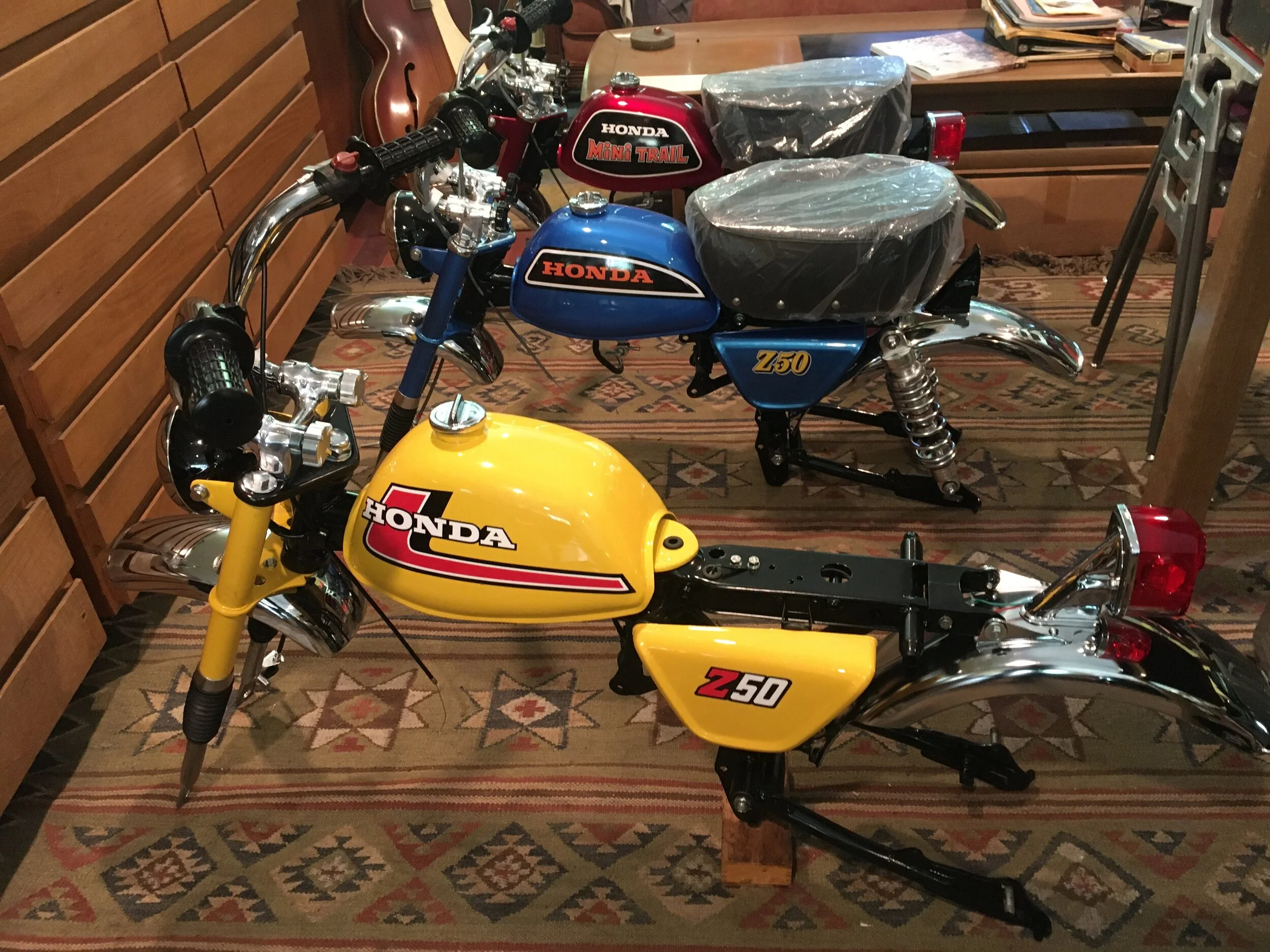
Three Honda Z50 soft tail builds in process. The red 1972 in back will be relatively stock, the blue 1973 has a 35mm extended swingarm, and the yellow 1976 model has 35mm extended front forks and a 55mm extended swingarm. A set of Takegawa rear shoc…

Three Honda Z50 soft tail builds in process. The red 1972 in back will be relatively stock, the blue 1973 has a 35mm extended swingarm, and the yellow 1976 model has 35mm extended front forks and a 55mm extended swingarm. A set of Takegawa rear shocks is on its way to hold up the rear end.

Some of the wheel parts for four different bikes: the three soft tails plus a K2 Z50 restoration. All the aluminum parts have been blasted and polished. There are new Honda OEM bearings and seals in the hubs, and freshly re-plated hardware on the br…

Some of the wheel parts for four different bikes: the three soft tails plus a K2 Z50 restoration. All the aluminum parts have been blasted and polished. There are new Honda OEM bearings and seals in the hubs, and freshly re-plated hardware on the brake panels. New slotted brake shoes with new springs were used, and the brake linings were de-glazed. The wheel halves have been taken down to bare metal, straightened and painted with Honda Cloud Silver paint.

In the process of rebuilding and refinishing the footpeg assemblies for the soft tails. The nicks and pits get filled and sanded, and some of the roughness on the welds is sanded out prior to paint. The bottom kickstand is the only original one of t…

In the process of rebuilding and refinishing the footpeg assemblies for the soft tails. The nicks and pits get filled and sanded, and some of the roughness on the welds is sanded out prior to paint. The bottom kickstand is the only original one of these three. The other two are extended proportionally to go with the extended swingarms on the ‘73 and ‘76, with the ‘76 being the longest.

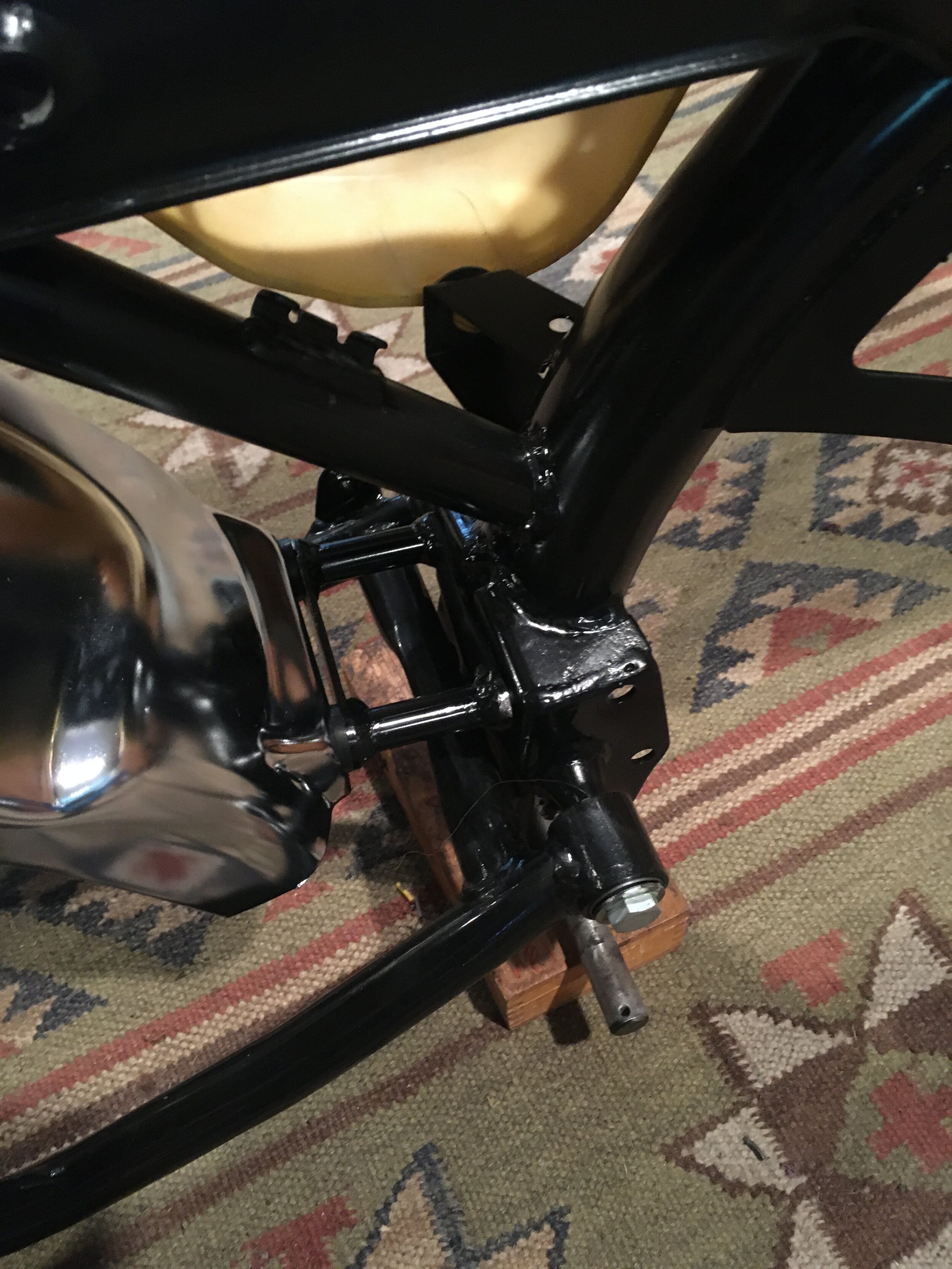
Because of the swingarm extension on the ‘76, the rear fender mounts needed to be extended as well to keep the wheel centered. The wheel looks a little too far forward in the stock location as far as the centering, and a 35cm extension on the swinga…

Because of the swingarm extension on the ‘76, the rear fender mounts needed to be extended as well to keep the wheel centered. The wheel looks a little too far forward in the stock location as far as the centering, and a 35cm extension on the swingarm places it about as far as you would want to go the other way without moving the fender from the stock location to match. The top fender extension is basically a box with tabs that slides over the fender mounts and bolts into the original mounting holes.

The lower rear fender extended  mount uses long bolts to pass through the 45mm extension.

The lower rear fender extended mount uses long bolts to pass through the 45mm extension.

The frame and extended swingarm after bead blasting.

The frame and extended swingarm after bead blasting.

Some 35mm extensions were made for the front forks on the ‘76 Z50. Some fresh Honda Trail Bikes reproduction fork lowers were used. The walls of their fork lowers are a good millimeter thicker than stock, and look like they will be much more resista…

Some 35mm extensions were made for the front forks on the ‘76 Z50. Some fresh Honda Trail Bikes reproduction fork lowers were used. The walls of their fork lowers are a good millimeter thicker than stock, and look like they will be much more resistant to bending.

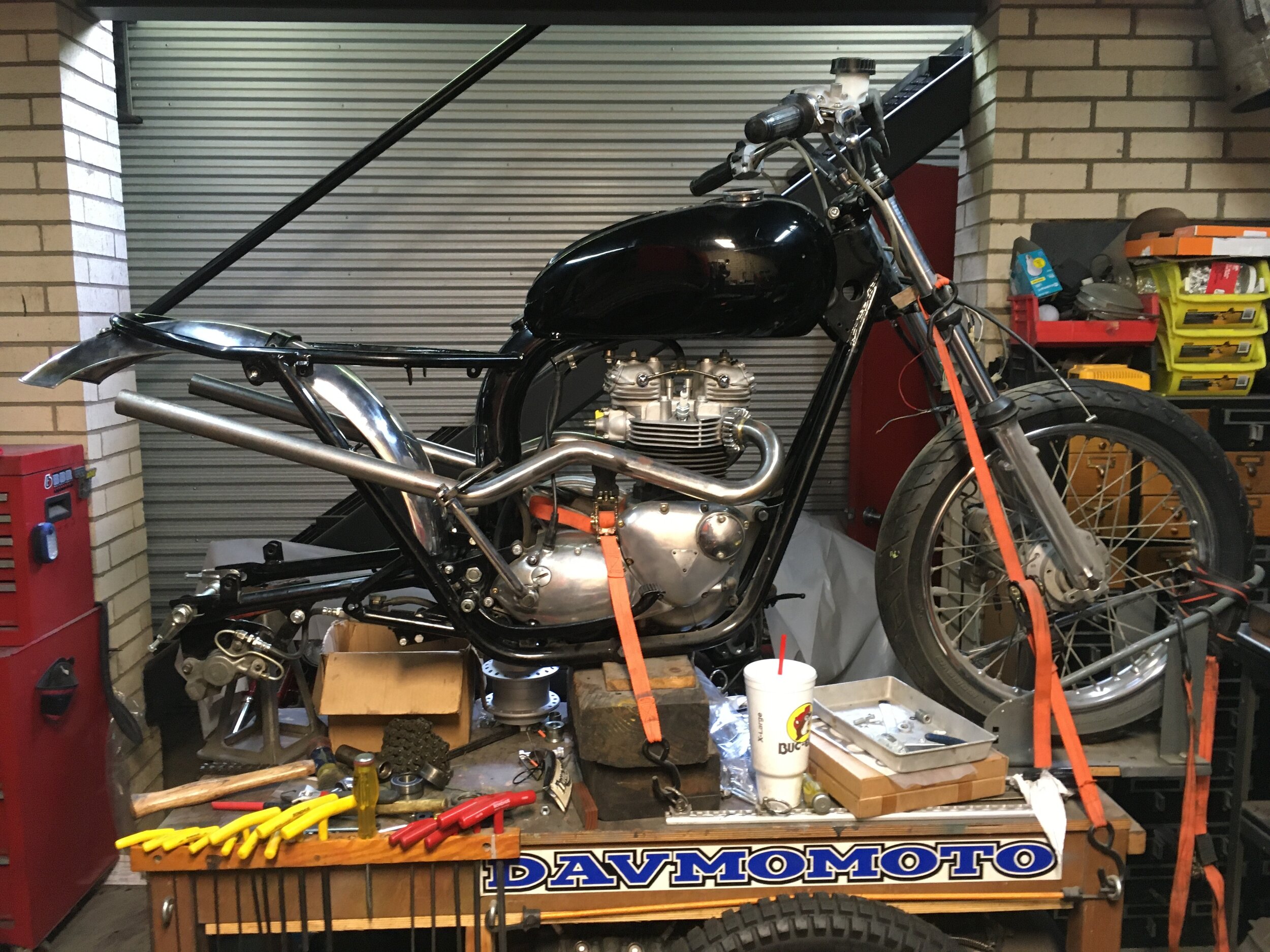
Other projects inching along include this 1978 Triumph T140. Though it is a Bonneville model, a TR7 head was found for this build to make it a single carb set-up. The aluminum rear fender was also recently added as well as the rear brake system, inc…

Other projects inching along include this 1978 Triumph T140. Though it is a Bonneville model, a TR7 head was found for this build to make it a single carb set-up. The aluminum rear fender was also recently added as well as the rear brake system, including a new stainless master cylinder. The front brake system is also complete, only waiting for an impending wheel re-build and new rotors.

Kibblewhite black diamond valves, all new springs, guides, retainers, and keepers along with screw threads on the exhaust spigots to allow T120 pipes to replace the push-in originals. The engine on this bike appears to have been totally re-built, wi…

Kibblewhite black diamond valves, all new springs, guides, retainers, and keepers along with screw threads on the exhaust spigots to allow T120 pipes to replace the push-in originals. The engine on this bike appears to have been totally re-built, with new pistons and valve components, it was a shame to lay aside the perfect twin carb head, but it will find a home on another project.

Built a number of years back, this 1971 SL70 was pulled out recently and gone through for a potential sale. Though the sale did not happen, it was still good to re-connect with the bike and fix some small things it needed to be complete…and the bike…

Built a number of years back, this 1971 SL70 was pulled out recently and gone through for a potential sale. Though the sale did not happen, it was still good to re-connect with the bike and fix some small things it needed to be complete…and the bike is still for sale.

Another one pulled out for a sale that didn’t pan out, this 88cc stunter has a bunch of the cool parts from back in the day. A full BBR suspension and bore-up kit, Yoshimura pipe, Douglas billet wheels, Takegawa rear shock, and added after the pictu…

Another one pulled out for a sale that didn’t pan out, this 88cc stunter has a bunch of the cool parts from back in the day. A full BBR suspension and bore-up kit, Yoshimura pipe, Douglas billet wheels, Takegawa rear shock, and added after the picture, a Fast 50’s left-hand rear brake assembly. The frame is extended 1.5 inches and reinforced. The engine starts easy and runs strong, stronger than most any 88cc kitted engine I have ridden. The guy I got the engine from said he couldn’t remember if it had a stroker crank, but I have doubts about it being a 110cc engine.

My buddy Ben’s K0 CT70 came by for an 88cc and race head upgrade along with some other maintenance.

My buddy Ben’s K0 CT70 came by for an 88cc and race head upgrade along with some other maintenance.

Out riding the Jack Wilson 1967 Triumph Bonneville recently. What a sweet ride!

Out riding the Jack Wilson 1967 Triumph Bonneville recently. What a sweet ride!

The 1974 came back for some maintenance. The new owner is a painter and did it up in this killer electric blue.

The 1974 came back for some maintenance. The new owner is a painter and did it up in this killer electric blue.

A recent purchase for a future build. Pretty trashed, but when most everything gets changed out anyway…

A recent purchase for a future build. Pretty trashed, but when most everything gets changed out anyway…

Norton engine and tranny getting torn down prior to rebuilding. The head went out to Fair Spares in California to get the exhaust spigots re-threaded and a valve job. Cylinders will get bored, the crank appears to have been re-built and is in excell…

Norton engine and tranny getting torn down prior to rebuilding. The head went out to Fair Spares in California to get the exhaust spigots re-threaded and a valve job. Cylinders will get bored, the crank appears to have been re-built and is in excellent shape.

Fresh Cadmium plate on all the hardware for the Commando.

Fresh Cadmium plate on all the hardware for the Commando.

The 1974 Norton Commando Cafe build right before tear-down.

The 1974 Norton Commando Cafe build right before tear-down.