Back from the Denton Texas Burnouts Custom Motorcycle Show.

The last three years, the Burnouts Custom Motorcycle show has been a big hit here in Denton. Its held at Dan’s Silverleaf, a Denton institution, and on the closed-off street behind the club. There are a ton of choppers, events like the kick-start contest, live music, and vendors. I was asked to bring some minibikes to adorn the inside of the club, which was where the art show was held. The opportunity was a chance to dust off some older creations, along with a couple newer ones, and connect with friends, old and new.
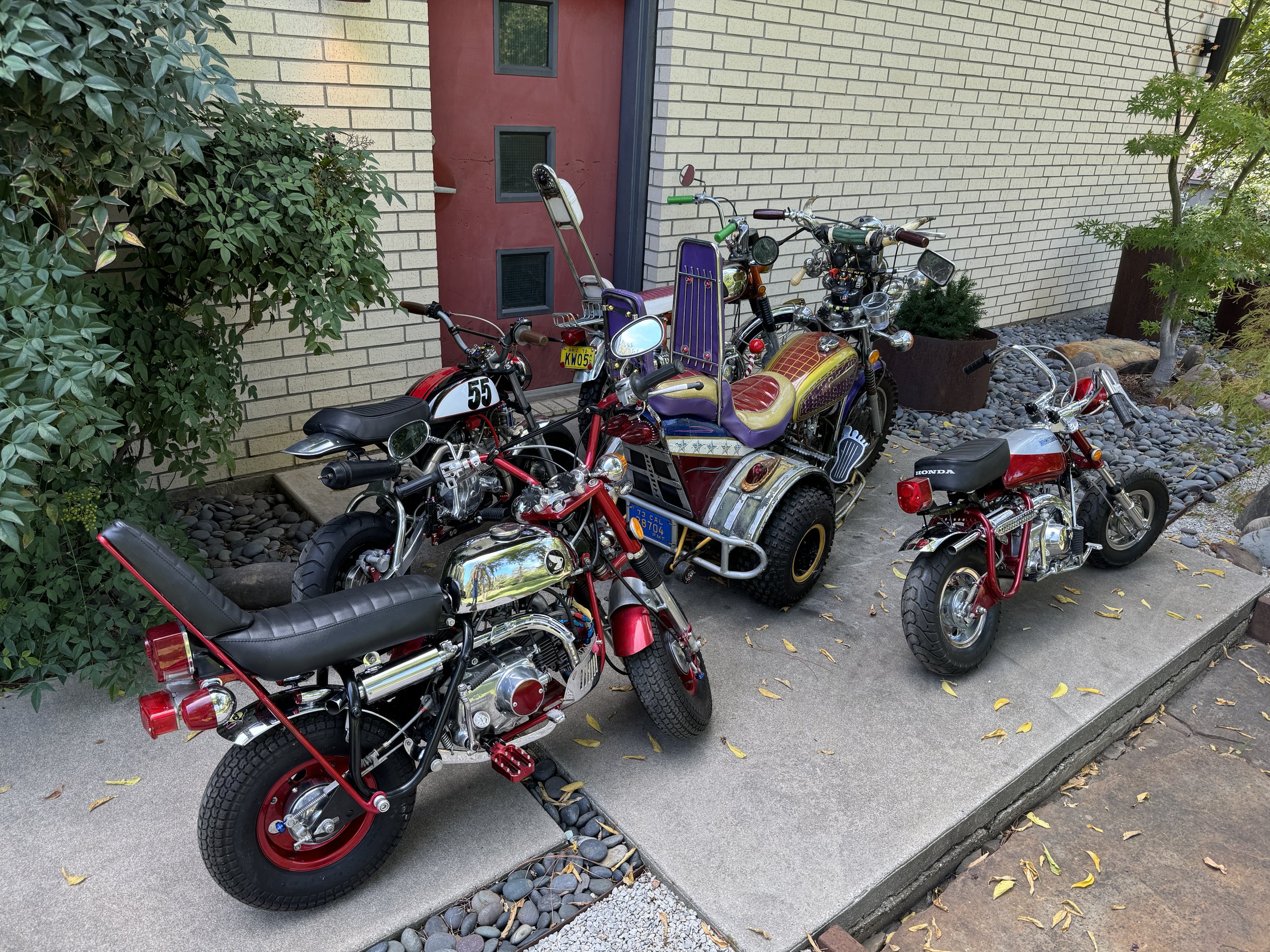
Here is the crew upon return from the show. The oldest of the bunch is the Scorpion bike in the foreground, originally put together in 2005.

Since it is a chopper show, I picked out bikes I thought would fit the theme. The 1969 Honda Z50 Chopper on the far left is the closest thing to a chopper in the shop, but long handlebars, seats and sissy bars on three others fit the look.
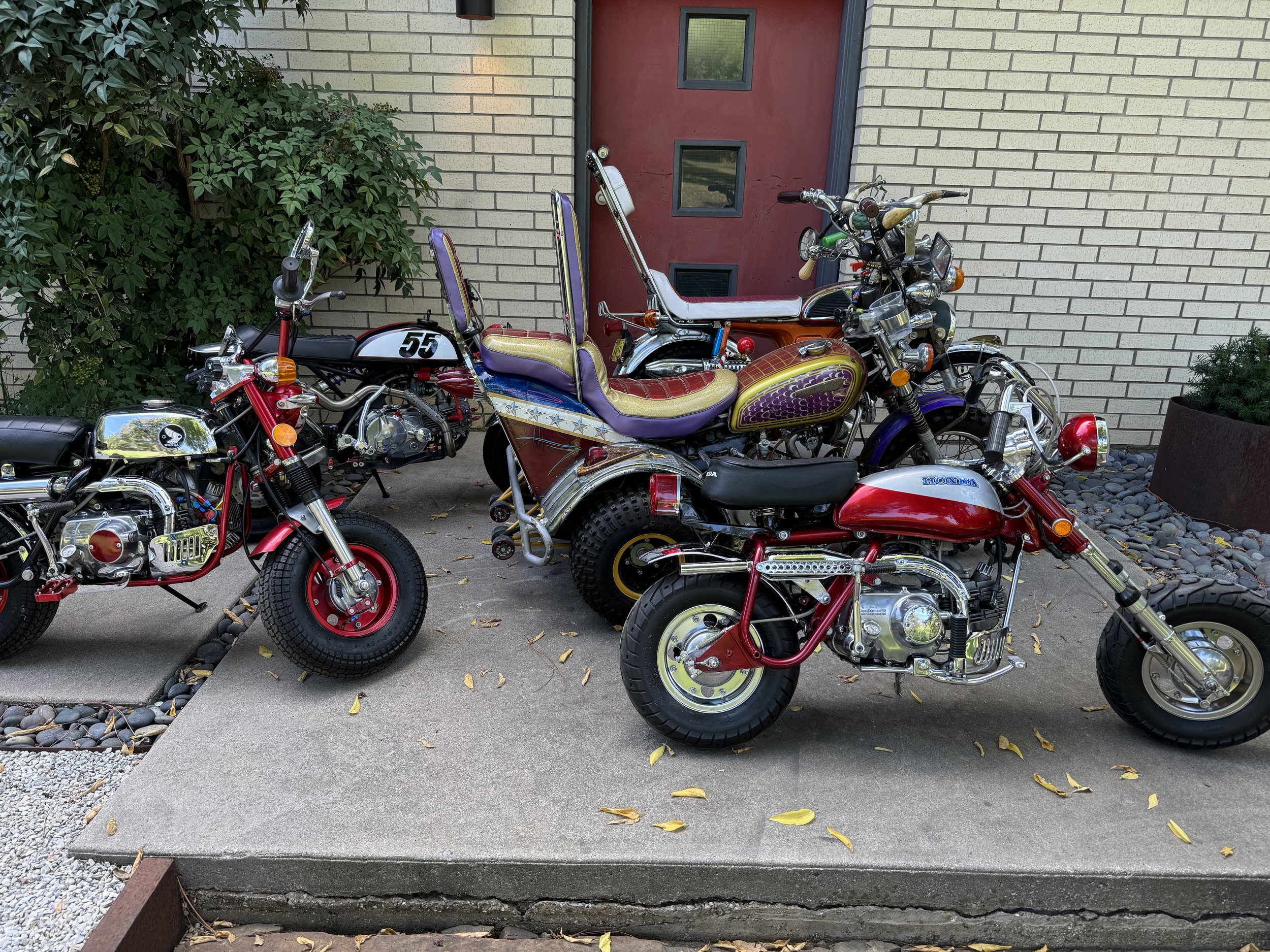
Fall color collection.

Laquita finally had a little shine put on her. During building, one of the guidelines was to not do any polishing. The exhaust and rear turn signal assembly were found used, and were not even cleaned before they were put on. For the show, I finally decided to hand polish the chrome, Even polished up, there is still enough patina present to keep the spirit of the bike.
She always has that look like she's headed somewhere...
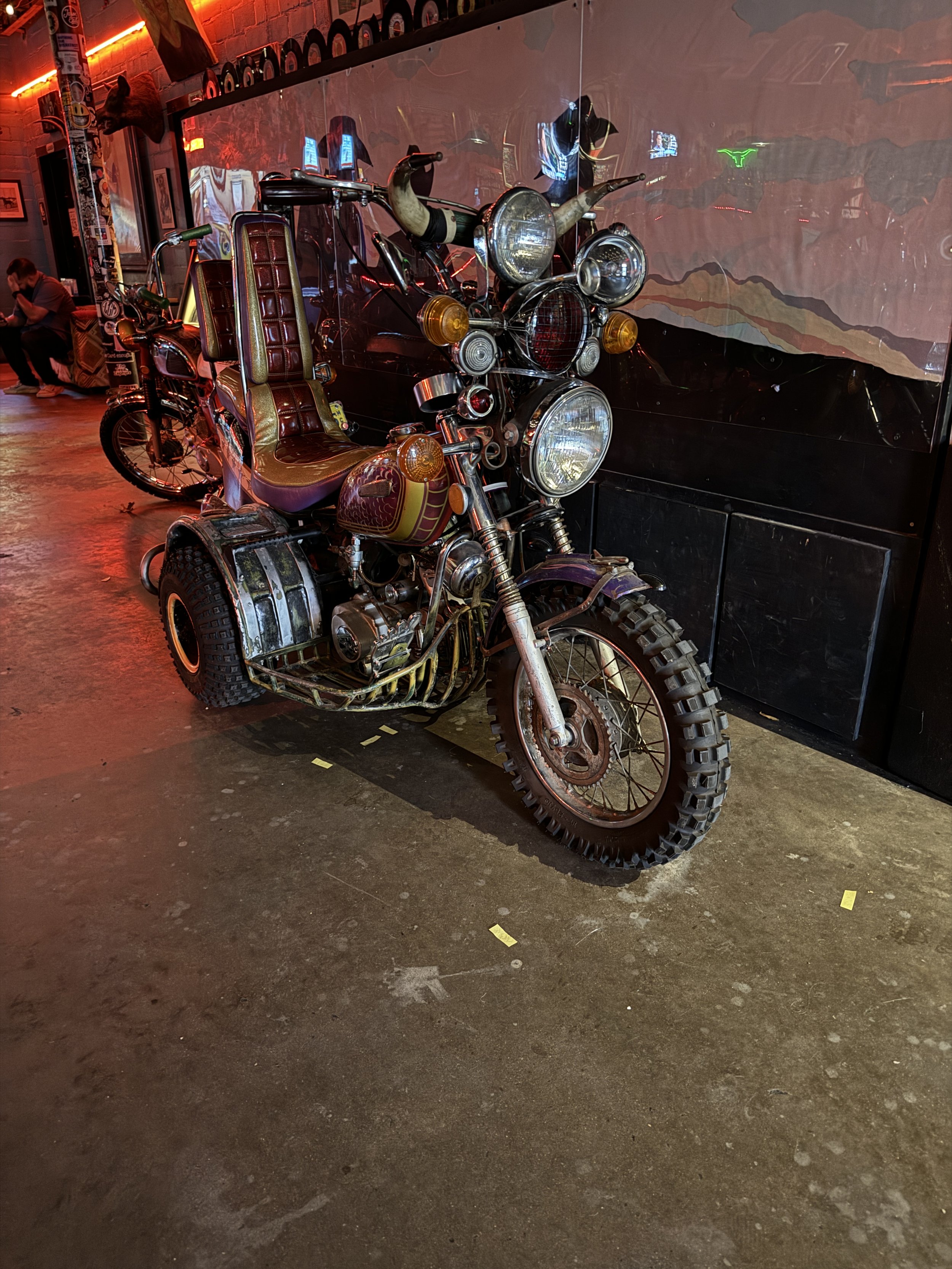
The trike and Flaquita in the club were one of three pictures I took the entire day. Guess its a good show when you are too busy to pull out the camera. The Tijuana Trike was a late entry for the show line-up. Originally thinking four bikes were enough and the trike might be too much, the space said otherwise, and the trike was brought along.

Not to be mistaken for a chopper, but the CRFU50, built in 2015 is full custom all the same.
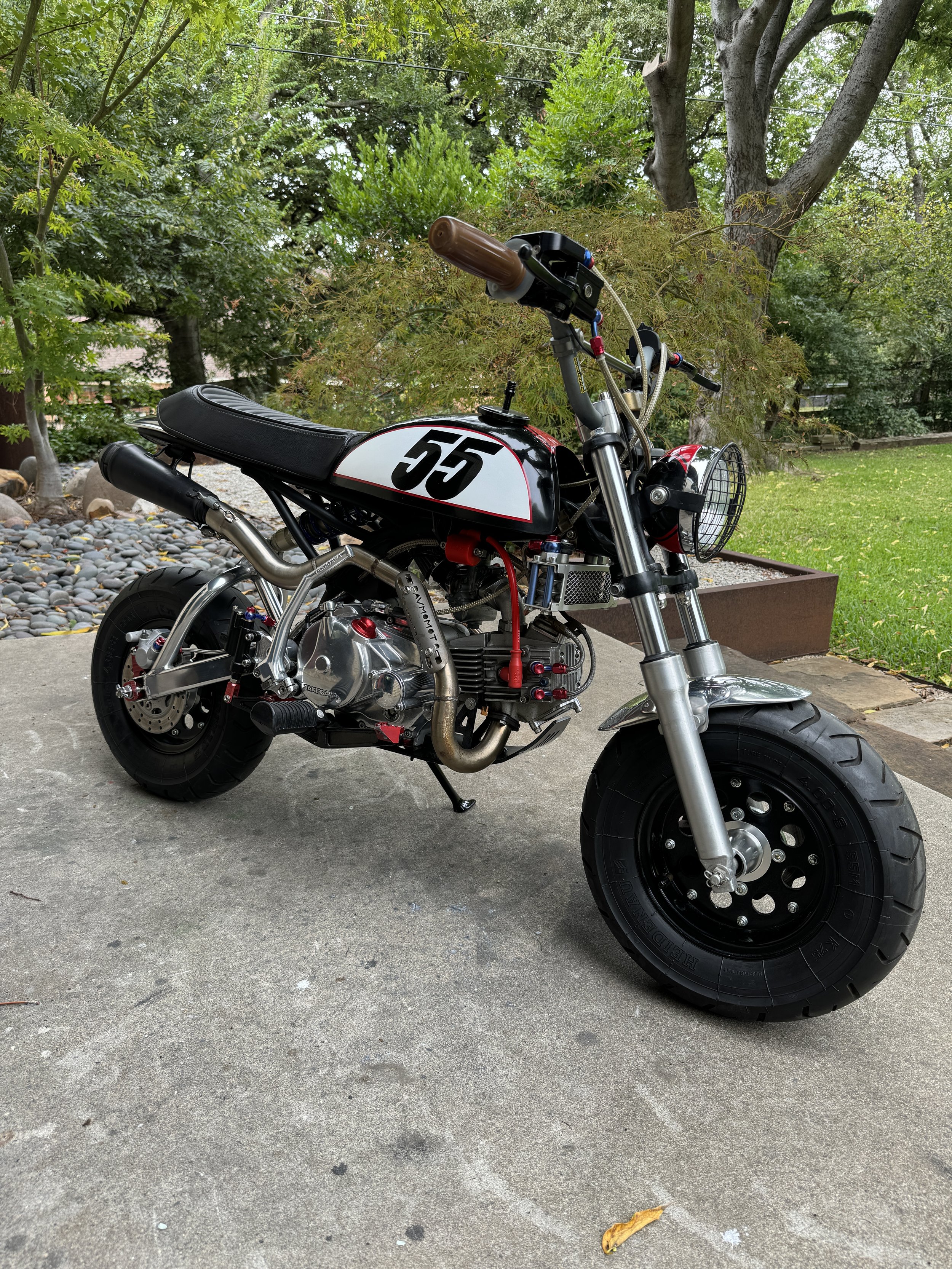
The Takegawa Special clutch, rolling rocker head, stroker crank, and close ratio gearbox are just a few of features on this 110cc racer. Seeing the rest of the polished chrome makes me think its time to polish these or get another set (the front could use an inch of lift, in my opinion.)
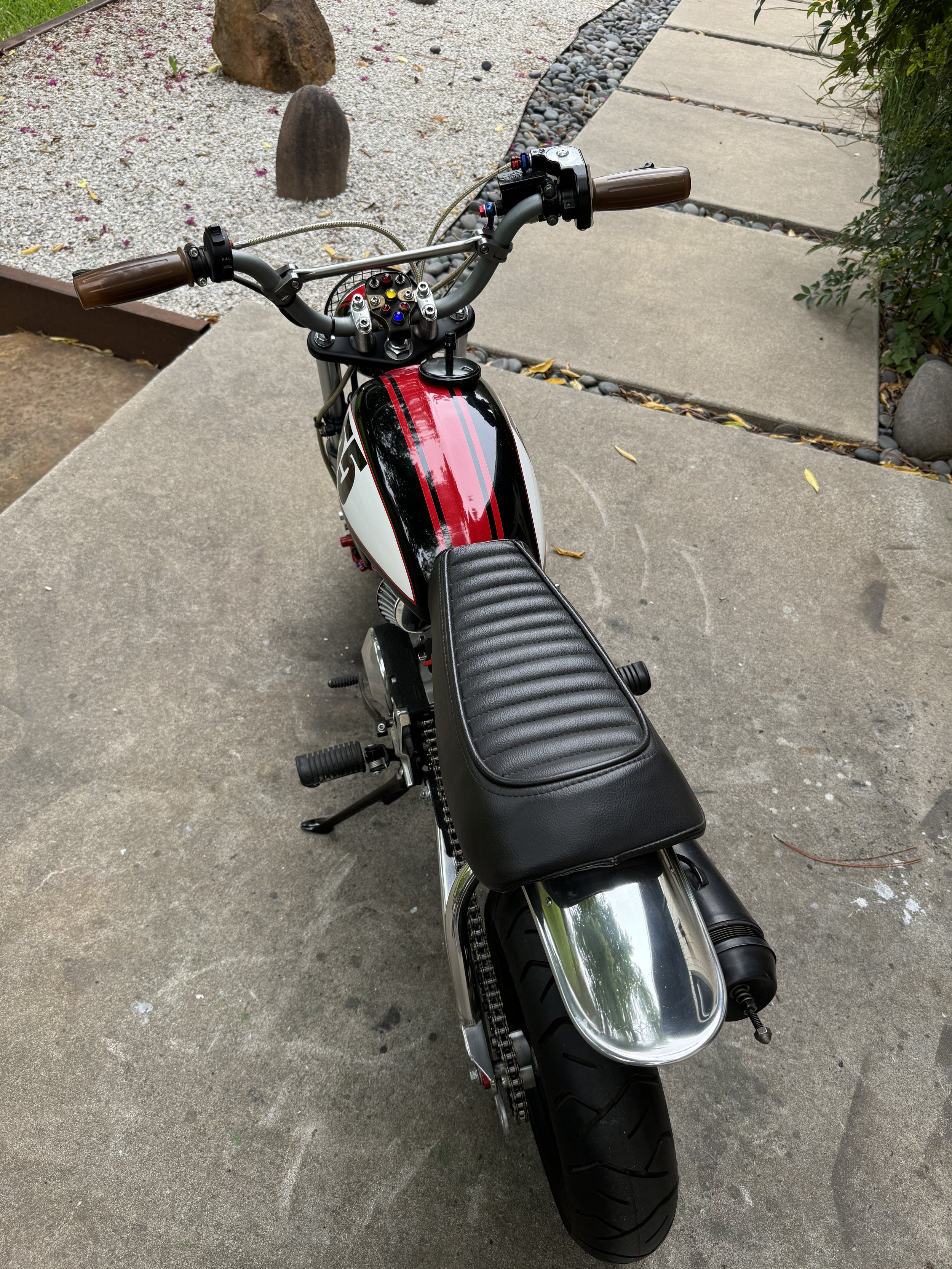
Always a favorite color scheme, black, white and red can’t be beat.
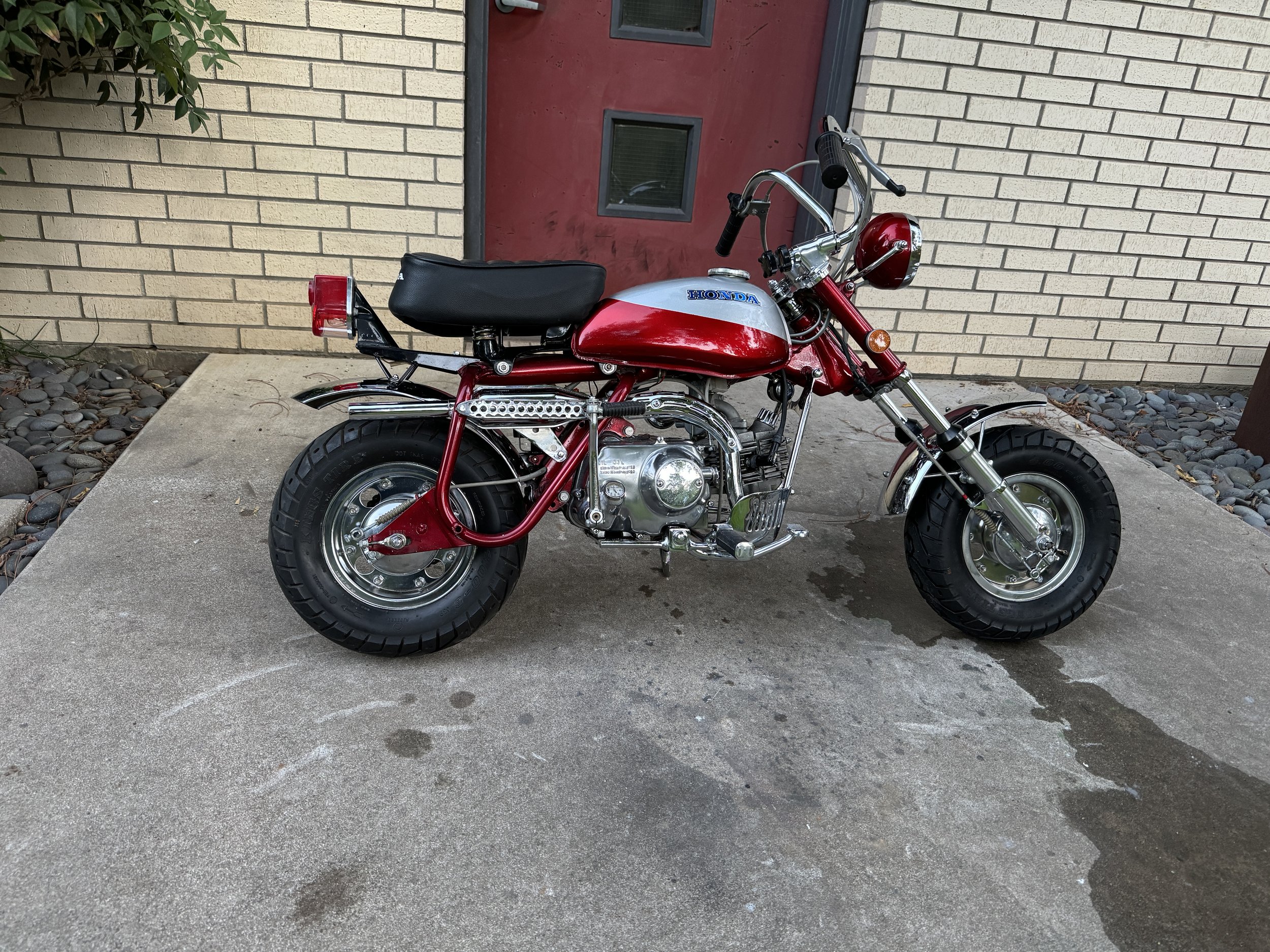
Built in 2006-2007, the 1969 Honda Z50A chopper was one of the earliest full custom bikes I did. Previous customs had hand made parts, but the frames and forks were left largely stock. This bike was made to resemble the original 1969 livery, with similar paint, wheels, fenders, handlebars, and exhaust. Even the seat is a smaller version of the originals (with seat springs to take away some of the hardtail harshness.) For the show, the bike was relieved of more than a little dust, and the front fender removed. Just thought it looked better that way.
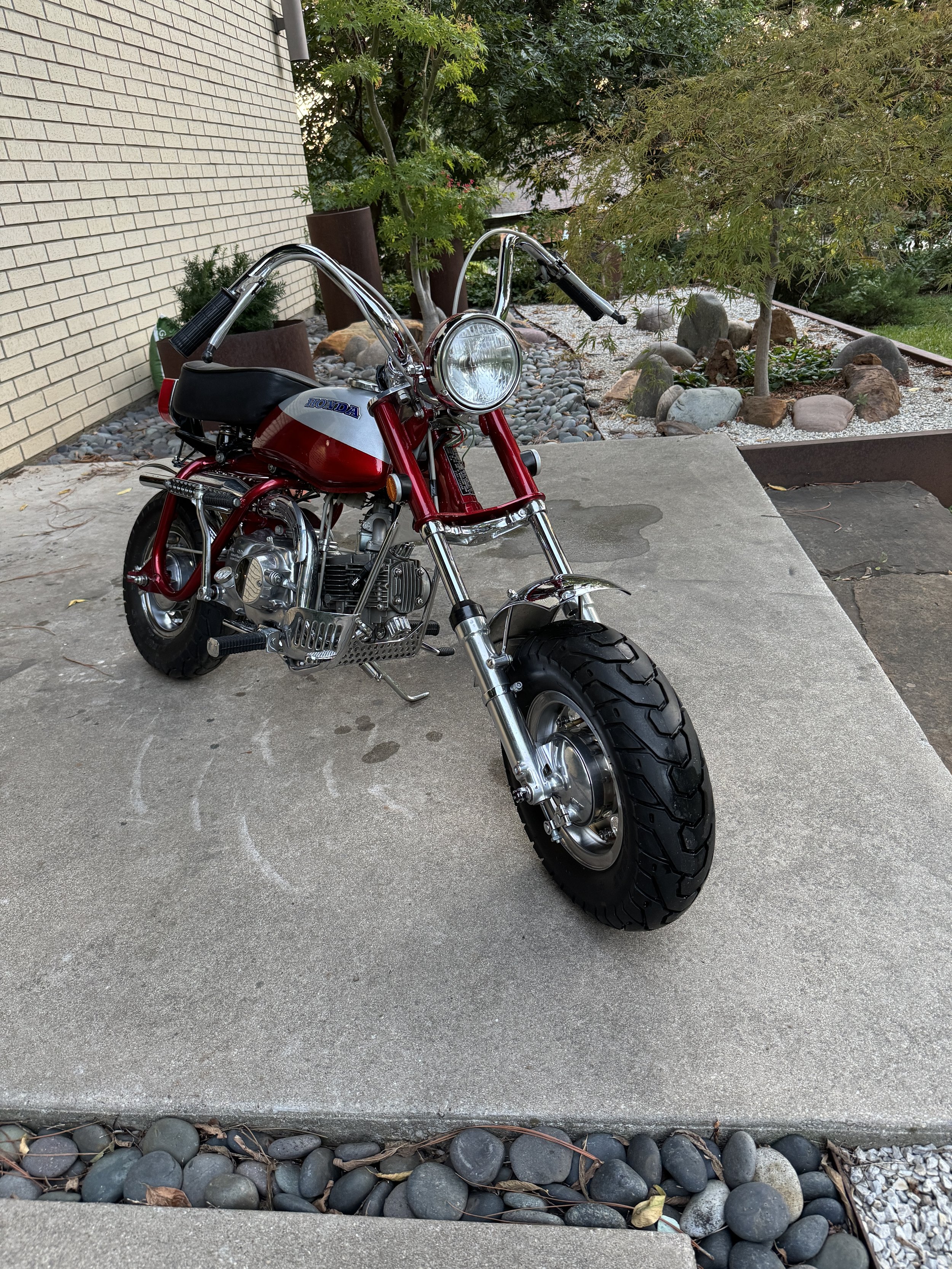
After a good cleaning.
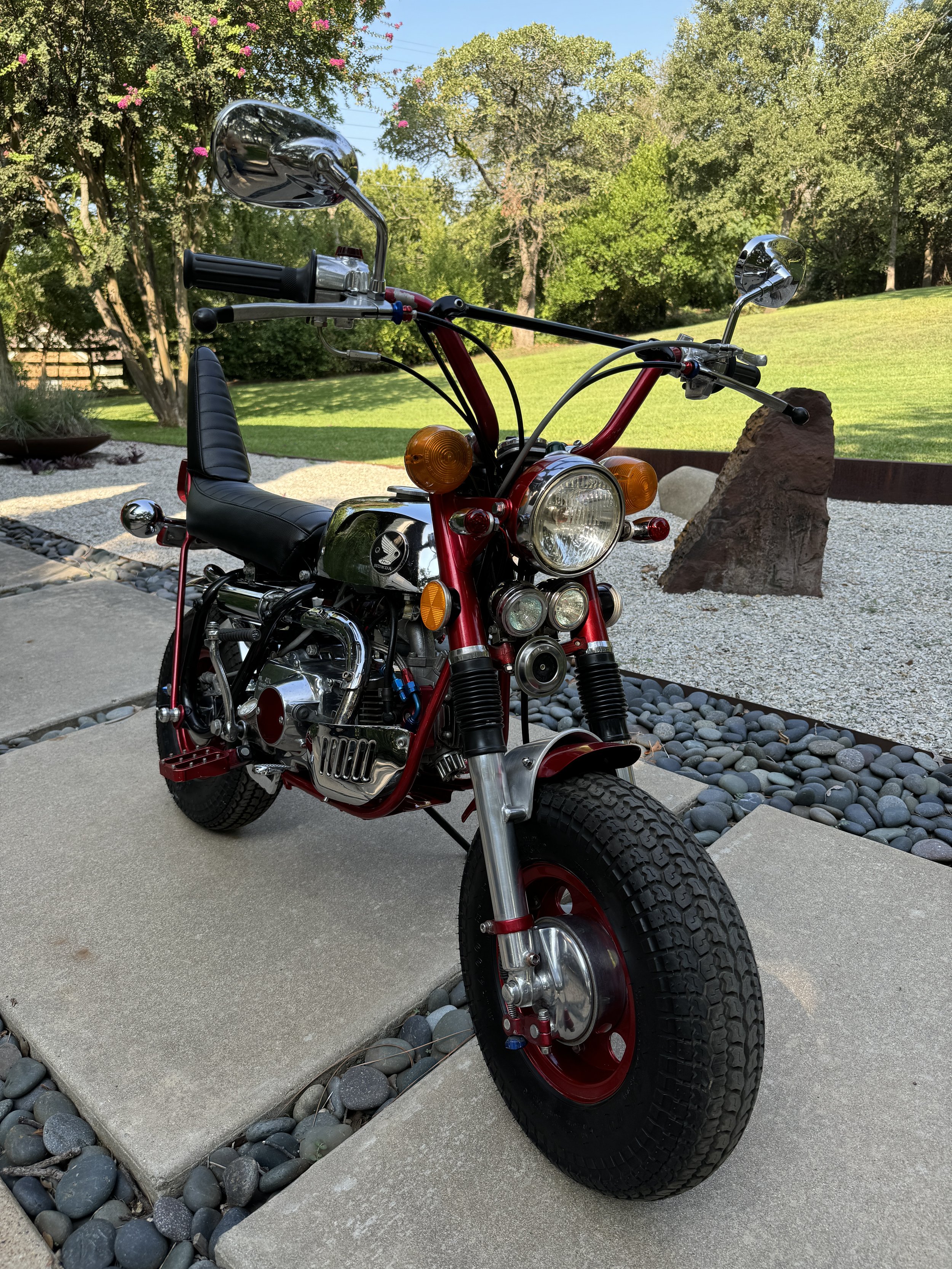
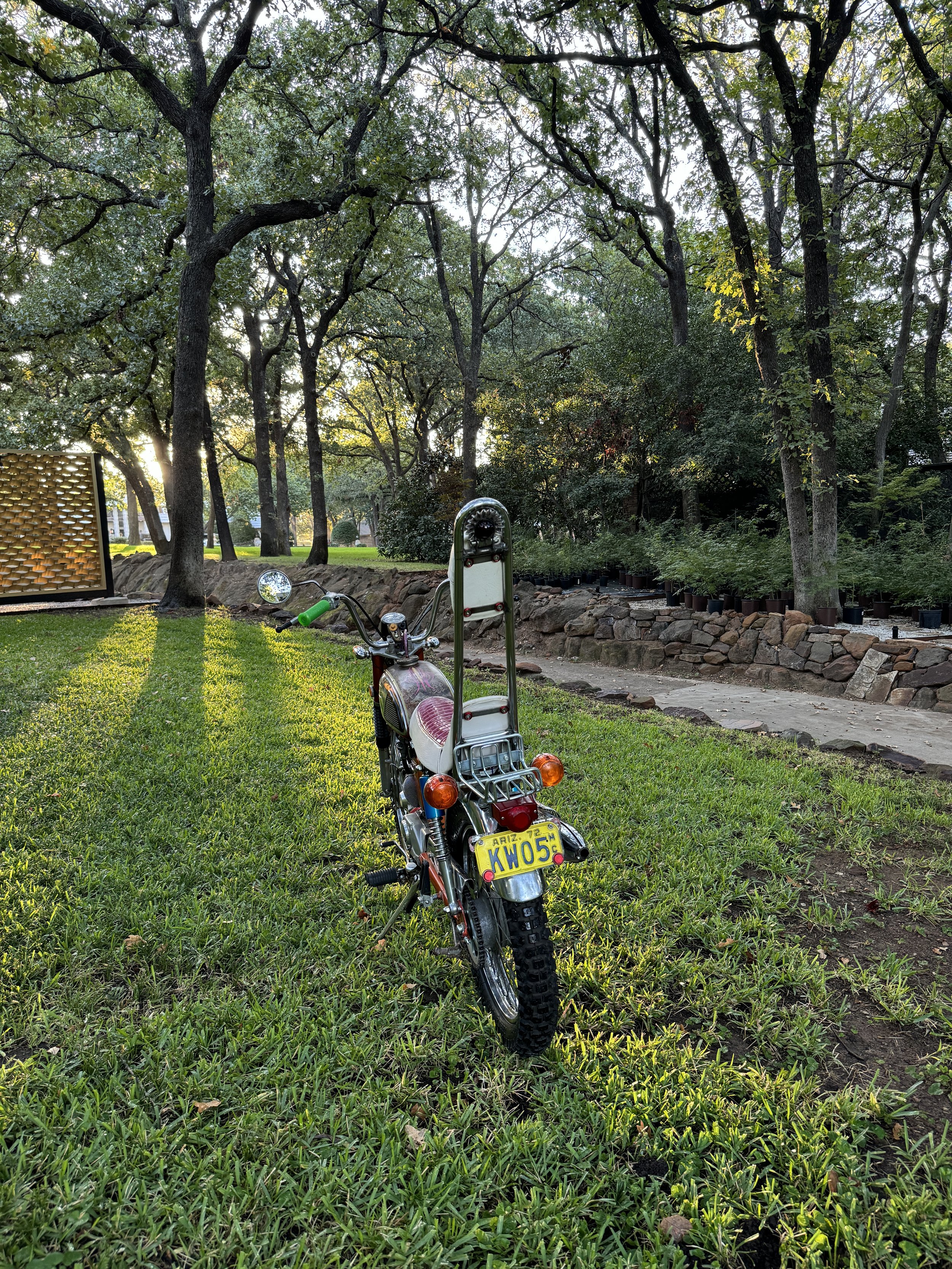
Th El Scorpion bike was stripped of some parade gear and a shameful amount of dust. This ride has seen hundreds of parade miles with The World Famous Wheelie-ing Elvi, but has sat dormant while other bikes (and the trike) have taken its place.
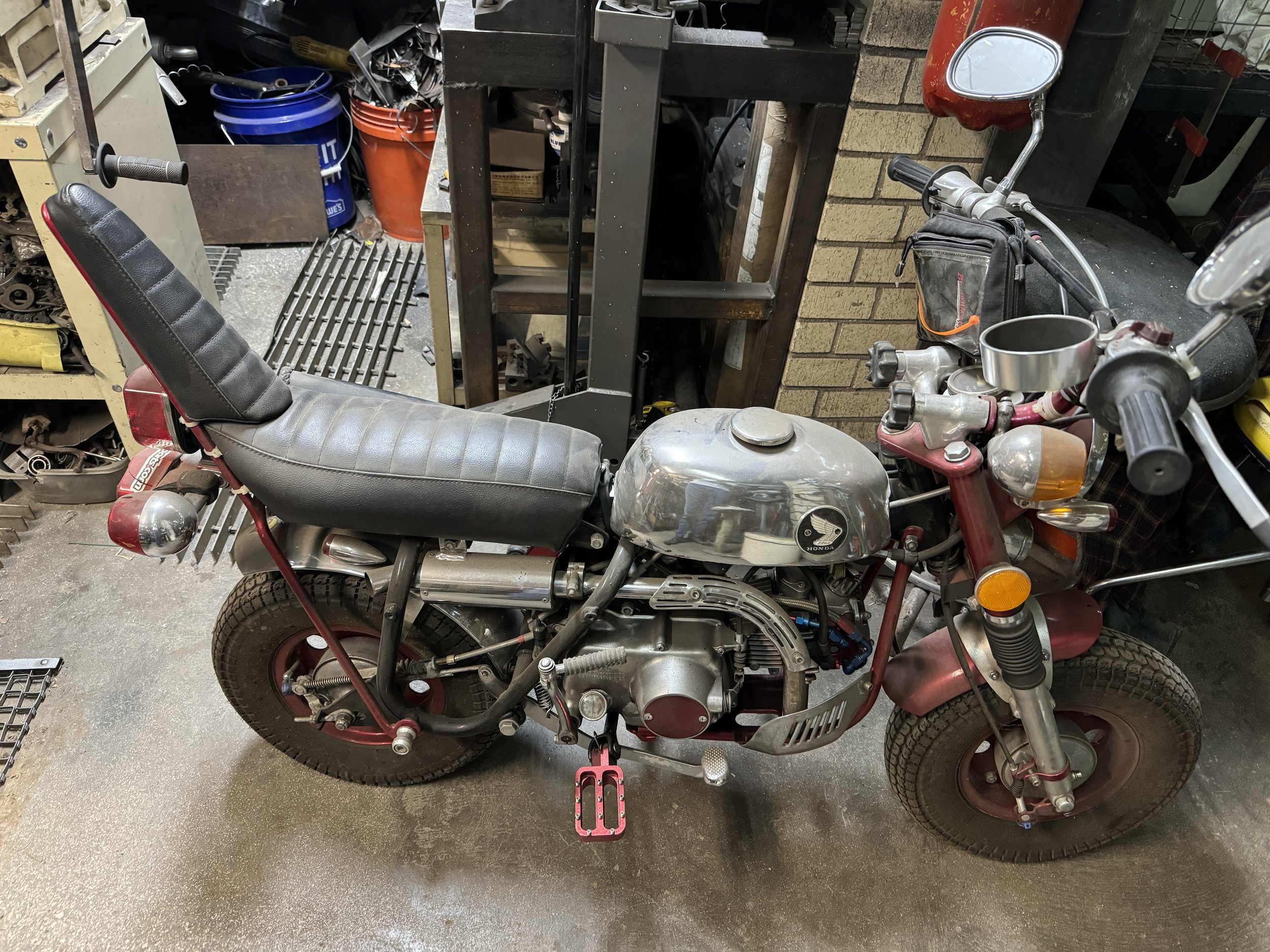
The before, with cup holder, handlebar pouch, and an unseen saddle bag on the left side of the bike, and a thick layer of dust.
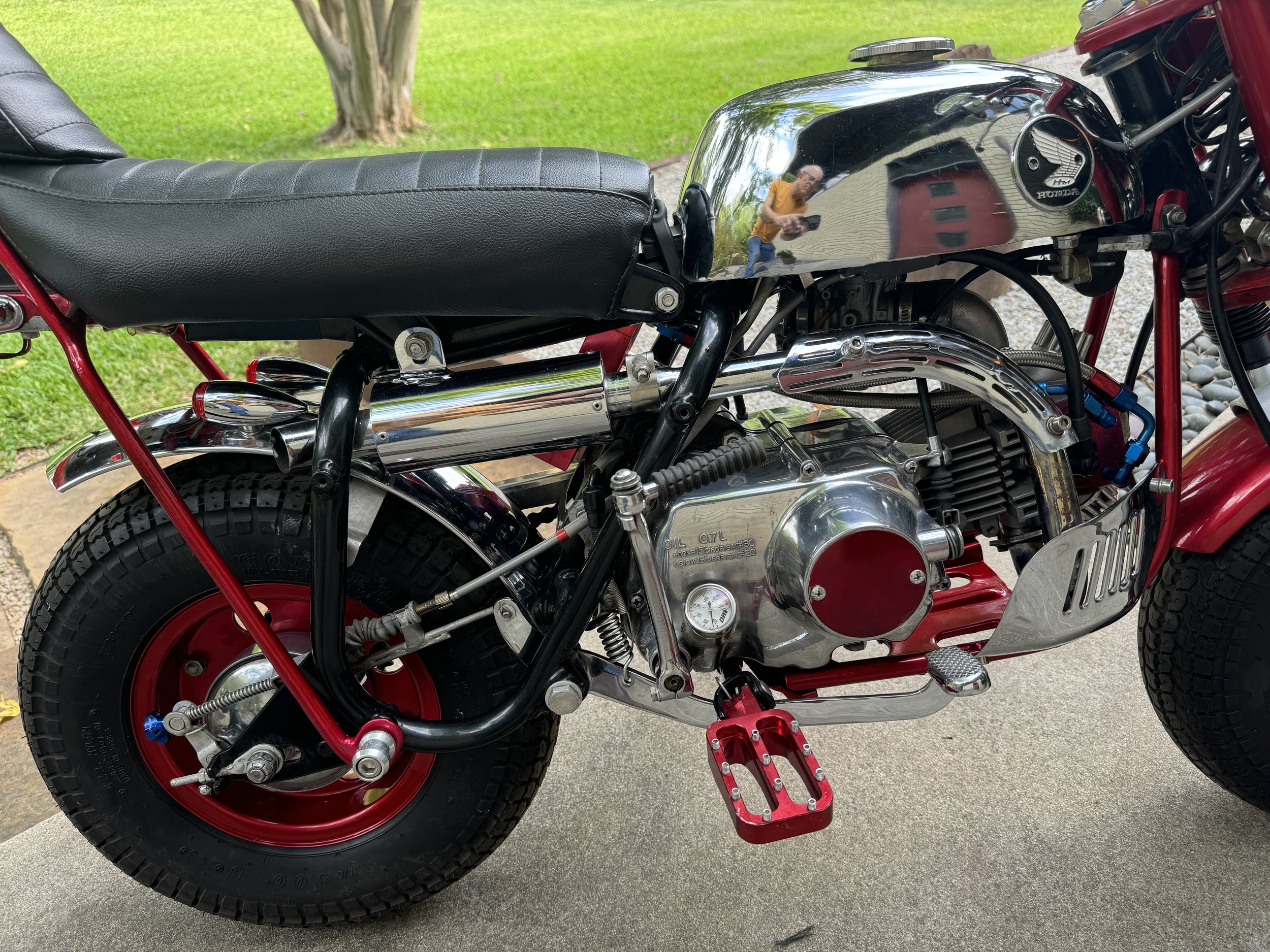
Getting the chrome and aluminum polished out brought this girl back to life!
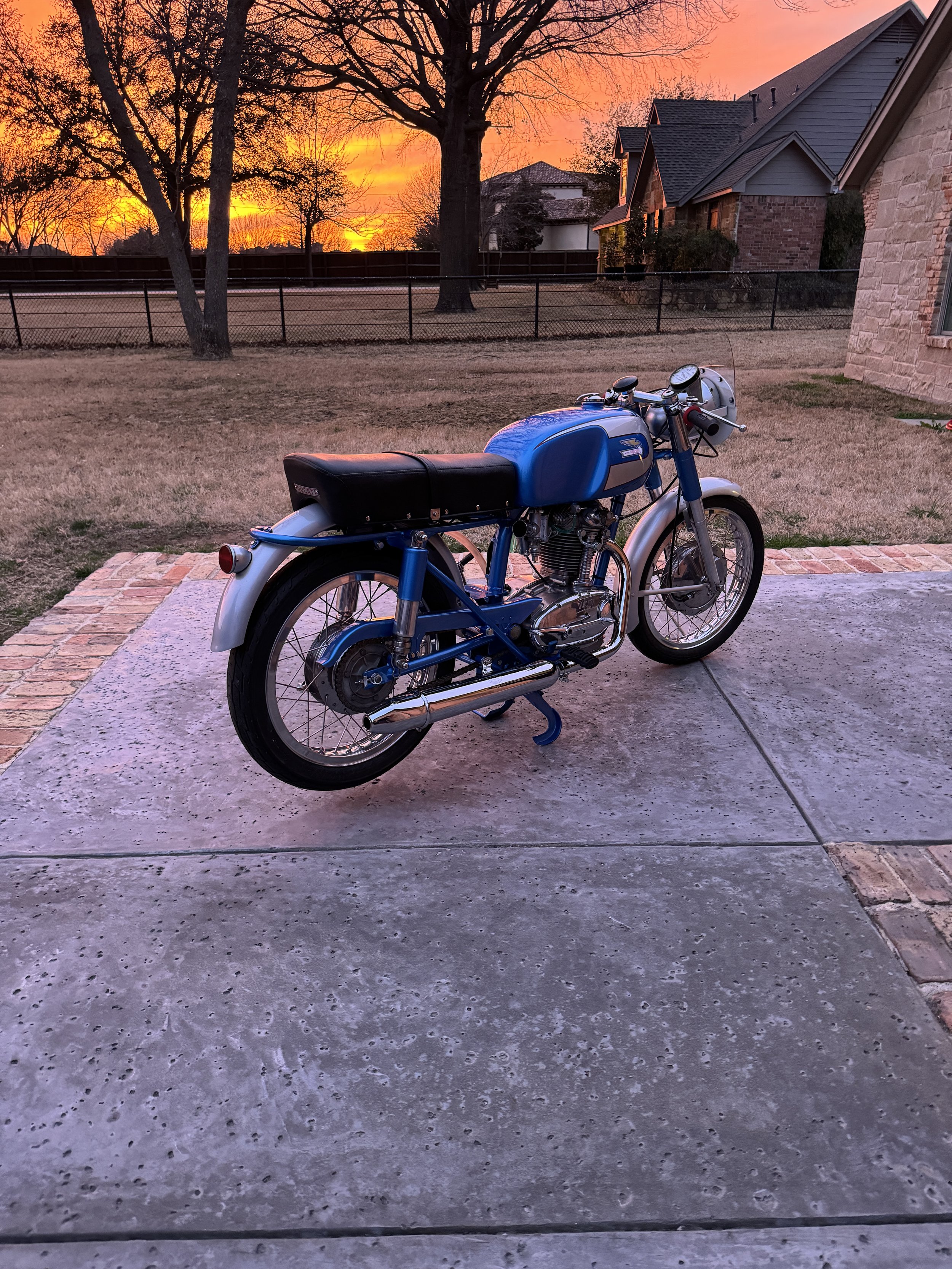
1963 Ducati Diana 250 Mark III completion

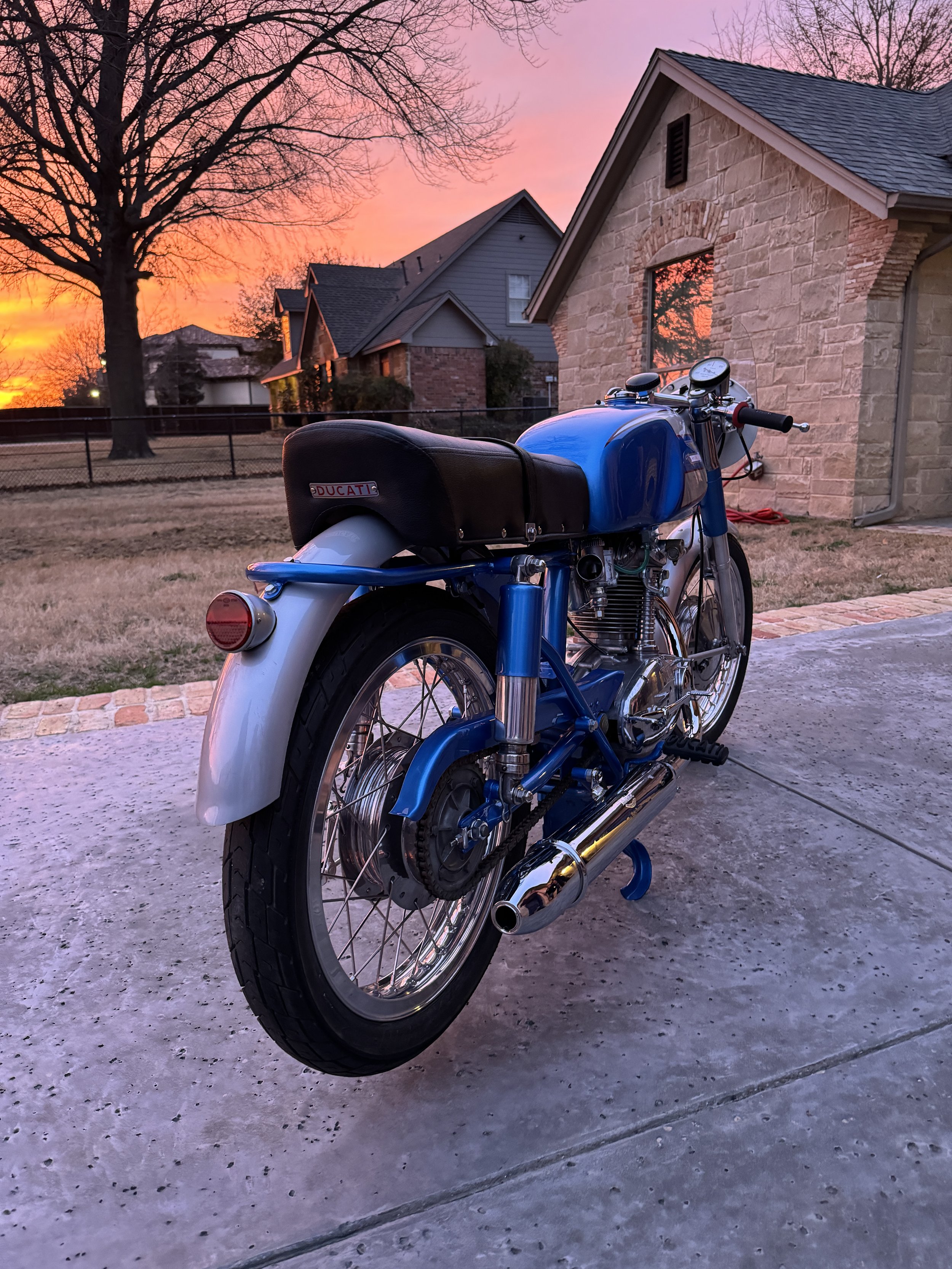
A 1963 (1964?) Ducati Diana Mark III 250 came through the shop a while back. It was partially restored, and needed to have the last bit of the job done. The bike was owned at one point by Jason Small, who also painted it. During the research and restoration, some of the information suggested it was a Mark III model, a US version imported by Berliner with a competition set-up. With that in mind, it was modeled as closely to the specs of the original, with the exception of the muffler.

Classic Ducati styling from a great era of motorcycle styling and building. Touted as a ready to race factory model, The Mark III was stripped down, and fitted with performance parts. A larger competition type Dell Orto carb and velocity stack, twin tank petcock feeds, free flowing exhaust,  and other mods produced a reported 30 horsepower from the 250cc engine! The competition tachometer, clip-on handlebars, passenger peg delete, and battery-less ignition rounded out the package. Items found on other Diana models like side covers, air, tool, and battery boxes were also stripped off to save weight.

Even the tail light was kept small to minimize weight, but still satisfy racing categories that require stock unmodified bikes.

The front number plate/windscreen showed up in the Berliner advertisements, but it is unclear if this was a factory part. This one was made from aluminum and Lexan, and modeled from the Berliner brochure images.

The bike as I found it. Paint had been done, but a bunch of parts were missing, and the everything needed cleaning and detailing.

The engine was loosely bolted in, and in need of some work, but was said to be in running condition prior to tear-down.

After replacing and re-plating hardware, some cleaning and polishing and a bunch of new parts, the beauty of this Ducati design shines through.

A badly worn seat came with the bike, but did not fit properly, and did not resemble the original seat. 

While similar to the Mark III seat, the front mounting bracket needed modification to fit with the tank and frame. The seat had been re-covered at some point, and a number of extra holes drilled into the side bars of the seat frame, to mount rivets.

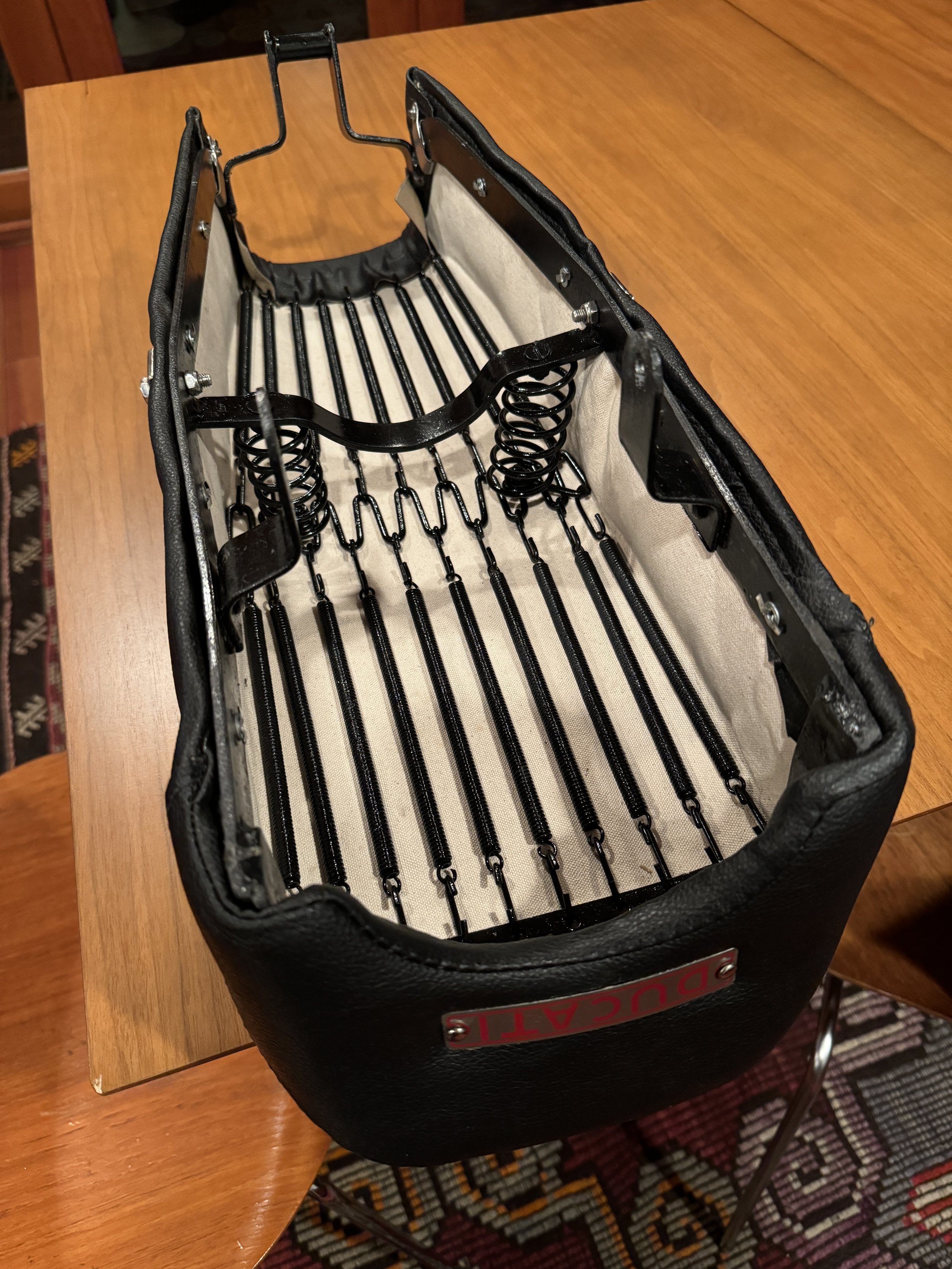
The design of the original seat is unusual in that it has a thin layer of foam sewed into the seat cover, and laid over a spring frame. The original foam was falling to pieces, so a duplicate was made from high density close cell foam. In this picture, the seat assembly was getting ready to go to the upholstery shop ( Xtreme Upholstery in Denton, TX,) where the seat cover was made and sewed through the foam. The other detail that had to be worked out was the pointed tail of the seat. Since there was no original seat to model from, it was based on pictures from brochures and other bikes. A close-cell foam form was made and placed at the rear, but the fact that the rear panel on the seat is not supported by any frame at the bottom, it floats somewhat, and was difficult to support. I was very happy with the final result.

After the seat frame was modified, the holes were welded up on the side rails, and it was painted. Andy at Xtreme Upholstery did a phenomenal job on the cover, even adding the canvas underside. I added the special front mounting tabs, seat strap and badge, and the mounting side rivets to finish it off.

On display at its final destination.

A failed tank liner was stripped from the tank, and it was re-lined with POR-15

A photo prior to the front number plate and correct hand grips being placed on the bike.

The beautiful Dell Orto SS1 27mm carb and velocity stack. Everything was polite, re-plated, and missing parts replaced.

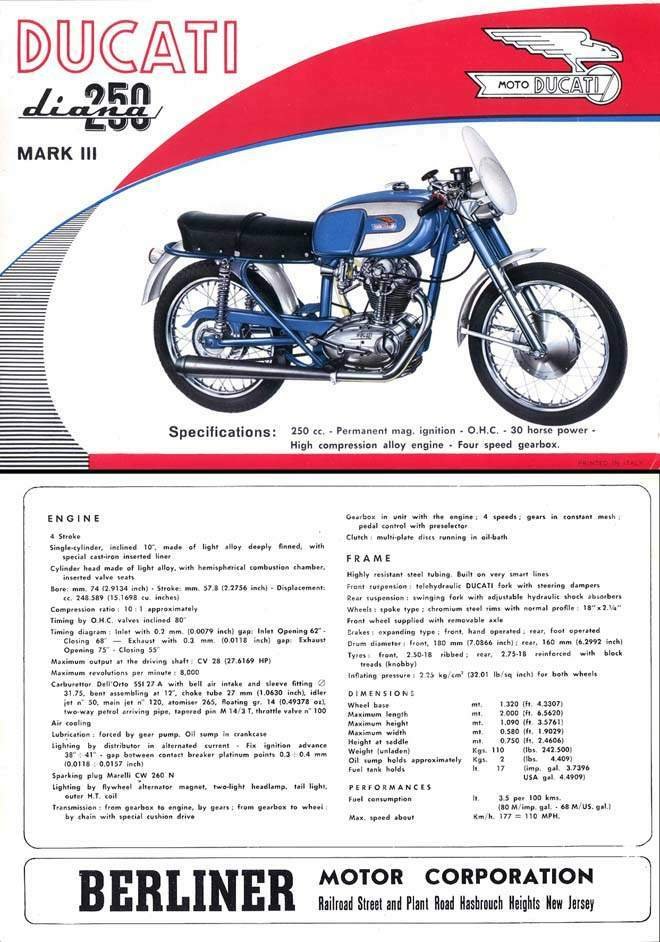
The original Berliner spec sheet. The five-speed gearbox on this bike suggests it could be a 1964 model, as the four speed was a four-speed. The serial number, however, suggest a late 1963.

The speedo is from another model, and only goes to 80MPH. The original one is hard to find, and goes up to 110MPH. Once again, the Ducati styling of this era was just classically beautiful.

Finishing the 1974 Honda CT70 Dax "Dino" custom.

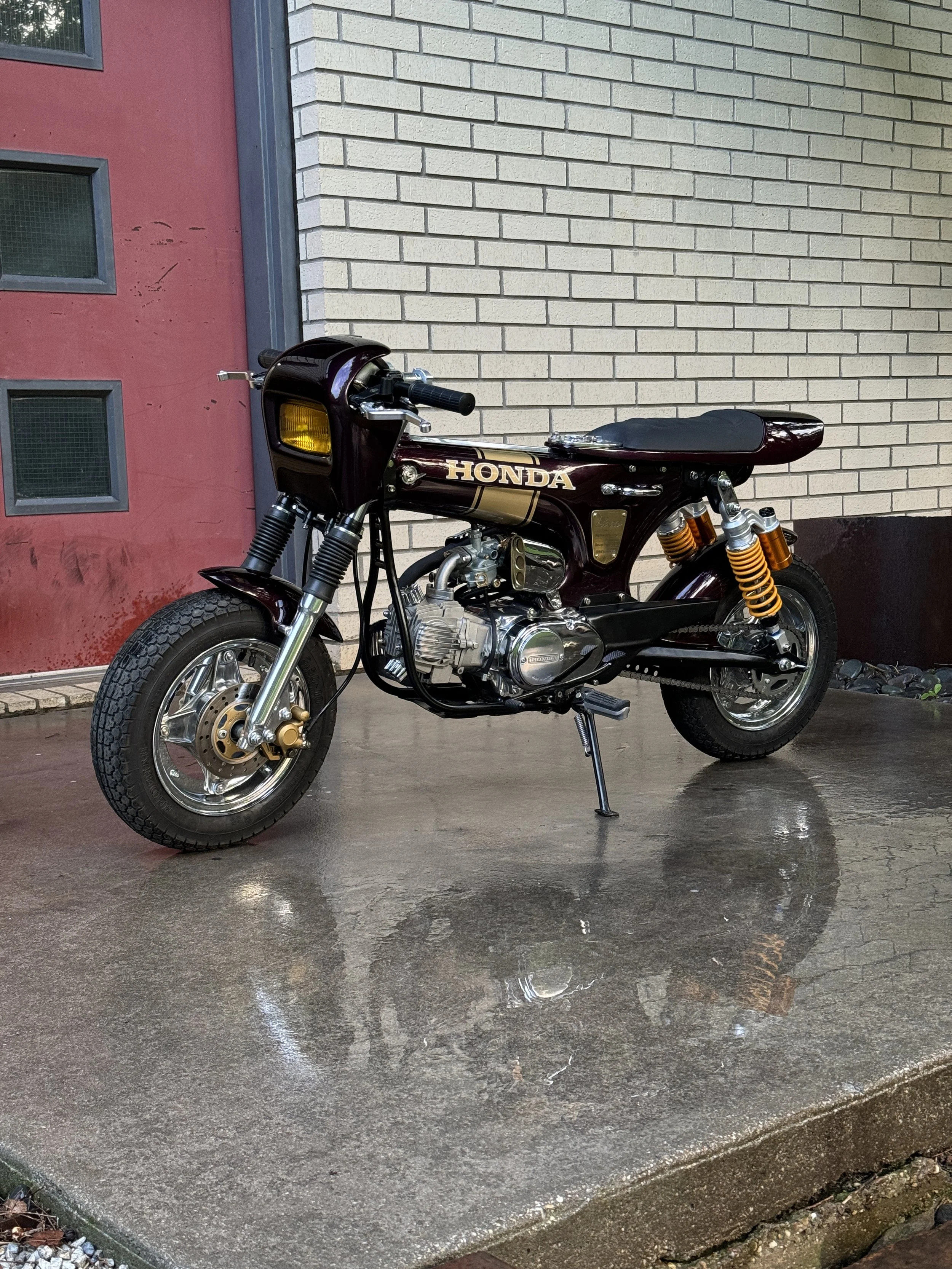
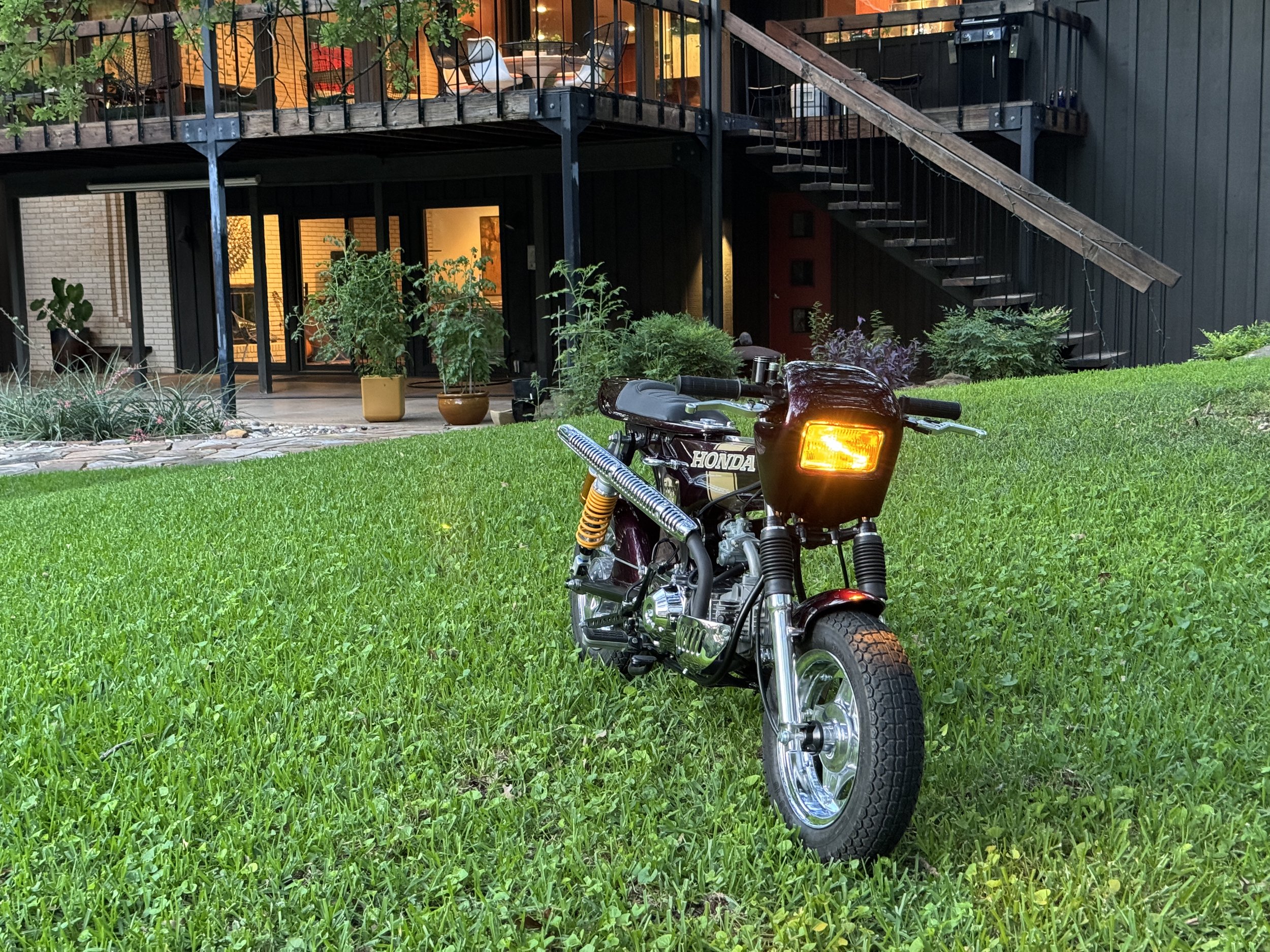
She’s a runner! The first few miles have been logged to test the brakes, steering and suspension, and everything feels right. The bike starts easy, idles well, and runs strong. There was a great deal of difficulty getting the engine to start initially, but once figured, it has run like a champ. The bike color looks black in the overcast sky we had for the pictures.

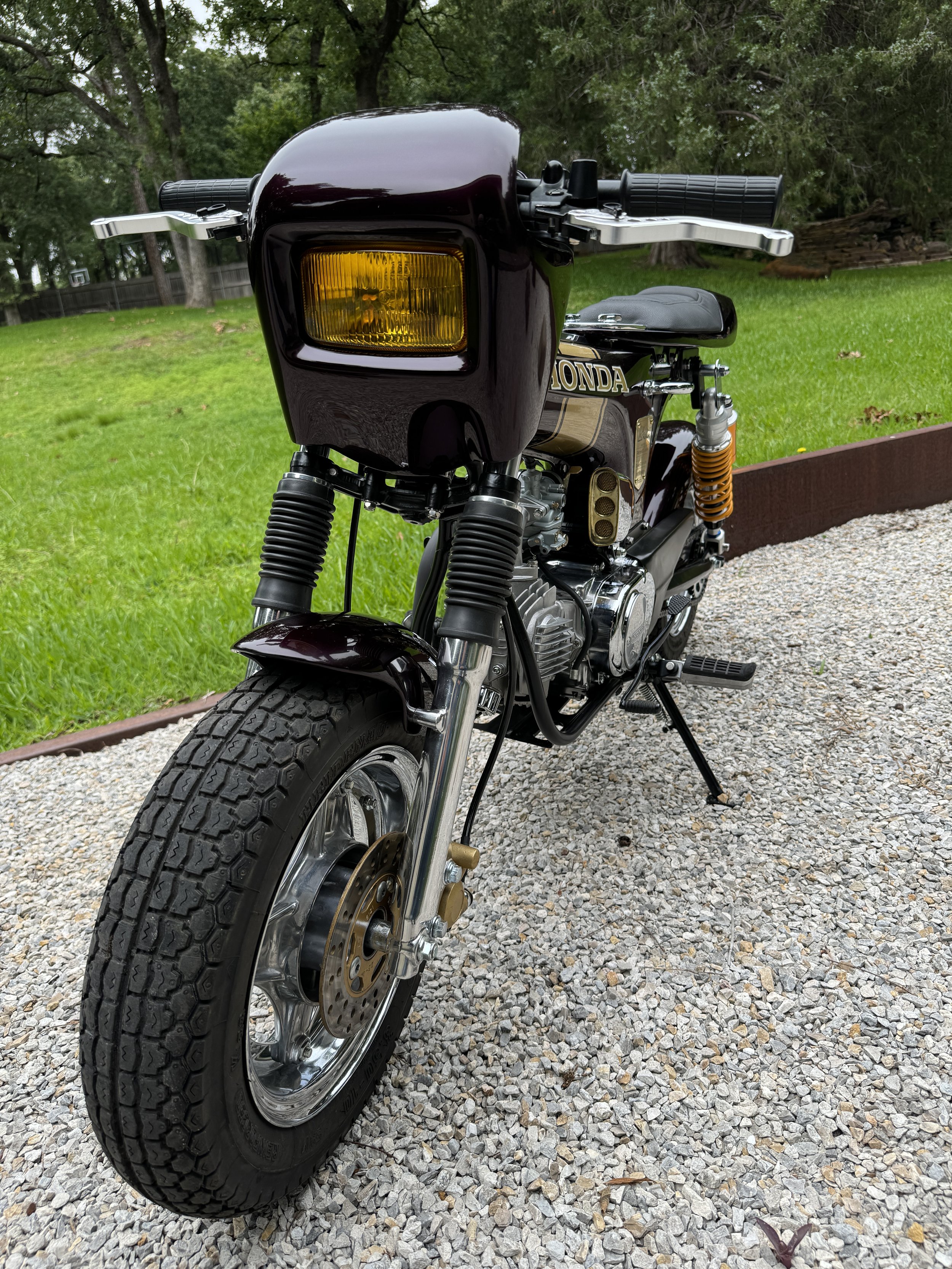
All systems are go…and stop. The front disc brake grabs nicely, and the left hand brake for the rear works well with the pedal. The brake light is hooked to all three actuators. The amber headlight and tail light are turned on with the key switch in the third position, and engine is running. The bike idled patiently while the picture were taken.

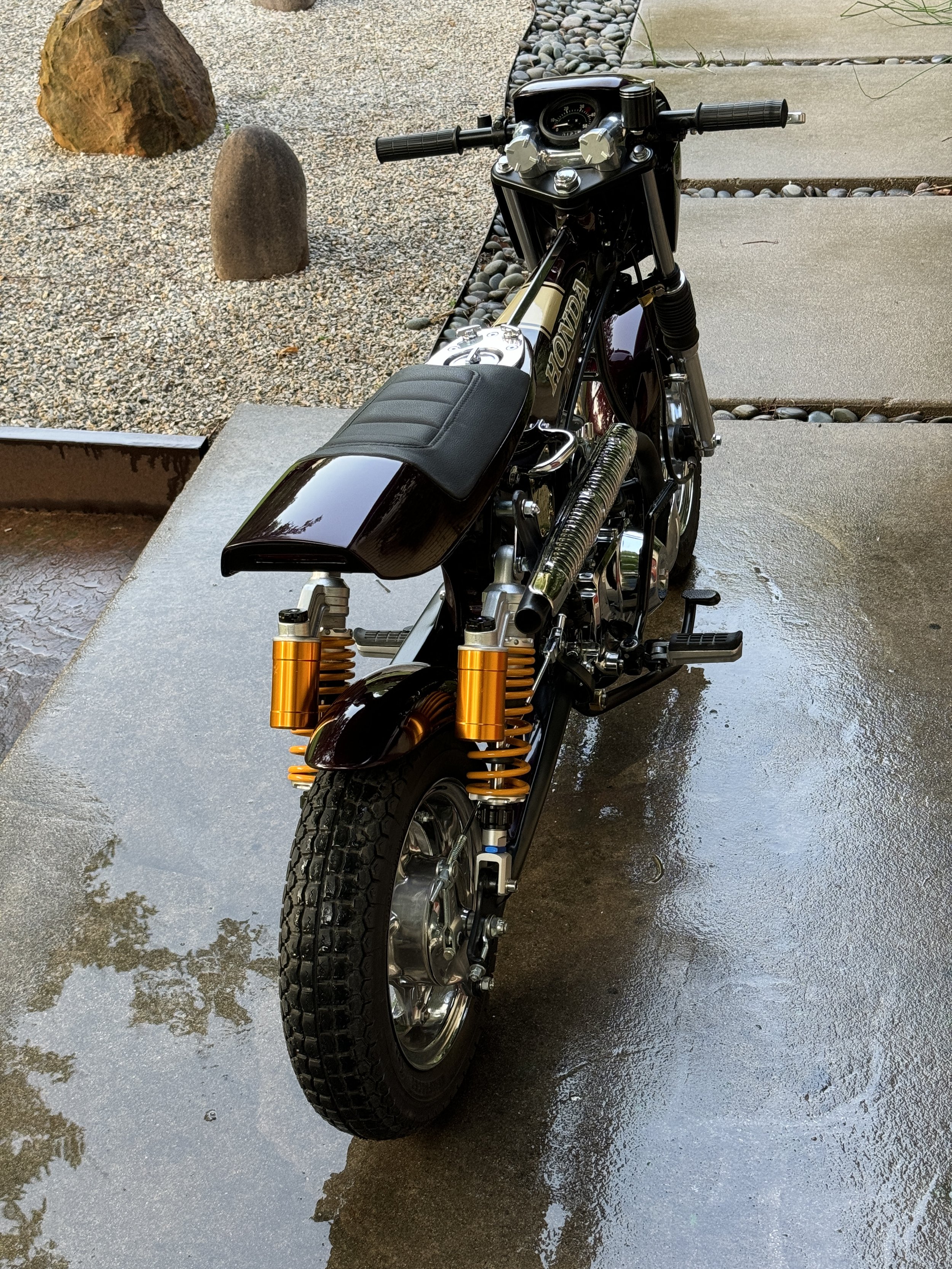
The LED tail light was made to echo the rectangular headlight. The green neutral light can be seen glowing on the speedometer.

Even though the exhaust looks similar to the original, the heat shield was arched to make it thinner, and the canister was formed to match. The shield was also turned around and given a hidden hook bracket to secure the rear portion tight to the canister.

With the long swingarm, the lowered shock mounts and shortened front fork tubes were necessary to keep the stance right.

The Dino with the CT117, the inspiration for this build. Built thirteen years apart, the Dino has a lot more hand formed parts.

Just showing some of the similarities in the designing for these bikes. A forward facing scoop on the CT117 was one of the signature features…

…the Dino scoop is also forward facing. In the case of both designs, I can find no other similar examples online. This scoop attaches to the stock air box.

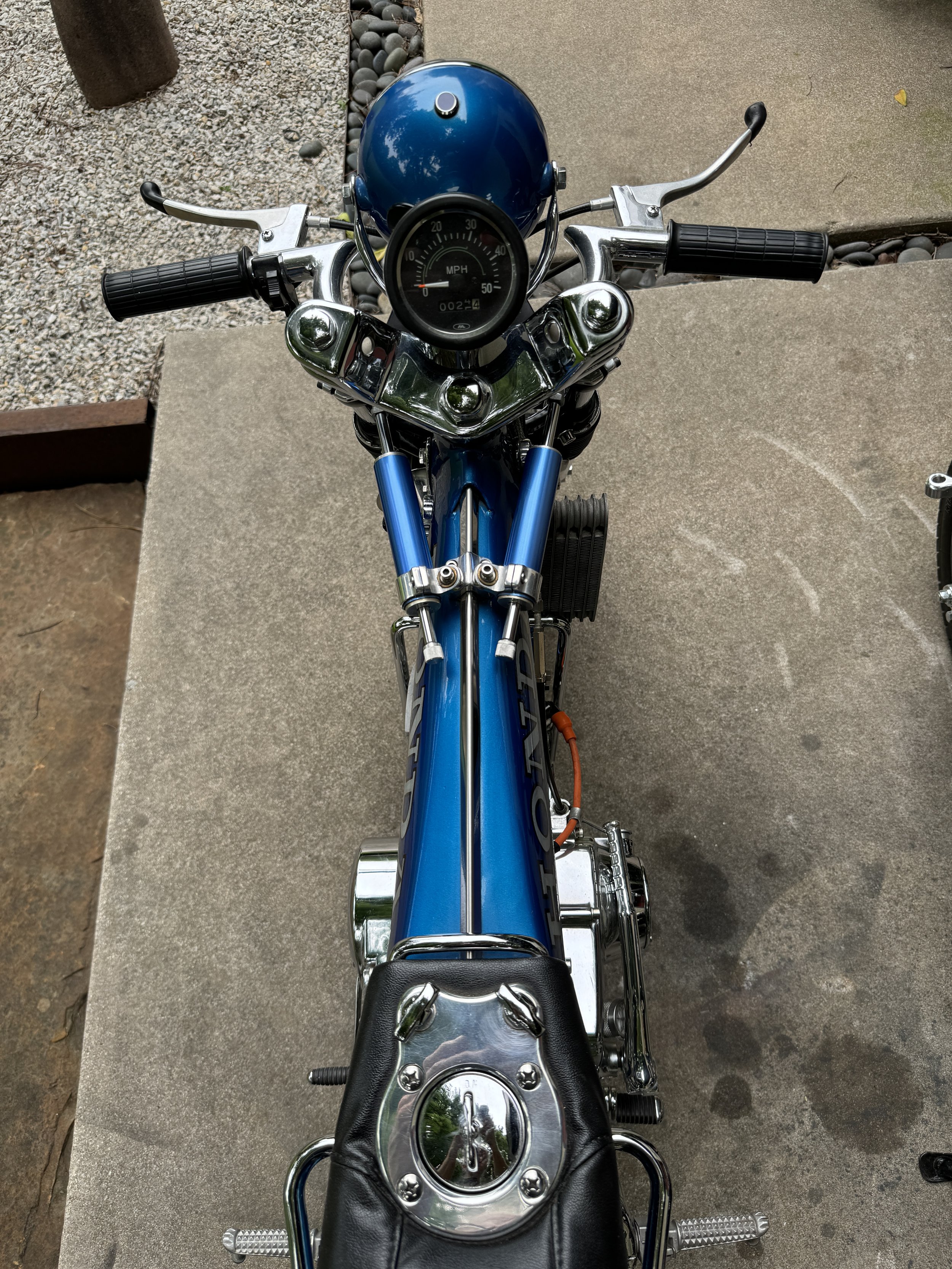
Another unique feature was the rear hinge on the seat, and the gas cap poking through the front.

A similar aluminum sconce fits around the Dino gas cap, and uses the same front thumb screws to secure the seat.

The source of a great deal of grief. When I went to start the engine, it would only run at high RPM, and carburetor adjustments, jet changes, and an entirely new carb had little effect on the running. After several weeks waiting on the carb parts, checking the wiring, coil, and engine valve timing and clearances, searching for intake air leaks, fuel starvation, and a load of other stuff, I finally remembered a similar engine starting problem. It reminded me of a similar problem getting the Cabracer 360 bike started. In that case, an aftermarket ignition set-up was misaligned, and scored the rotor. A quick check under the flywheel showed a score line on the flywheel. In the case of both engines, they would fire intermittently, but could only be kept running at high RPM, and were transformed to normal starting and running with new flywheels. This engine has a 12 Volt conversion with CDI ignition, which uses the magnet position to sense flywheel location., as was the one on the Cabracer 360 engine. My theory is that the score line produces a slight bit of magnetism in the aluminum portions of the flywheel, and confuses the sensing enough it cannot run right.