1967 Triumph Mountain Cub in the shop for a revival.

The Triumph Mountain Cub was a late sixties iteration of the Tiger Cub. The Tiger Cub, with 200cc’s was dubbed the “Baby Bonneville,” and was well received because it stayed within the 250cc limit for learners permits in England. It was produced from 1954-1968, with street or off road versions. The Mountain Cub was a US only model, produced in 1967 and 1968, intended to compete with small Japanese bikes in the consumer market. It was set up for street or off road, with some models including aluminum fenders, trial tires, tall bars, and stripped down so much there was no side or center stand. This particular Cub has MX-style high handlebars, knobby rear tire, folding pegs, deleted tach, passenger pegs and center stand, a high pipe, battery-less ignition, and a light front wheel with the small hub and an alloy shouldered rim. Not a bad start on an off-road set-up. The front tire, long seat, lights, and steel fenders, however, are more suited for street riding. It is not clear what parts of the bike are original factory parts, or those added by previous owners. The first order of business is to return the engine to original running condition.
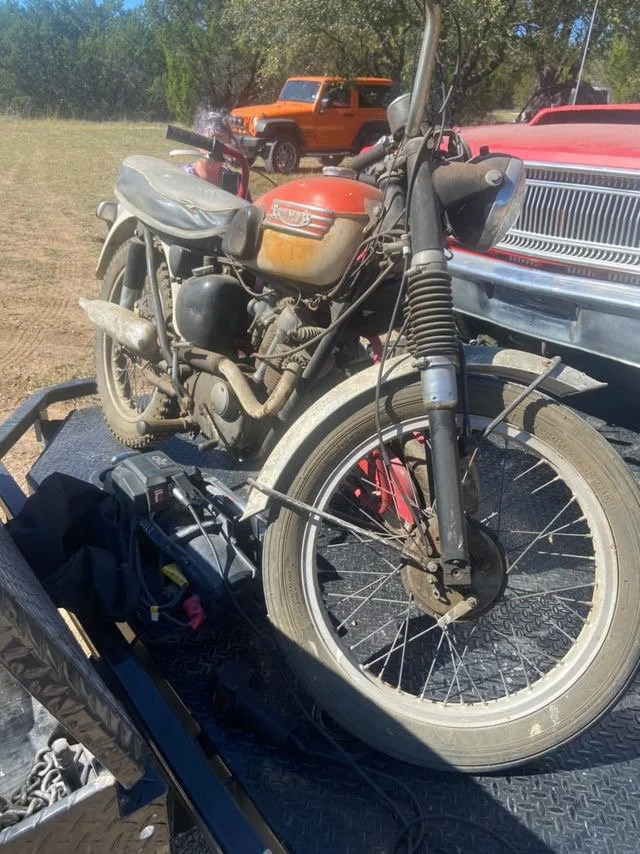
Here it is, shortly after being pulled from the barn. A 1967 Triumph Mountain Cub motorcycle in Grenadier Red and White. This was a legacy bike, found by Skratch at Skratch’s Garage in Haltom City, Texas. The daughter of the owner wanted it to go to someone who was going to take care of it rather than flip it. That will certainly be the case. She asked for a chance to ride it again, once running. That is surely the intention, but as bad as it smokes, it needs tear-down and rebuild before it can be ridden.
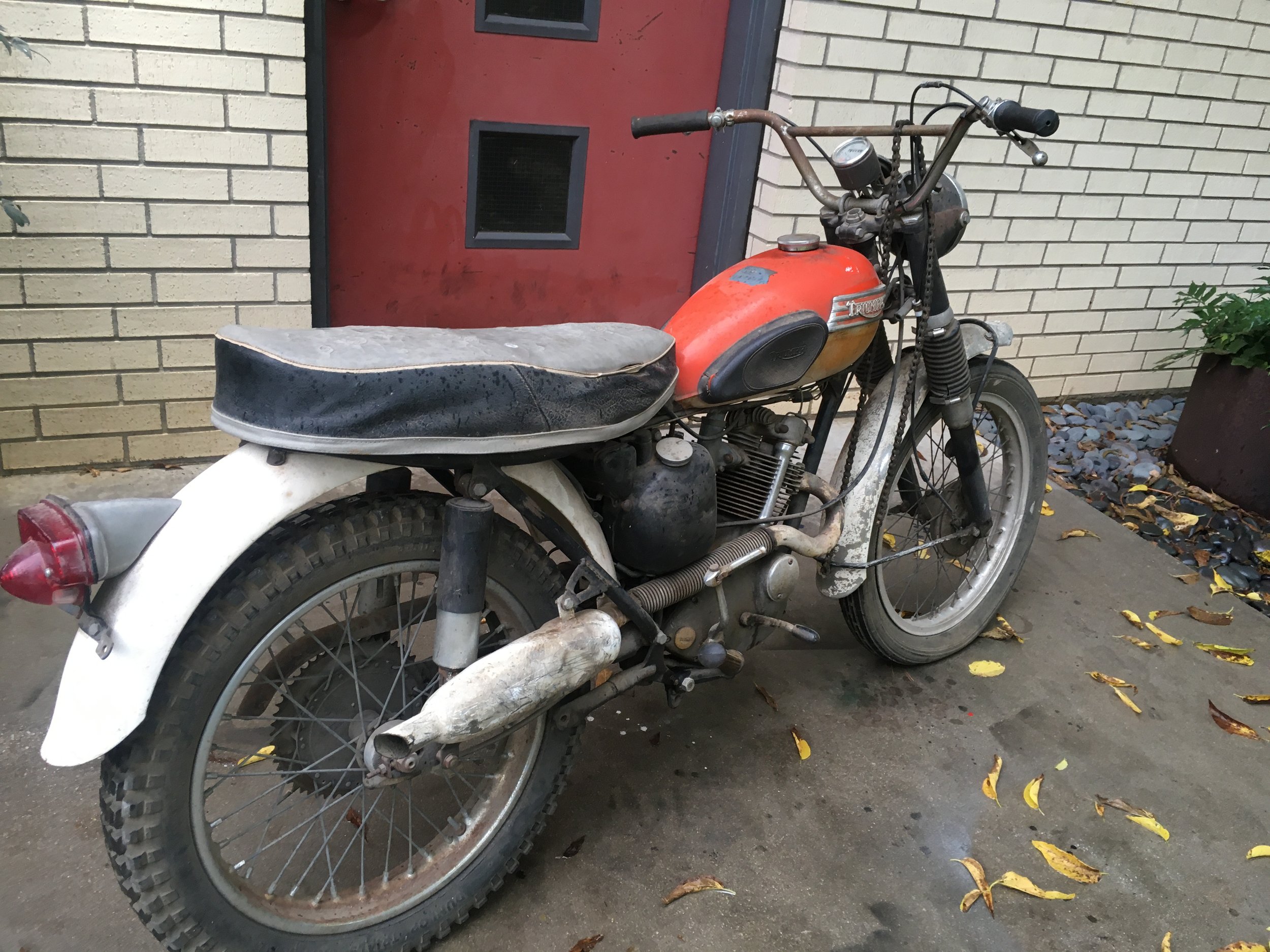
A number of changes had been made to the bike by the previous owner(s.) The exhaust had a section of flex pipe welded in the center, there were some dents, cracks, custom paint, and copious quantities of oil inside the muffler. The oil was from the engine, which smoked furiously, once started. The tank and carb cleaning were enough to revive it, but the smoking was bad enough I only kept it running a few minutes for fear of engine damage. The engine was wet-sumped, with a quart of the 1.5 liter capacity sitting in the engine. Even with it removed, the engine did no better.
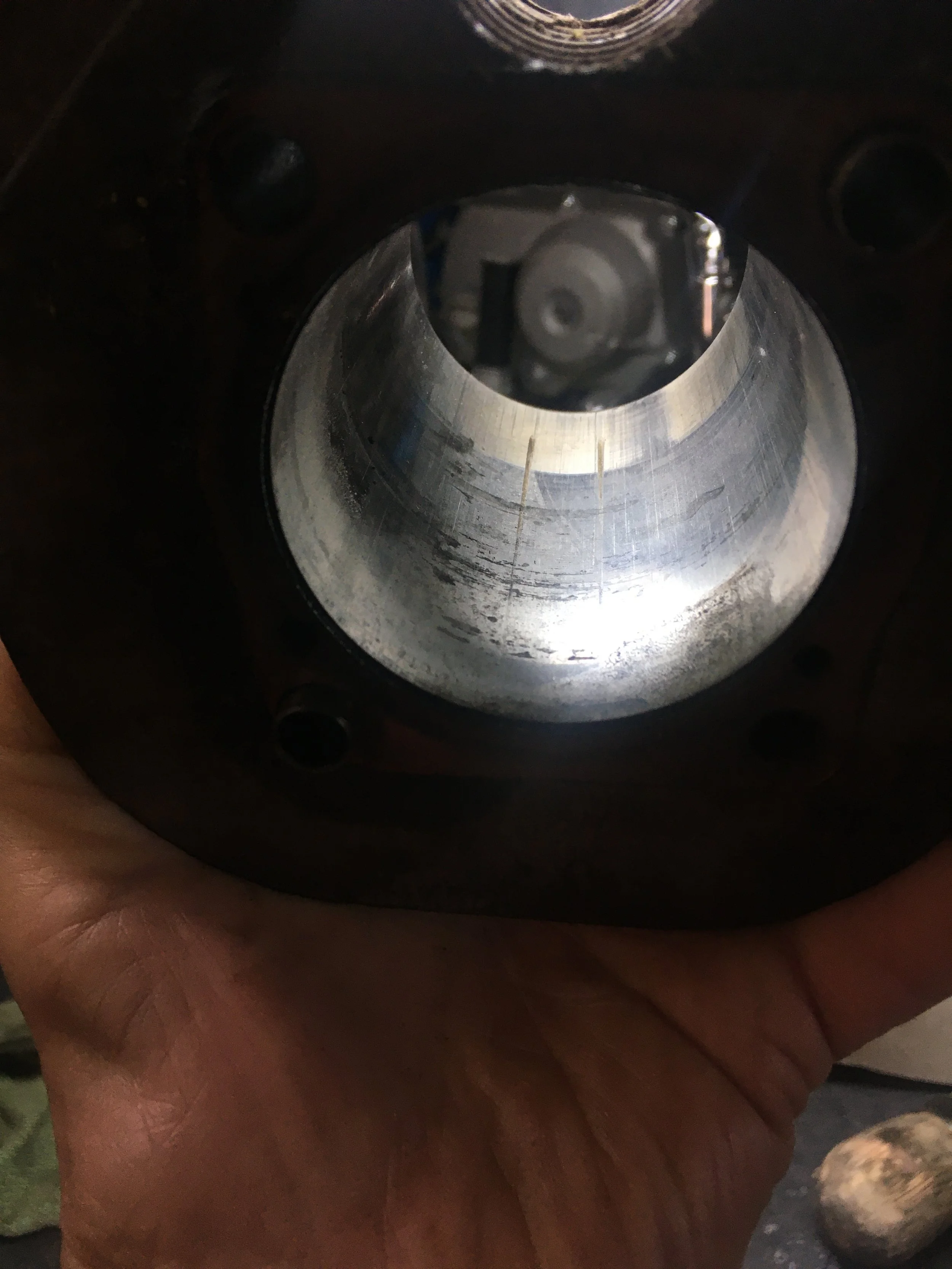
A couple of deep gouges were found on the side of the cylinder bore. A new .030 over piston and rings is on the way. It was easy to find higher compression (9:1) domed pistons, but the flat-top 7:1 CR pistons proved a little harder to find. Because these engines have a reputation for running hot, the lower compression piston was chosen.
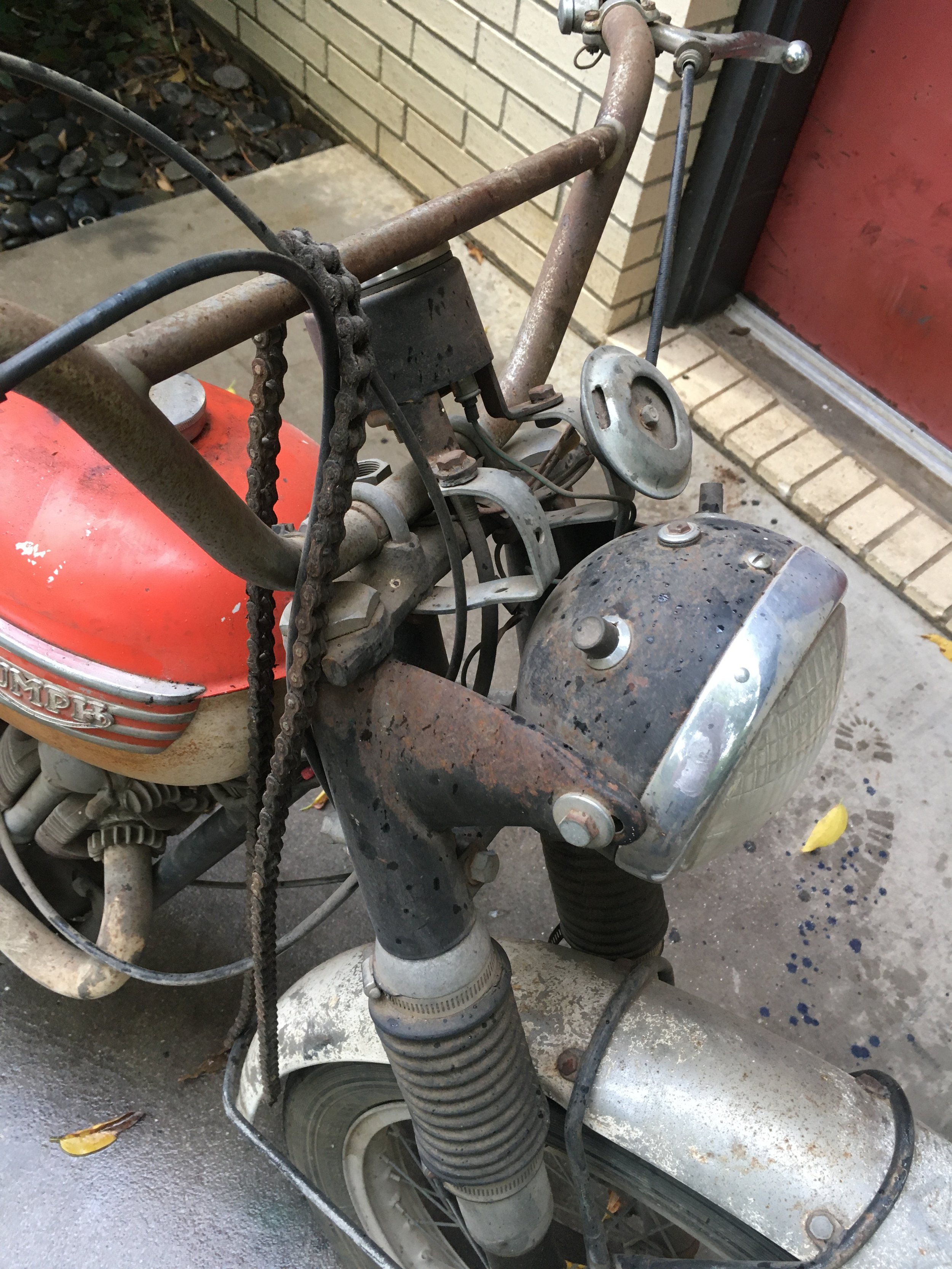
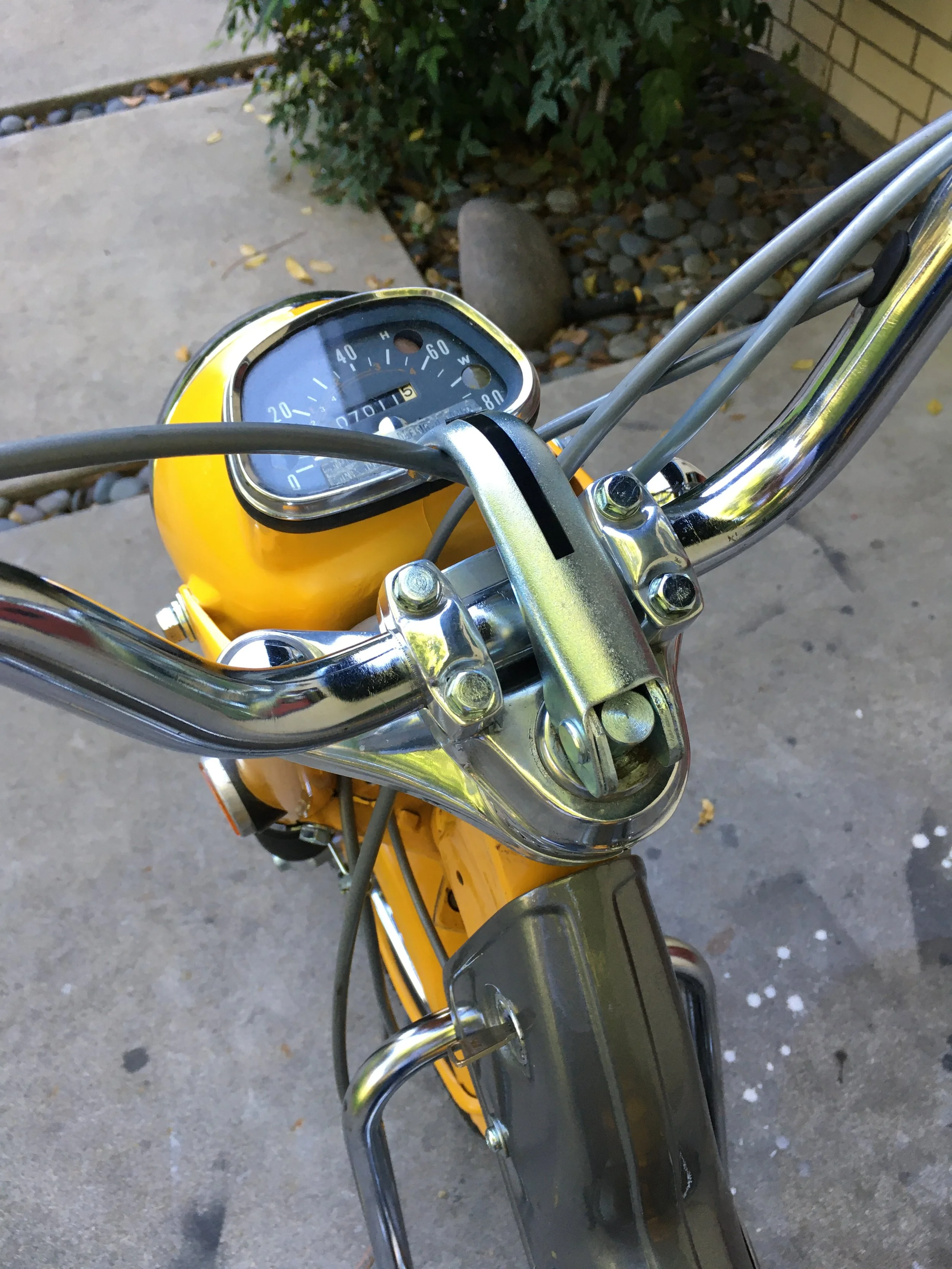
Other creative changes made by a previous owner include remounting the speedo and horn on some hardware store brackets. I have my doubts this set-up was used, as the odometer is still set to zero. The speedo cable had been re-routed through the frame to make the cable reach, with a number of bends along the way. It has since been returned to the factory location along the bottom of the engine. The original 415 chain was hanging over the handlebars. A new Pro-Taper gold MX chain was purchased to replace it. New fork components are being gathered in preparations for a total rebuild.
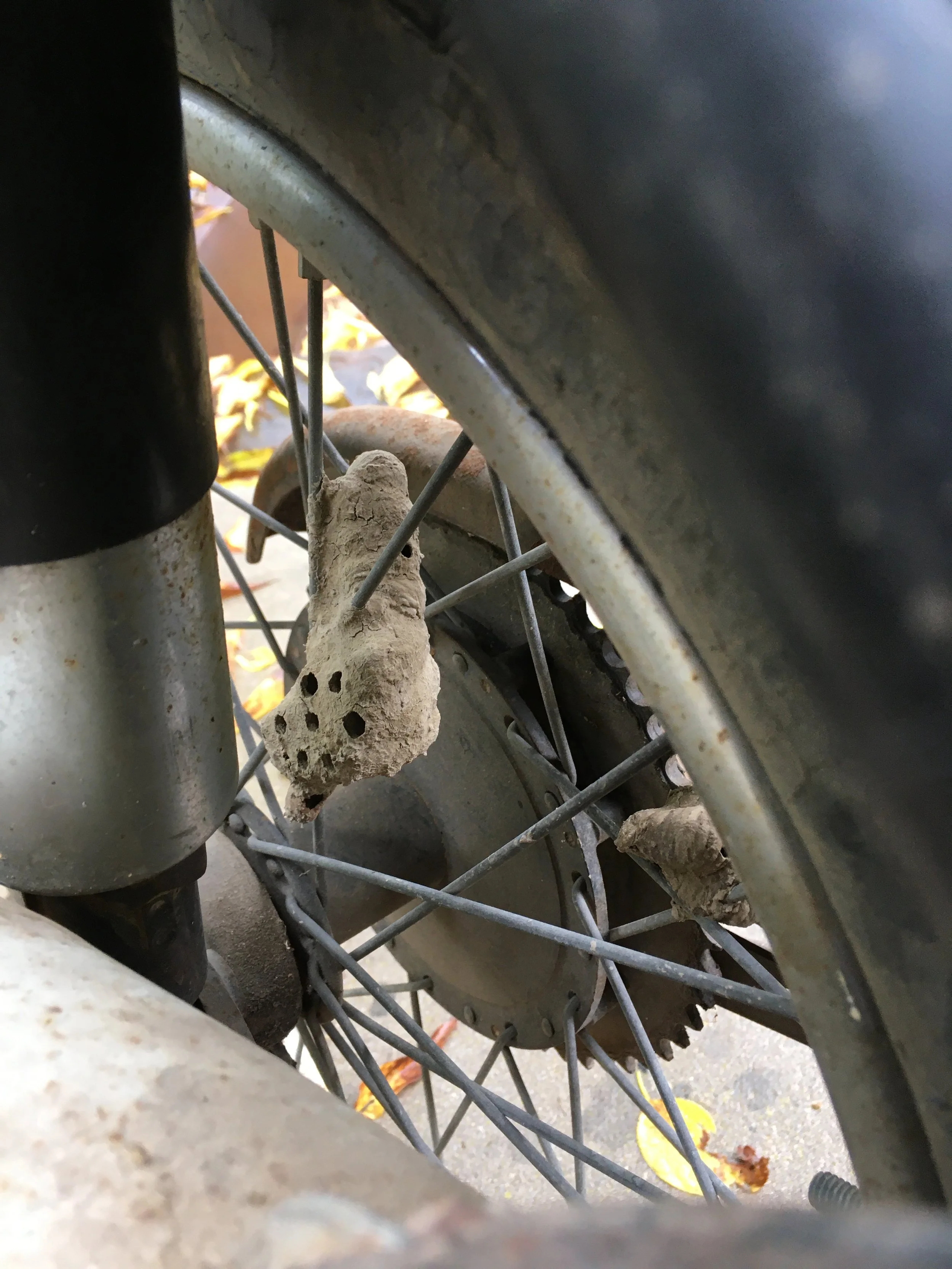
Mmmm. Barn fresh. Mud dauber nests were fond in a number of locations on the bike. Pretty common in Texas.
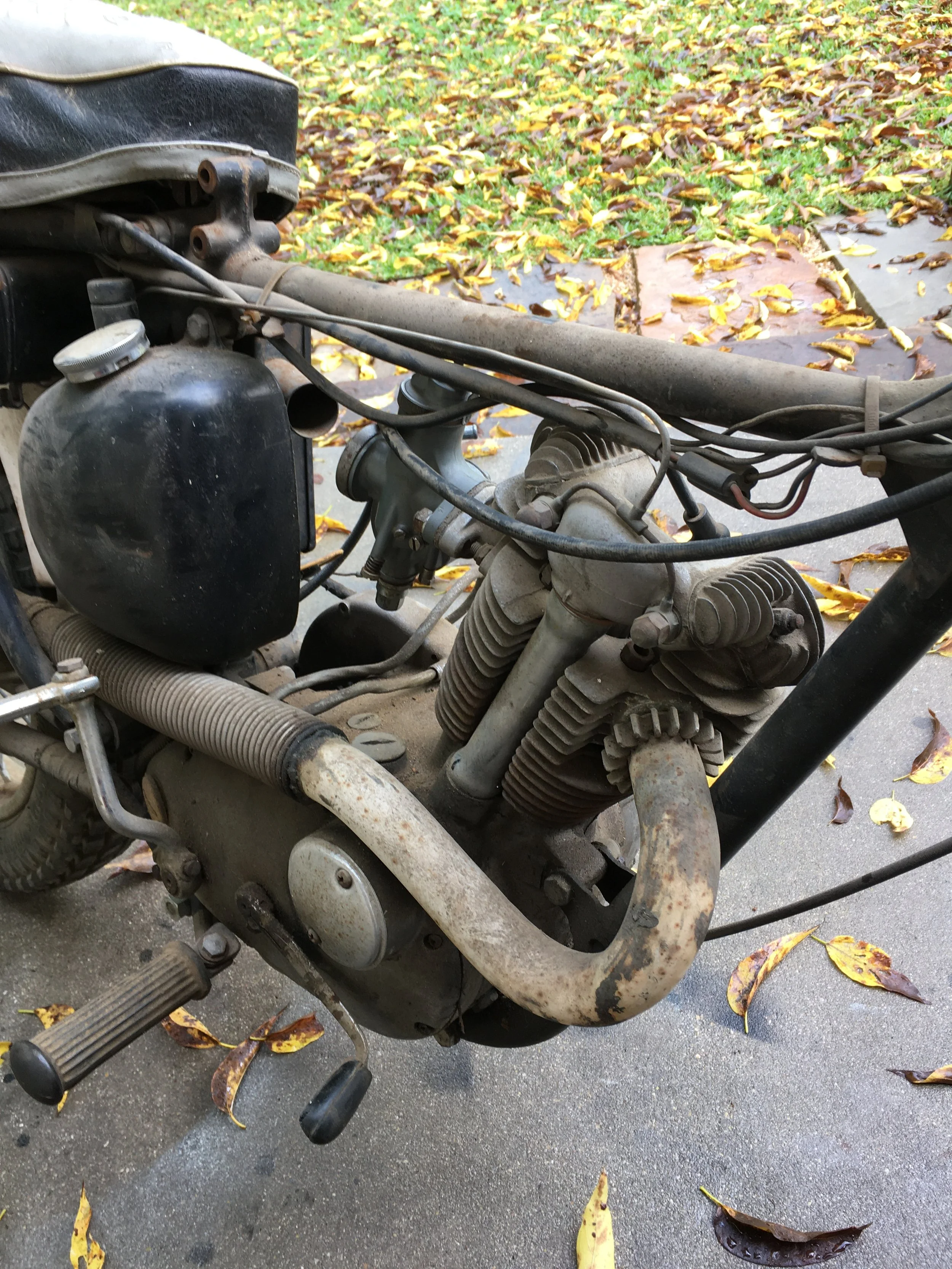
Hard to believe a fuel system clean and some fresh oil is all it needed to run. The Lucas ET ignition does not require a battery, and starts the bike easily. The lights were operational, as are the brakes and clutch. The scavenging side of the oil system appears to be dry, with no significant oil being seen in the rockers. A new Morgo pump has been ordered to replace the original. All the passages and oil tank will be checked and cleaned.
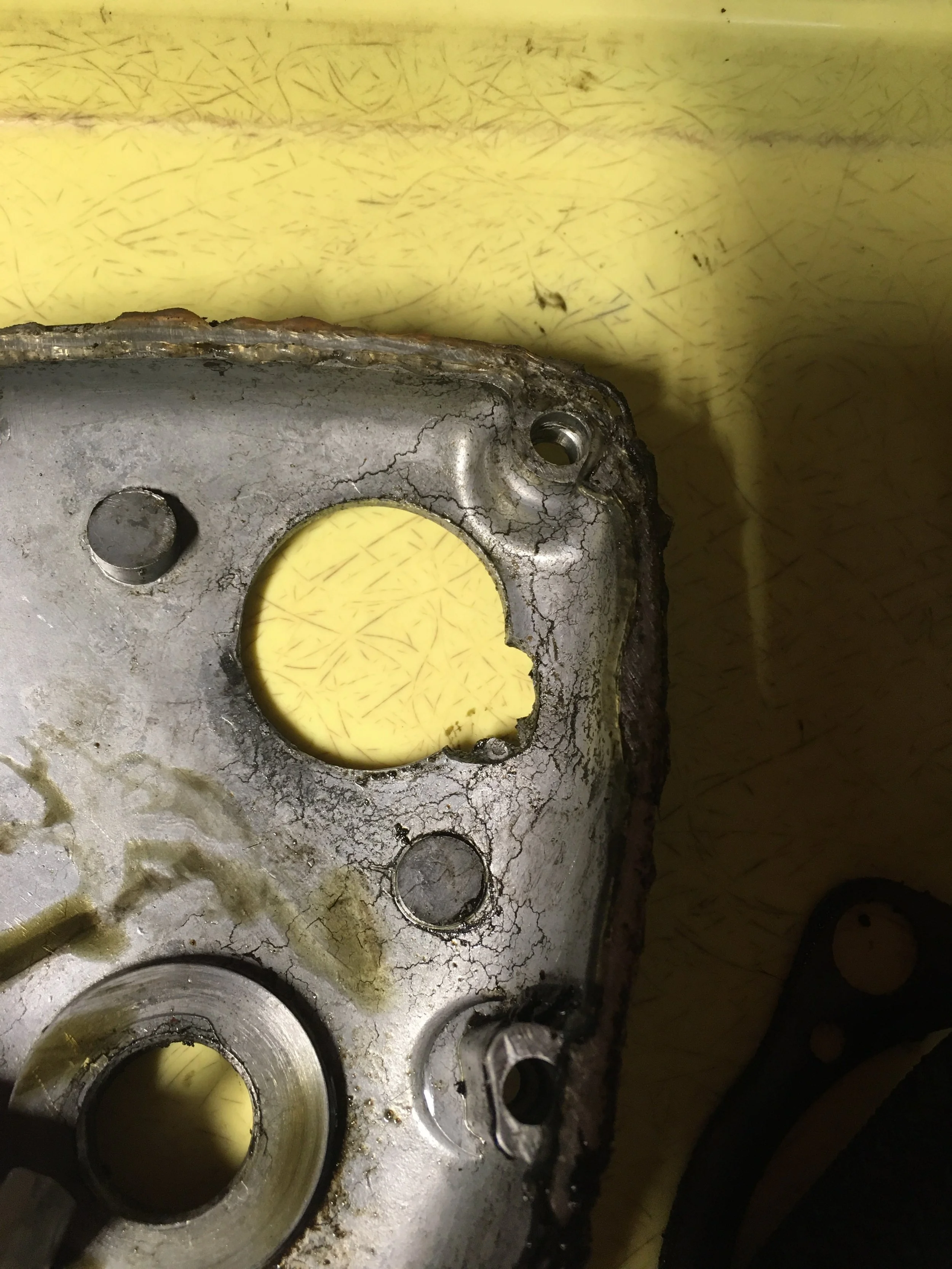
The right side engine cover has a significant chunk out of the edge of the clutch adjuster inspection hole. A used one has been purchased to replace it.
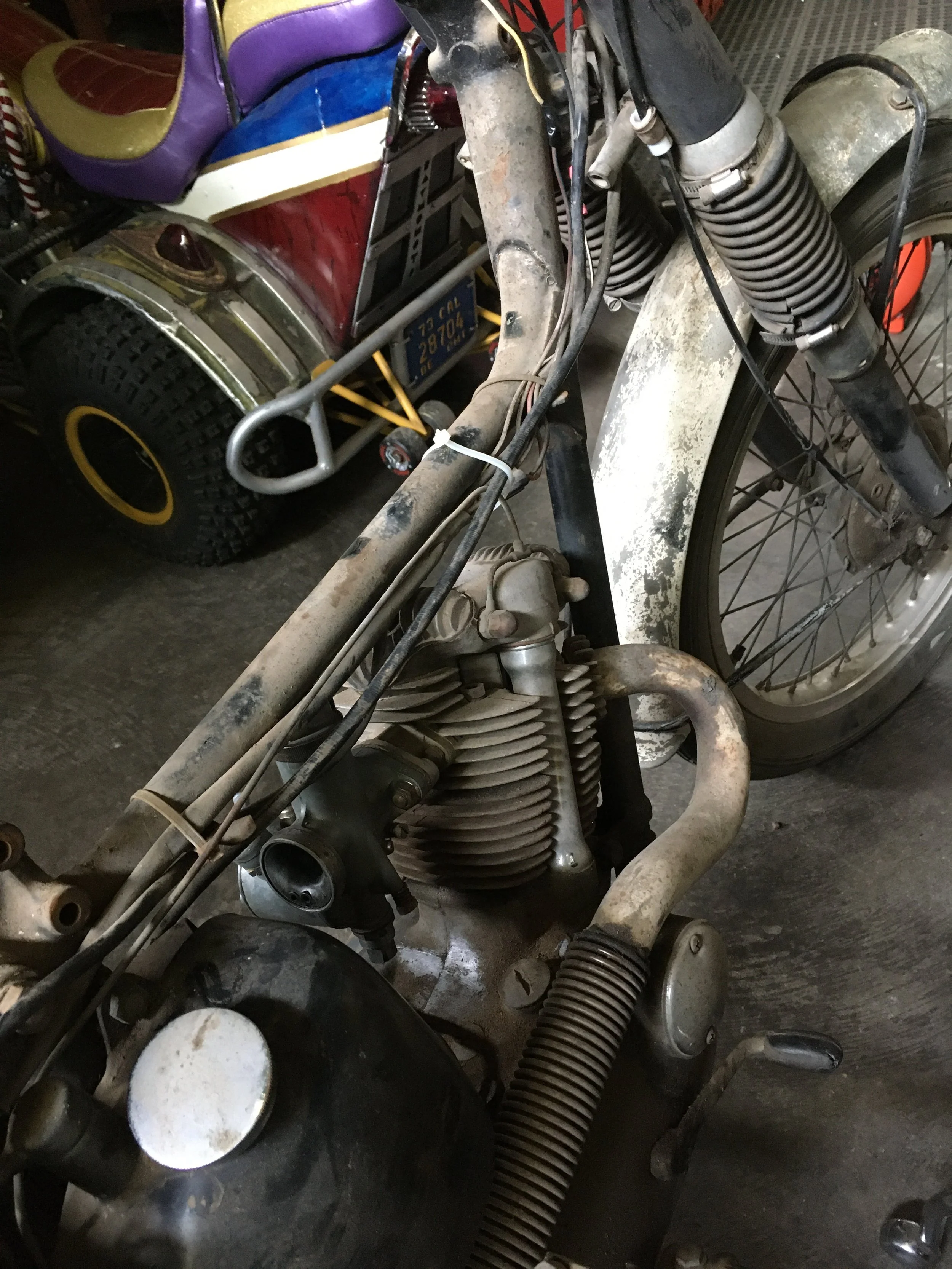
The frames and tank on these models are unusual in the way the frame slopes down from the steering tube, and uses the tank as a stressed member. There are steel bars running through the inside of the tank, that have the external tank mounting tabs on each end, which bolt to the frame. This bike was designed by Edward Turner, accounting for some of the Bonneville-like styling.
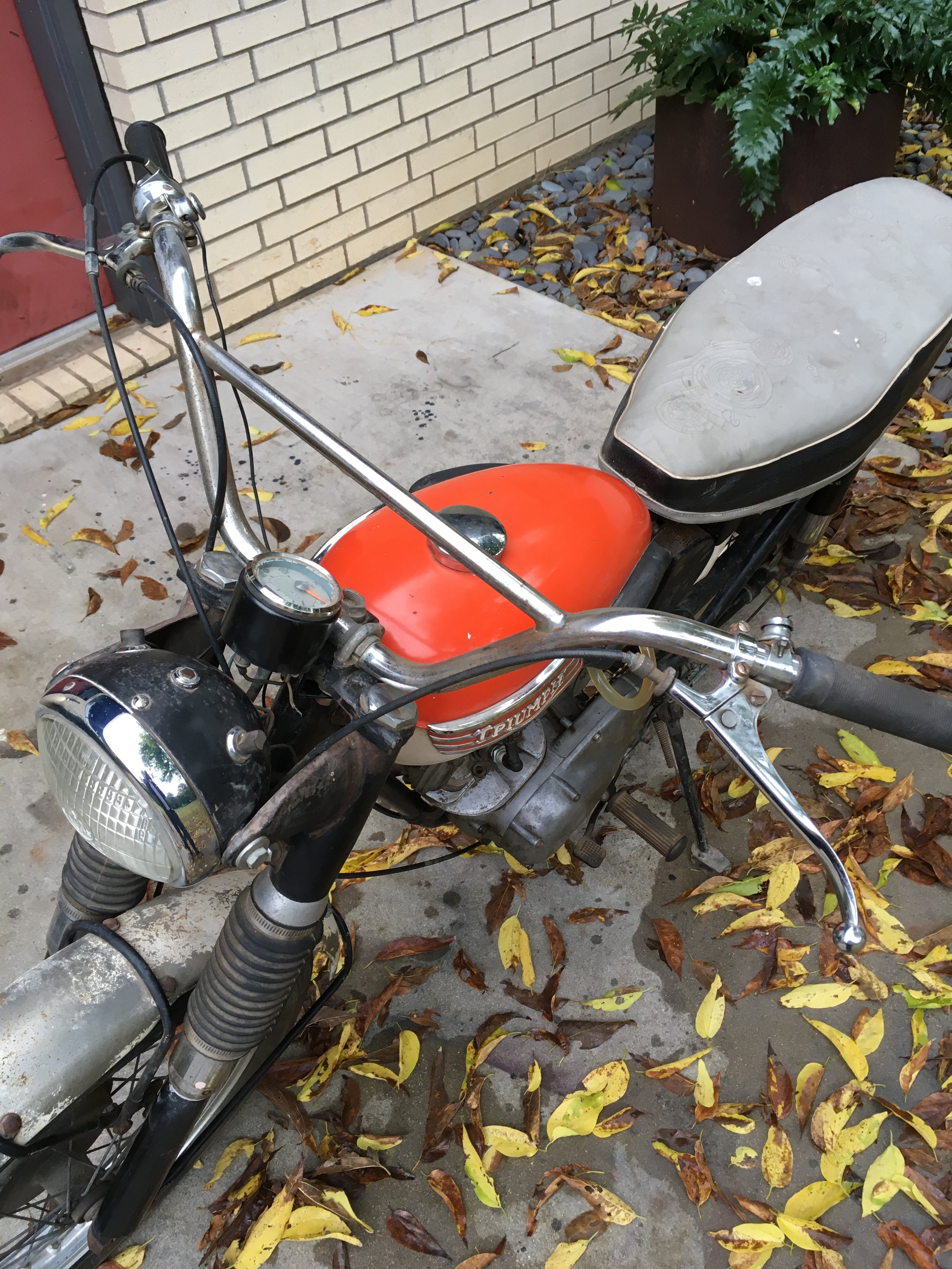
After a bit of elbow great and some wrenching, the speedo is back to the original location, and the bars are a bit cleaner. The tank has been cleaned inside and out at this point, and is in good shape, overall. It will be repainted at some point. A new set of knee pads are on order. The front brake cable was repaired, and is operational now. The wiring for the kill switch and horn needs to be addressed, but there is likely to be some restoration done on the handlebars first.
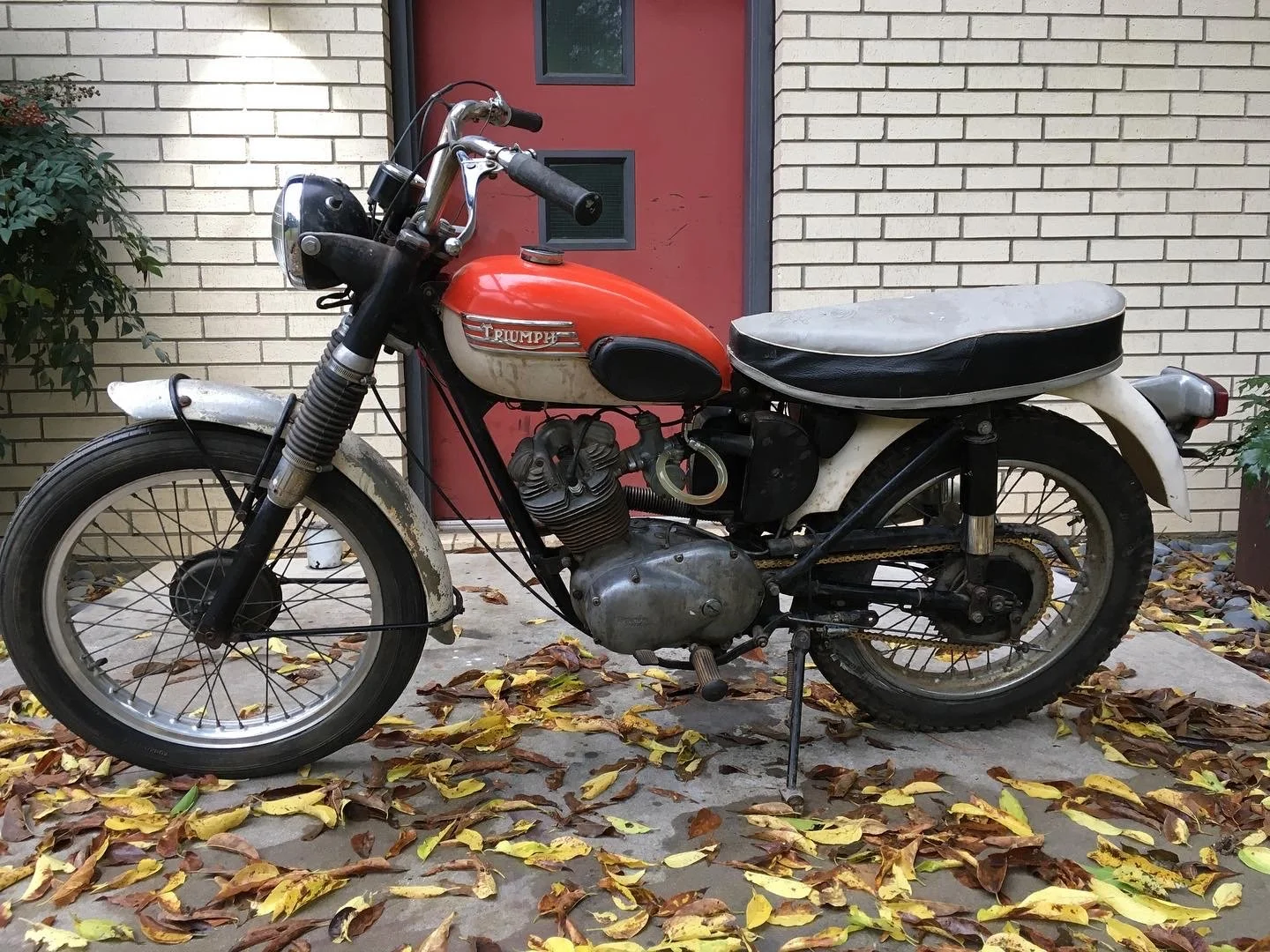
As cool as it looks at present, some custom touches are planned for the rebuild. The engine will be left mostly stock. The original seat is rock-hard and the plan is a shorter trials-type seat to replace it. The steel fenders may also get traded out for some alloy models, along with a smaller tail light assembly. The wheels will be rebuilt with rubber more suited for off road riding, and perhaps a rear alloy rim to match the front.
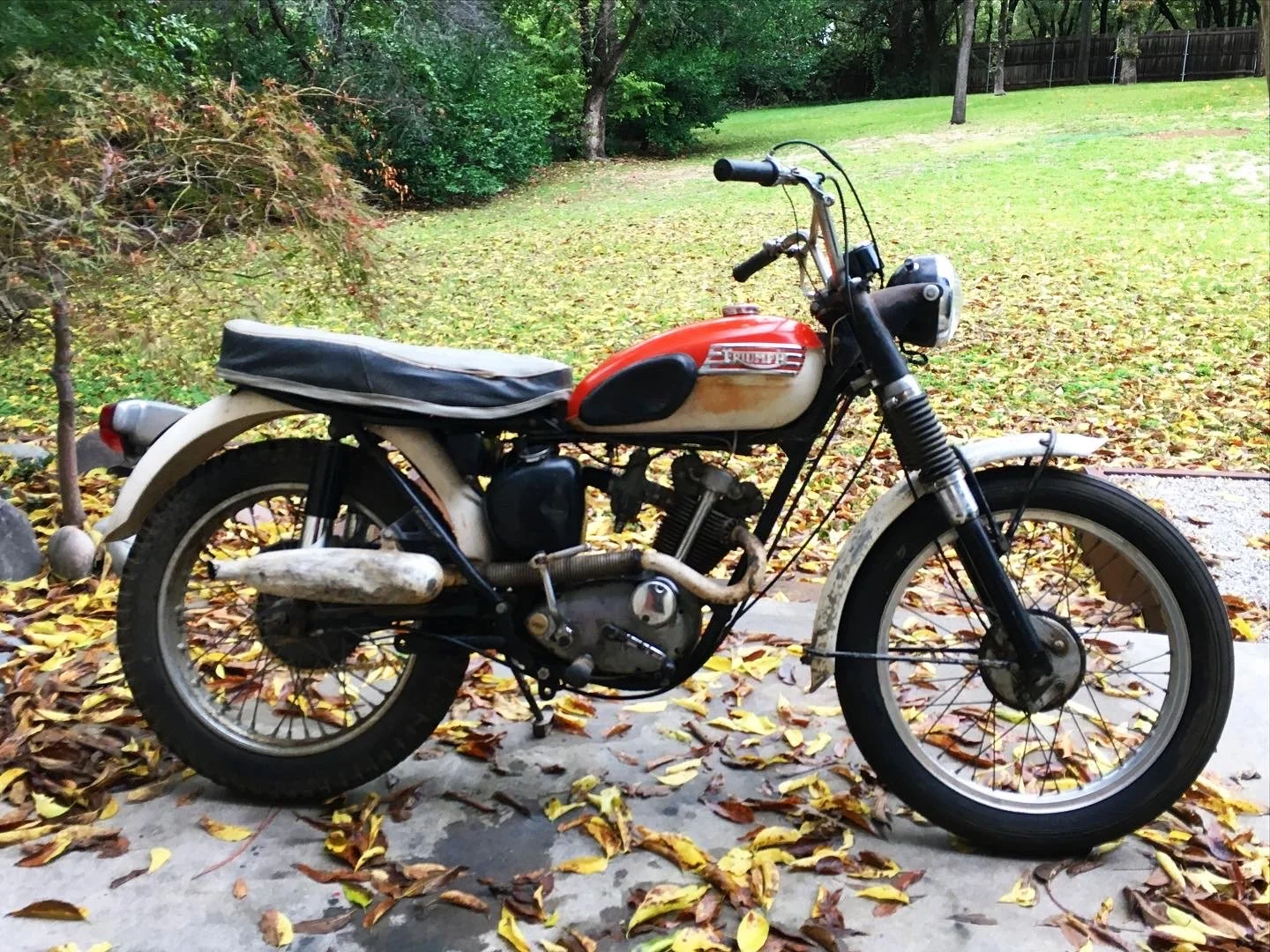
A new chrome plated exhaust system is on its way from England. Even though there were thoughts of just get the bike running, and leave it funky, there are enough things wrong with it that it has to go.
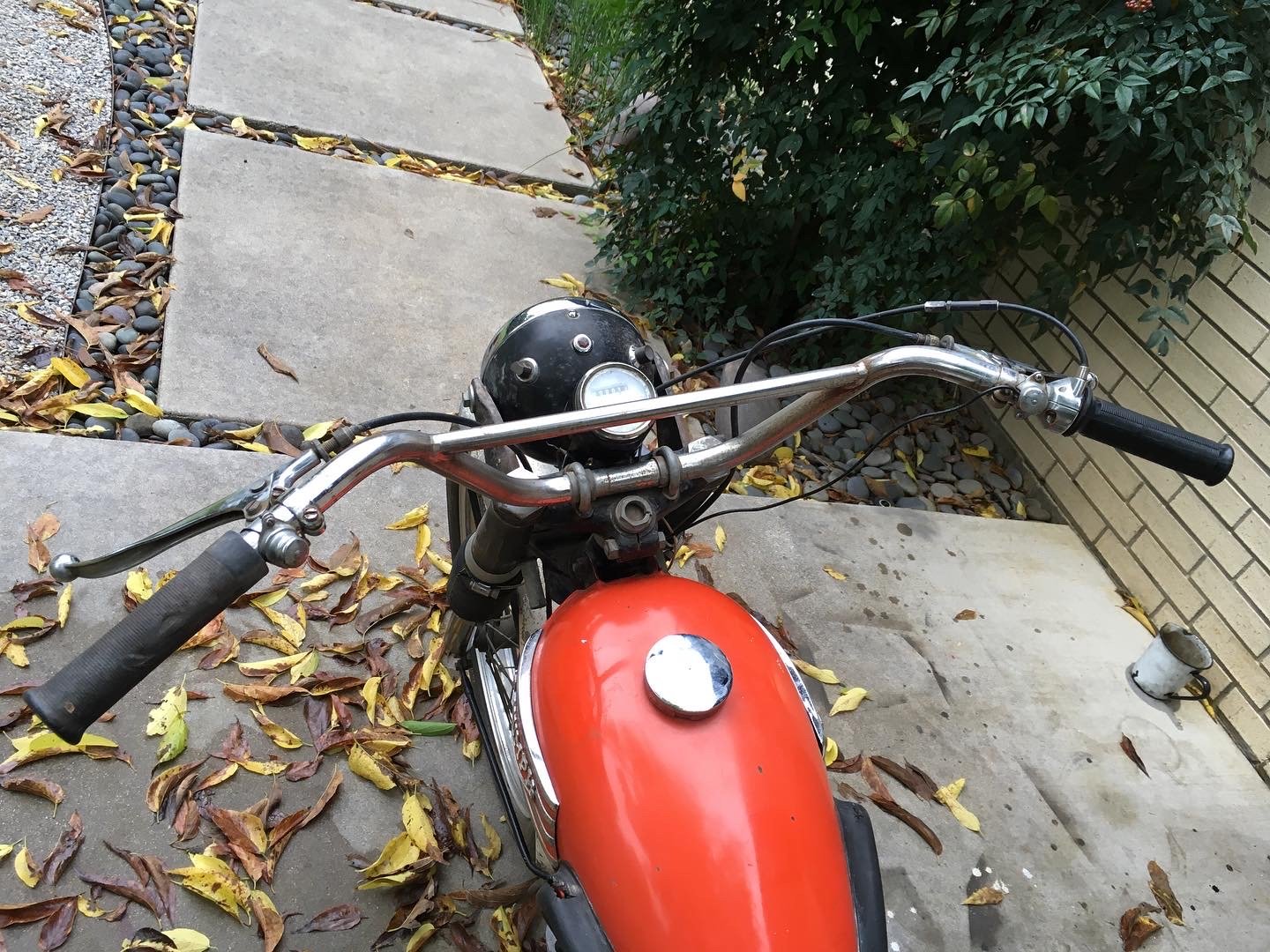
Just the clean-up and re-mounting the speedo return some of that classic Triumph styling.
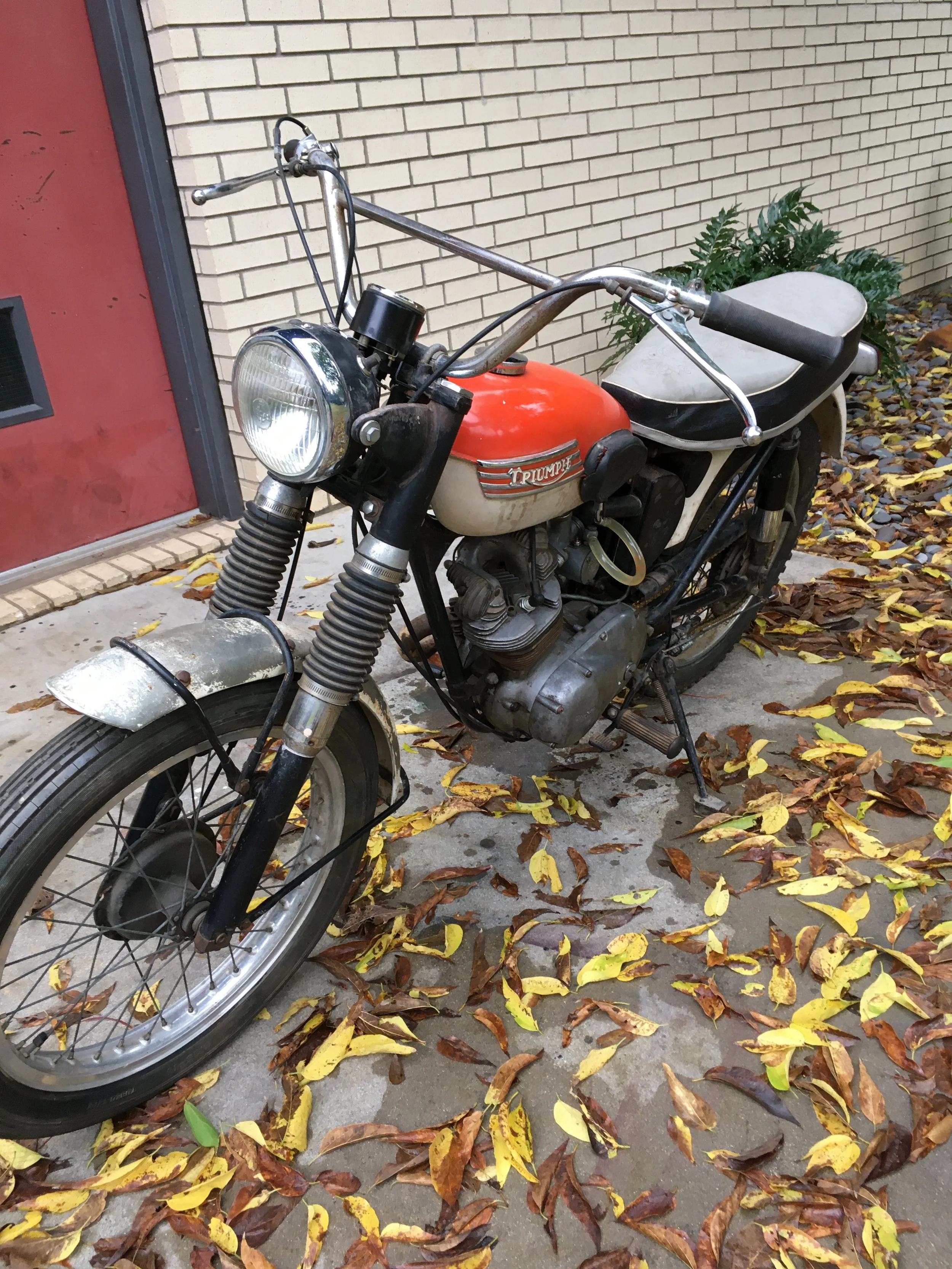
I read that Gary Nixon won short-course races on a cub. Not planning to race this one, but a lighter race style looks great on this bike.
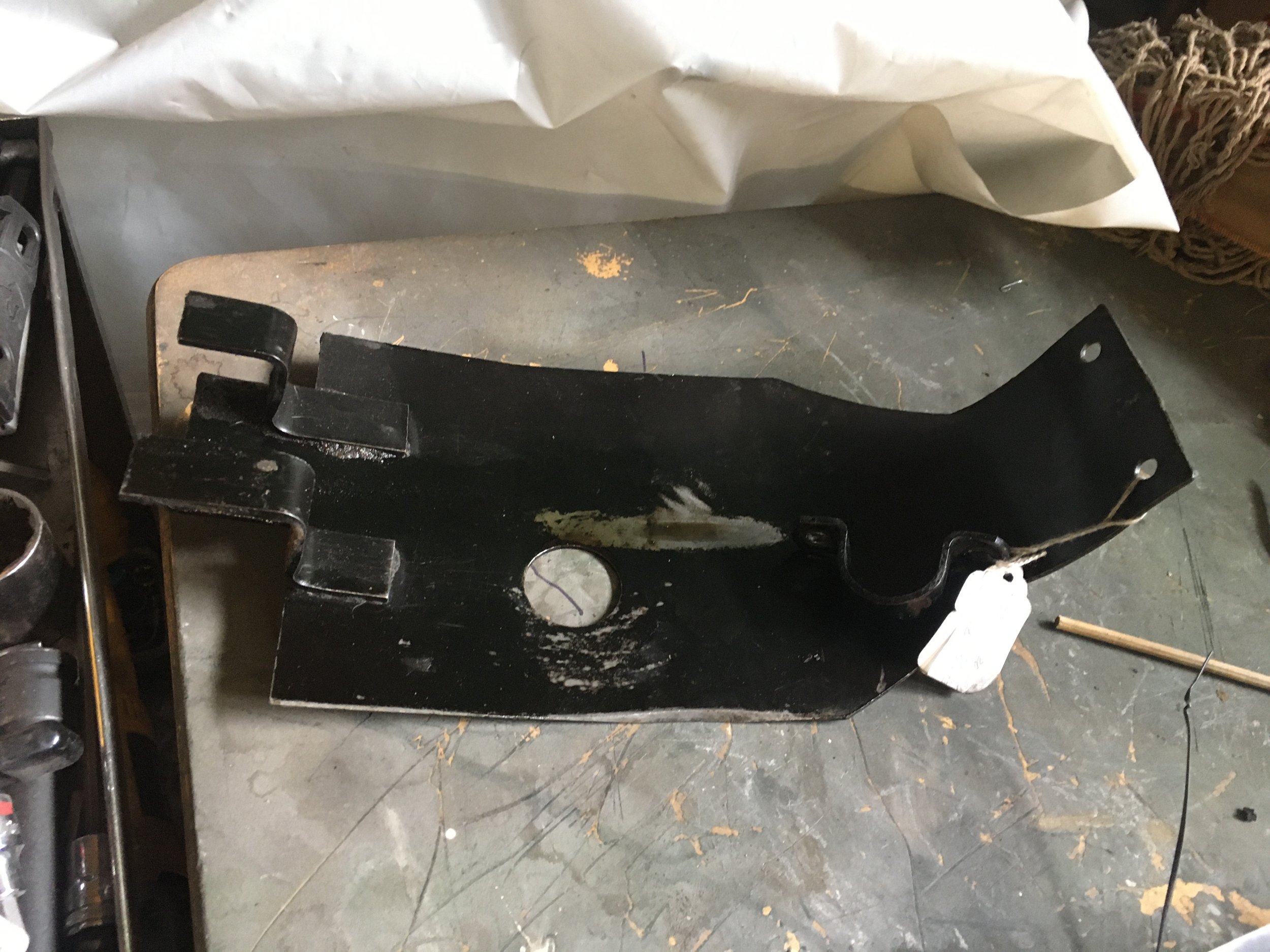
A skid plate was found online to replace the original one that was missing. Wear marks on the the oil feed pipes that rub the skidplate brackets indicate the bike was fitted with a skid plate previously.
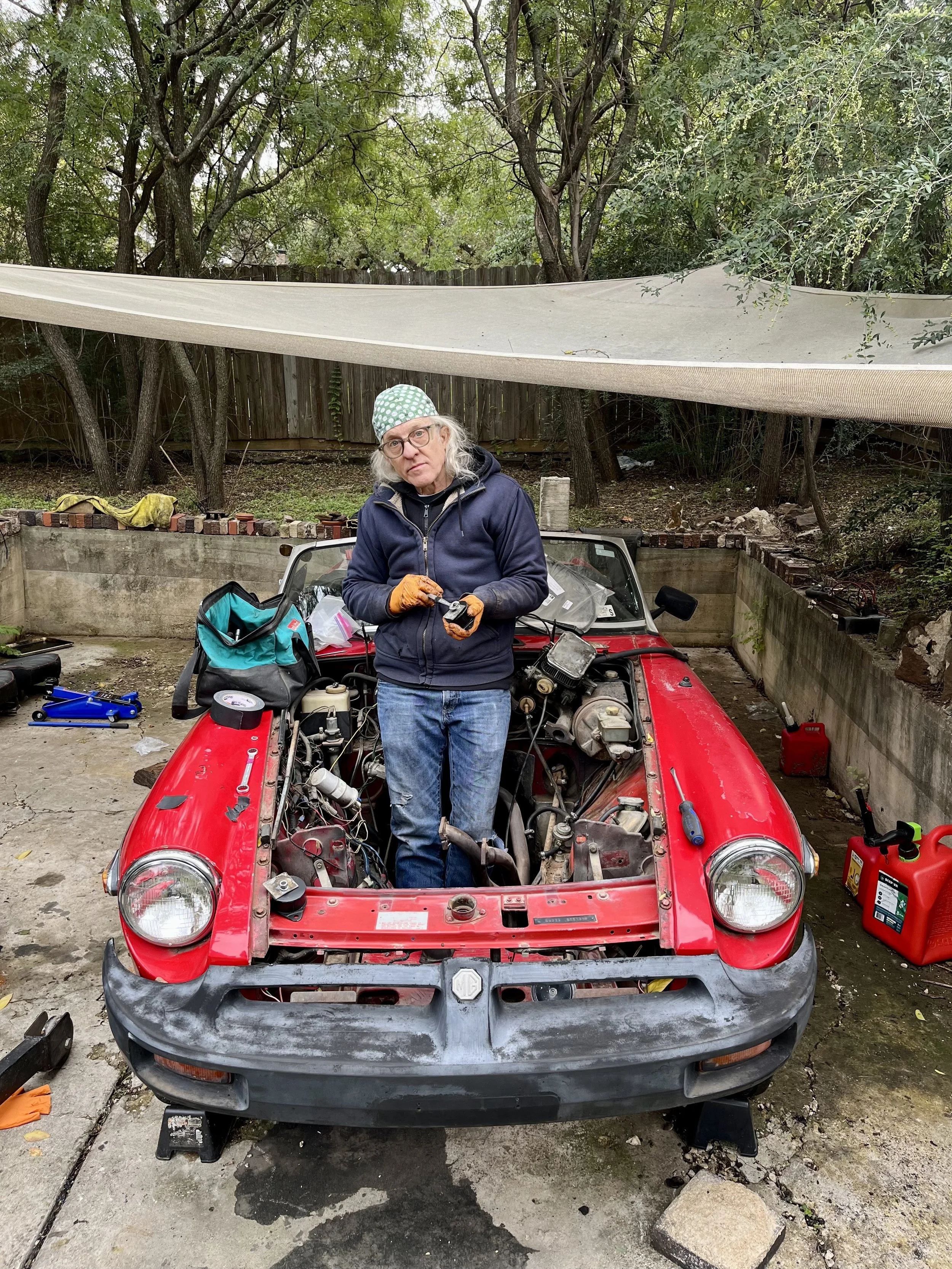
Seems I can’t get away from UK brands. My buddy Peter, who has done the studio photos of my bikes, needed help on his 1979 MGB. The clutch had blown, and needed replacement. Here, I am feeling proud of getting the left motor mount on in ten minutes, after youtube videos said steering shaft and the whole rack and pinion rack needed to be removed to do the job ( it does not.) A lot of well-meaning people on there telling you how to get the job done like a total bung-hole. The solution is a slim 9/16” wrench with the nut and lock washer taped to it with gaff tape. The big flat washer that goes on before the nut and locker has to be put in place behind the mount first, but is easy to put in place because of the long slot the bolt passes through makes it easy to see and manipulate. The slim wrench and nut slipping by the shaft holds the flat washer in place

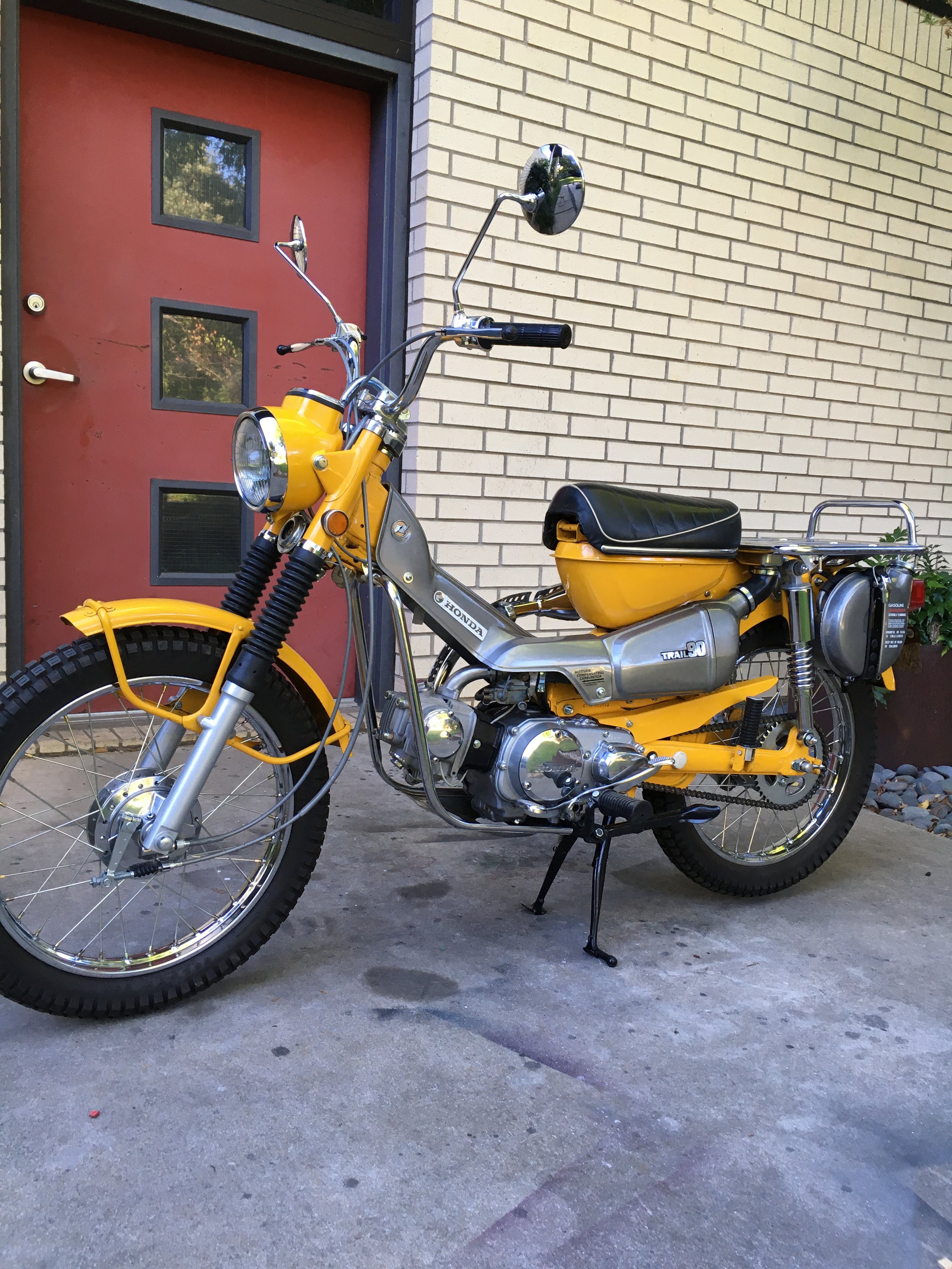
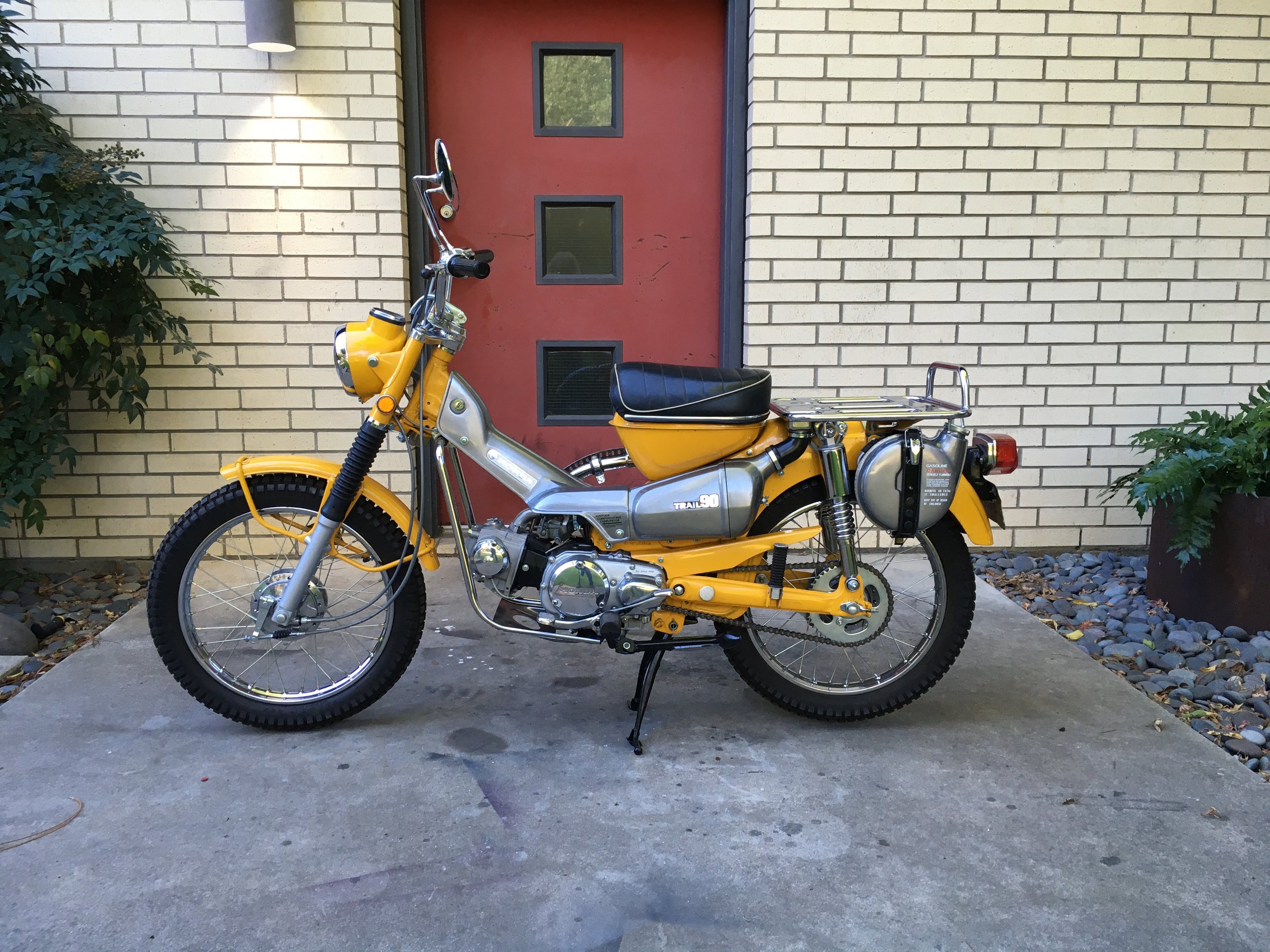
Completing the 1970 Honda CT90 restoration.

The sympathetic restoration of the 1970 CT90 is done. There might be a few things added to the build like a new dipstick to replace the original one, and the helmet holder lock that goes on the auxiliary fuel tank bracket. The engine is broken in after the top-end rebuild and service, usually starting on the first kick.

Original yellow paint, touched-up with a can of Honda touch-up paint, original chrome and seat cover. The engine side covers, plastics, and black parts like the footpeg assembly and battery box were re-painted,

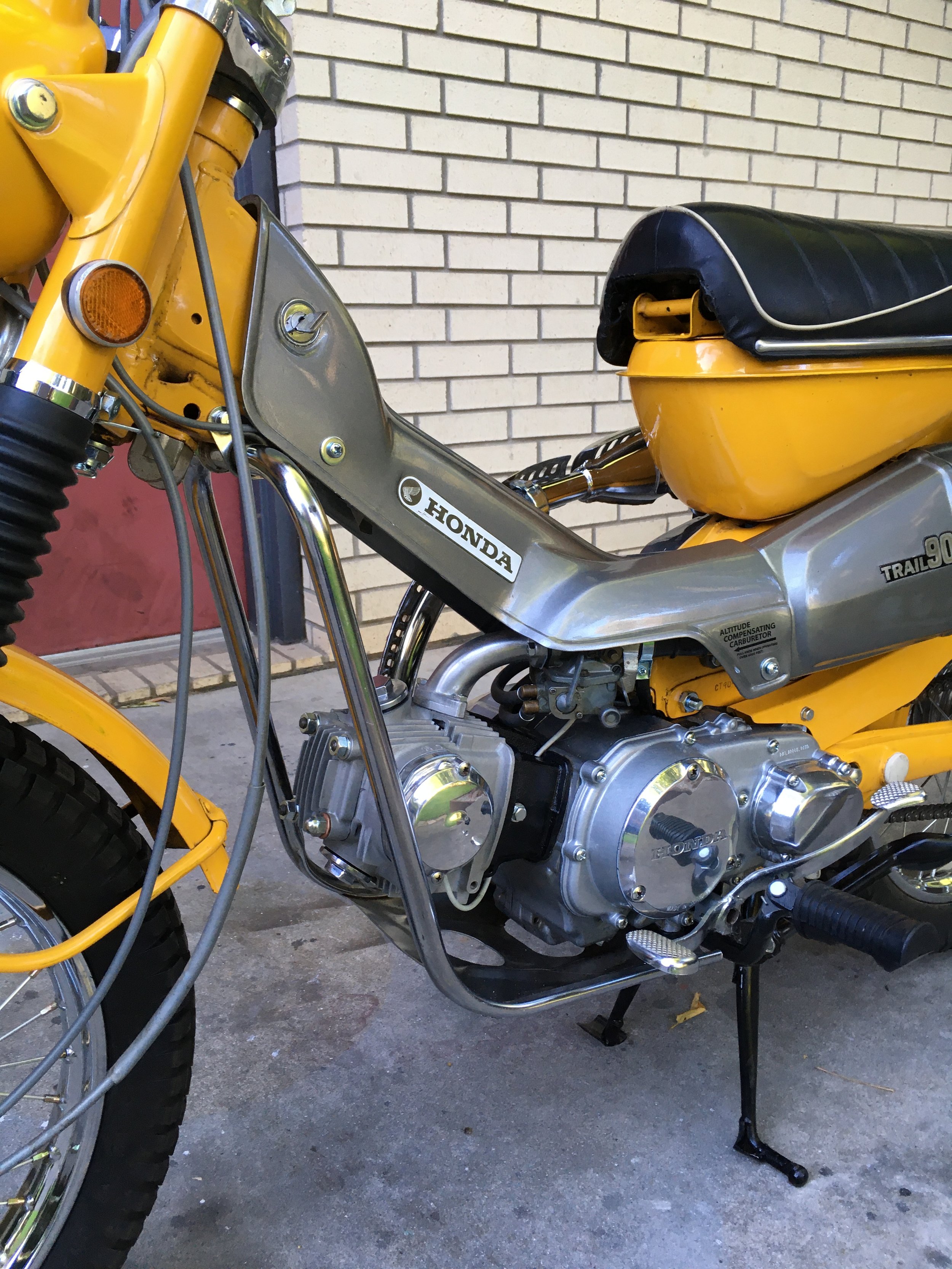
The original foil badges on the air cleaner and frame cover were carefully removed and re-applied after the plastic parts were repaired and painted. A medium charcoal metallic was the closest match I could find, and was used on the auxiliary fuel tank in addition to the plastics.

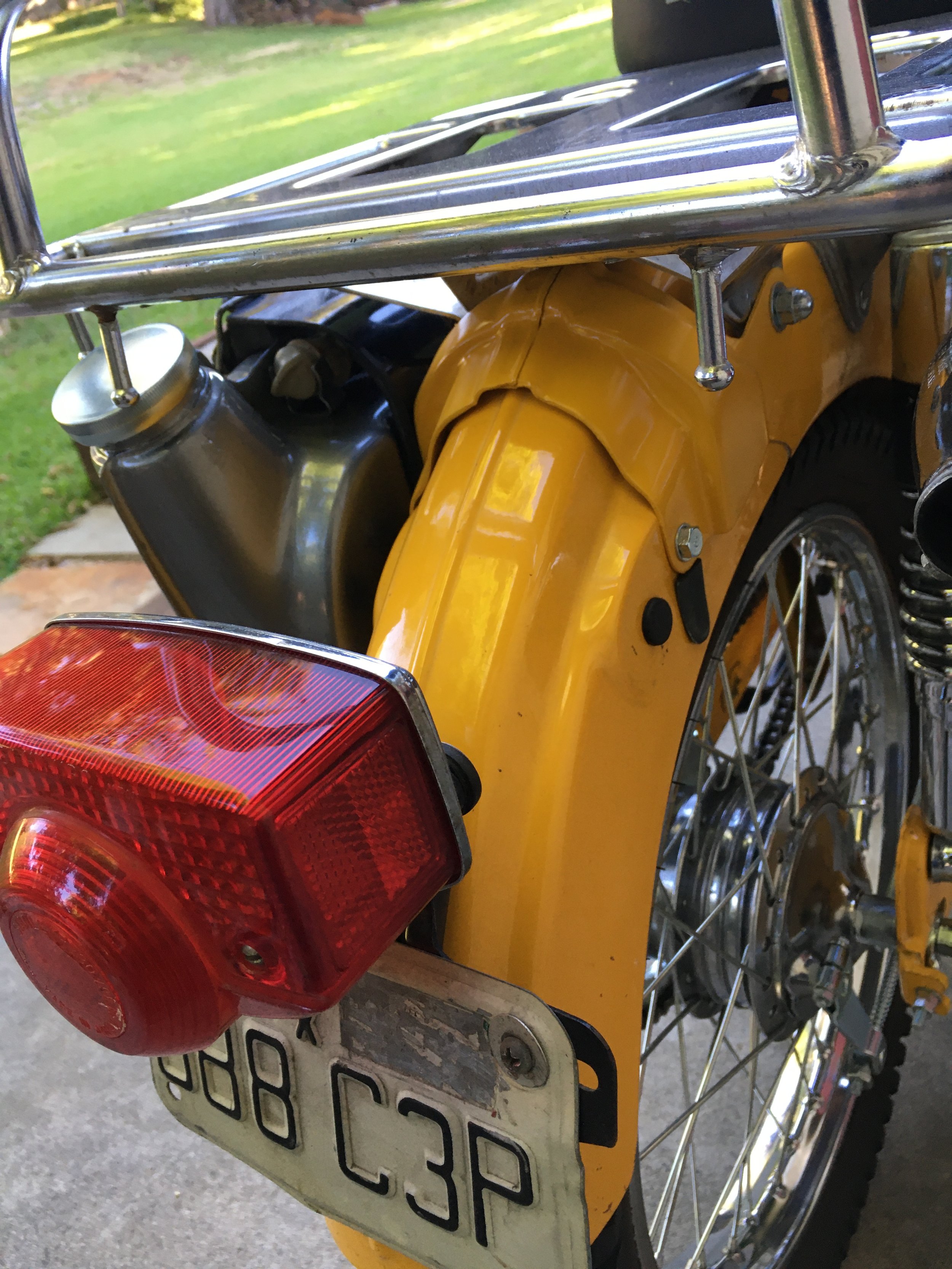
The chrome on this bike is in exceptionally good shape. The wheel rims, brush guard, cargo rack, and muffler on these bikes are often pitted or worse on a bike of this age, but the only place with any visible damage was on top of the cargo rack. It looks like the optional seat pad was used on this bike, and may have caused a couple small spots where the chrome is worn through.

Not perfect, but she sure is a beauty. Honda had a way with color that still works as well today as fifty plus years ago.

The fender bracket for the auxiliary gas tank was also sprayed to match using Honda touch up paint. I am surprised how little fading has occurred on the original paint, and how well it matches. A correct cap for the auxiliary tank was found. The one under the seat has vent holes on the top, but the auxiliary one has holes underneath to avoid water getting in the tank.

Some of the small details like putting new vinyl sheathing on the handlebar control wiring and main wire harness make the difference on this type of restoration.

For years, these bikes did not appeal to me, but this one has changed my mind about them. A really strong running engine, easy to ride, and comfortable, with room on back for a full sized cooler…pretty close to the perfect fun bike.

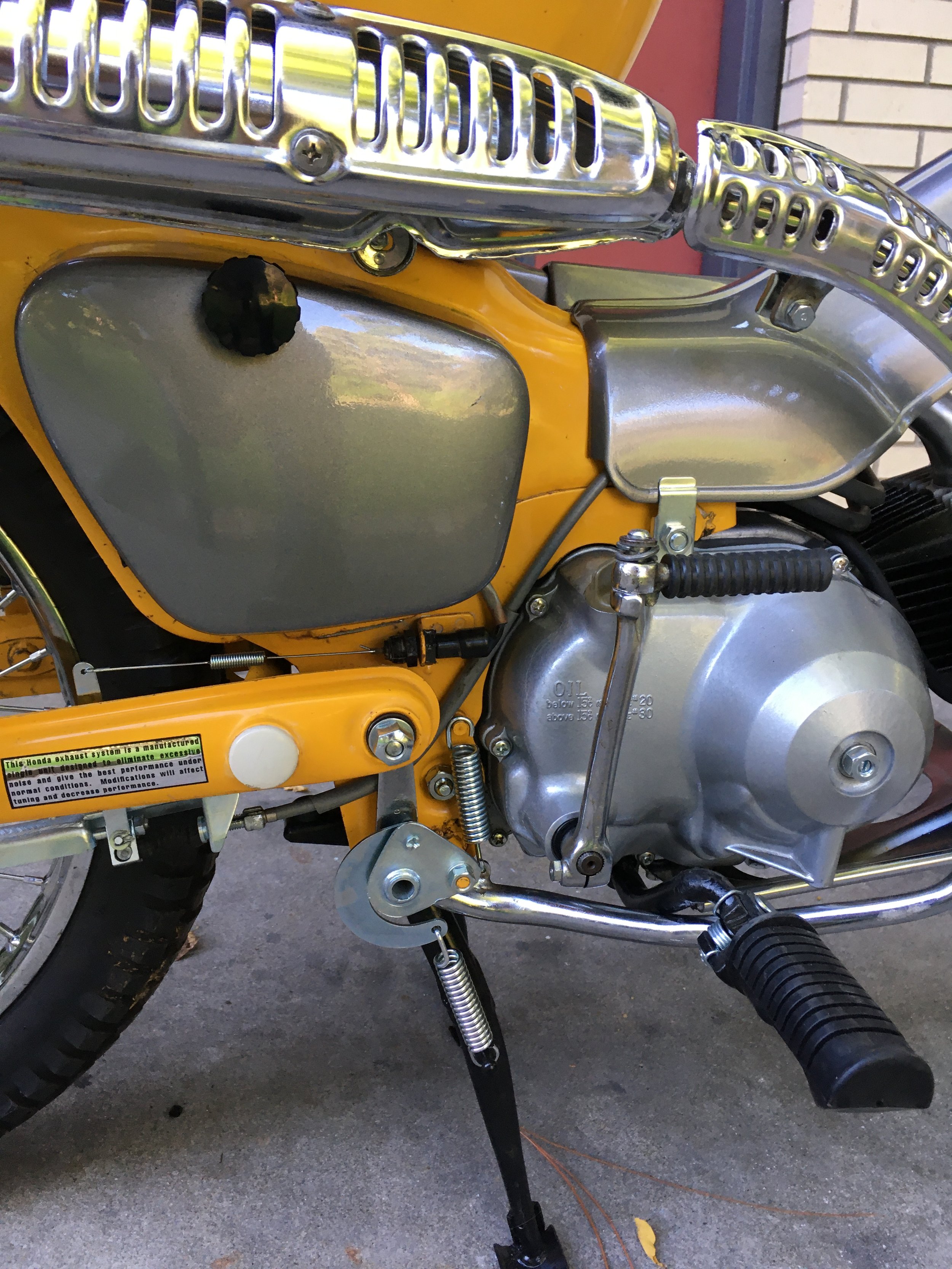
The foil label on the swingarm and the clear one on the auxiliary fuel tank and the carb instructions are reproductions as well as some of the cables and wire sheathing. All other parts are either restored or OEM Honda parts.The tool kit is complete and was zinc plated. It fits behind the battery cover in the original vinyl pouch.

Some of the imperfection in the paint was left like on this side of the swingarm. Since this is not meant to pass for a complete restoration, its okay to leave some imperfections making it obvious.

New mirrors from Honda, replaced hardware and polished aluminum and original chrome have the cockpit looking fresh.

Only a couple small pits could be found in the wheel rims. Hard to believe it is fifty year old chrome. With the new spokes, seals, re-plated hardware, and polished aluminum hubs, the wheels are like new. The front forks , rear shocks, and tires were already on the bike when I got it, and appear to be in like-new condition. The front forks are not exactly like the originals on the lower portion, and are most likely aftermarket. They work fine and fit just like the originals.

The wear on the rear rack can be seen in this picture.

The 1970 Honda CT90 gets an engine refresh.

An engine refresh is underway on the 1970 Honda CT90. The top end is being rebuilt with a new piston and bored cylinder. With the covers polished out, the engine didn’t look too bad, but there was a good amount of grime on the back and underside of the engine. The rest of the bike is coming together and looking pretty fresh. The engine needs some attention to get it to match. After a thorough cleaning of the entire engine, the side covers will be painted, the head will be bead blasted, the rebuilt cylinder will be installed, and freshly plated hardware will be used.

The engine side covers show the wear up close. The re-plated hardware really makes the difference in a sympathetic rebuild. The sidestand and center stand were painted. A lot of welding spatter from the factory welds was removed on the center stand prior to painting.

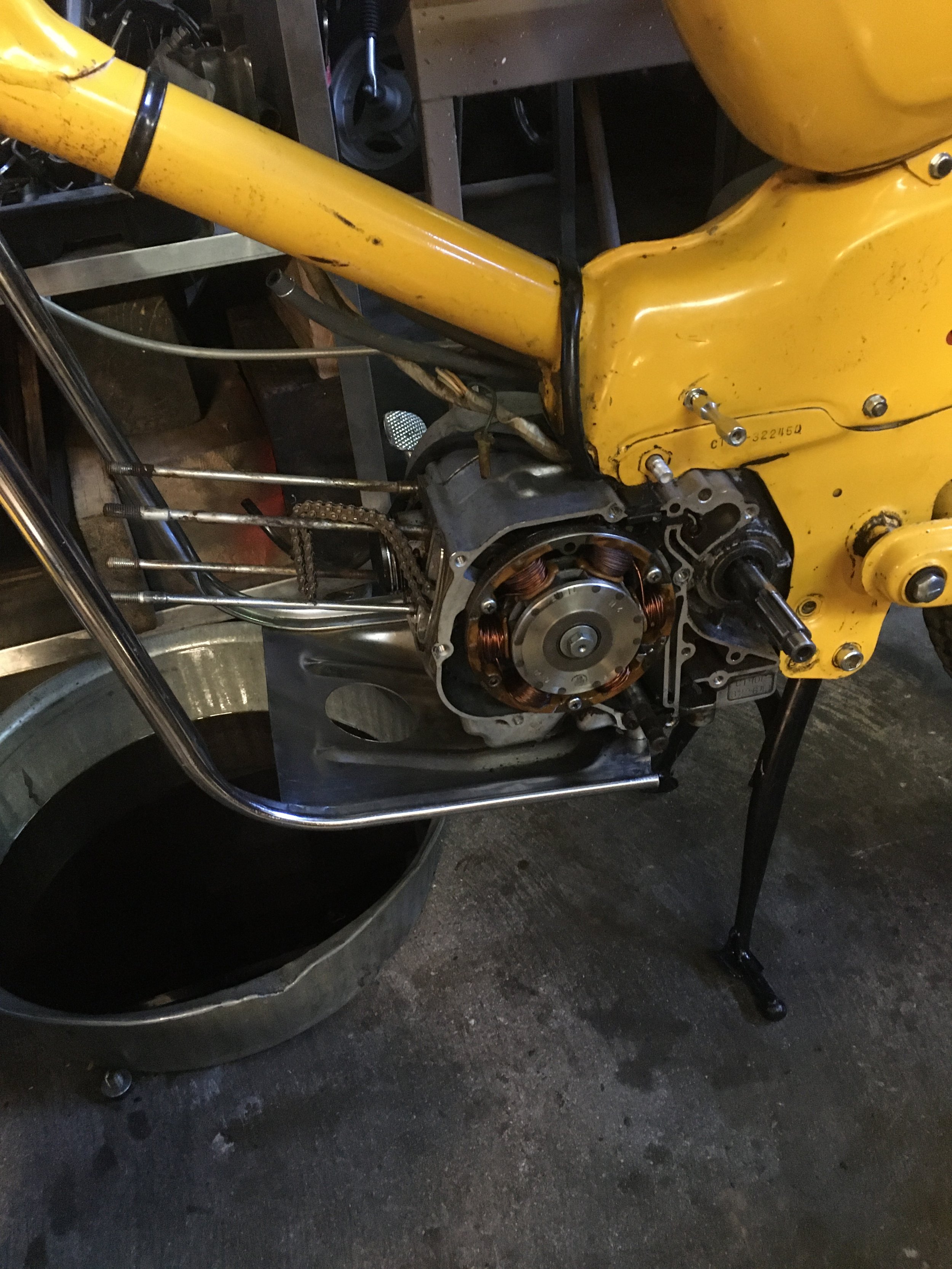
With the side covers and top end removed, the engine is pretty easy to remove from the frame. It is said the frame is the best engine holder. In order to bust loose Phillips-type screws that in some cases have been in place for fifty years, an impact driver is used. If the engine is not held in place tightly, it makes it hard to get the down force necessary to keep from stripping the heads of the screws.

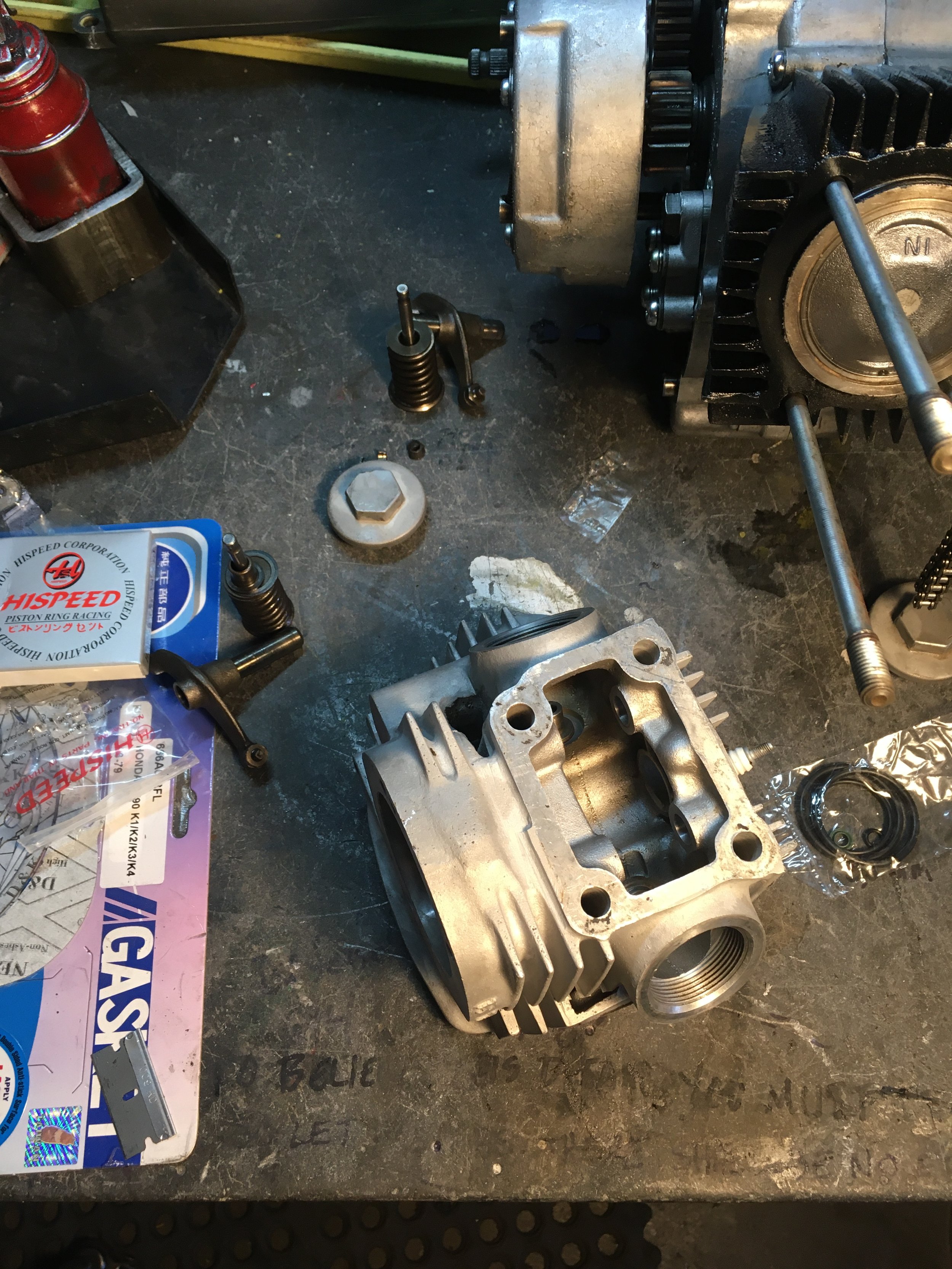
A lot of time was spent on just degreasing the parts. The head was completely disassembled, bead blasted, and the valves lightly lapped in prior to reassembly with all new seals and gaskets.

The stock cylinder was bored .075 and a new piston and rings will be used. The cylinder was bead blasted and painted with medium gloss black engine paint.

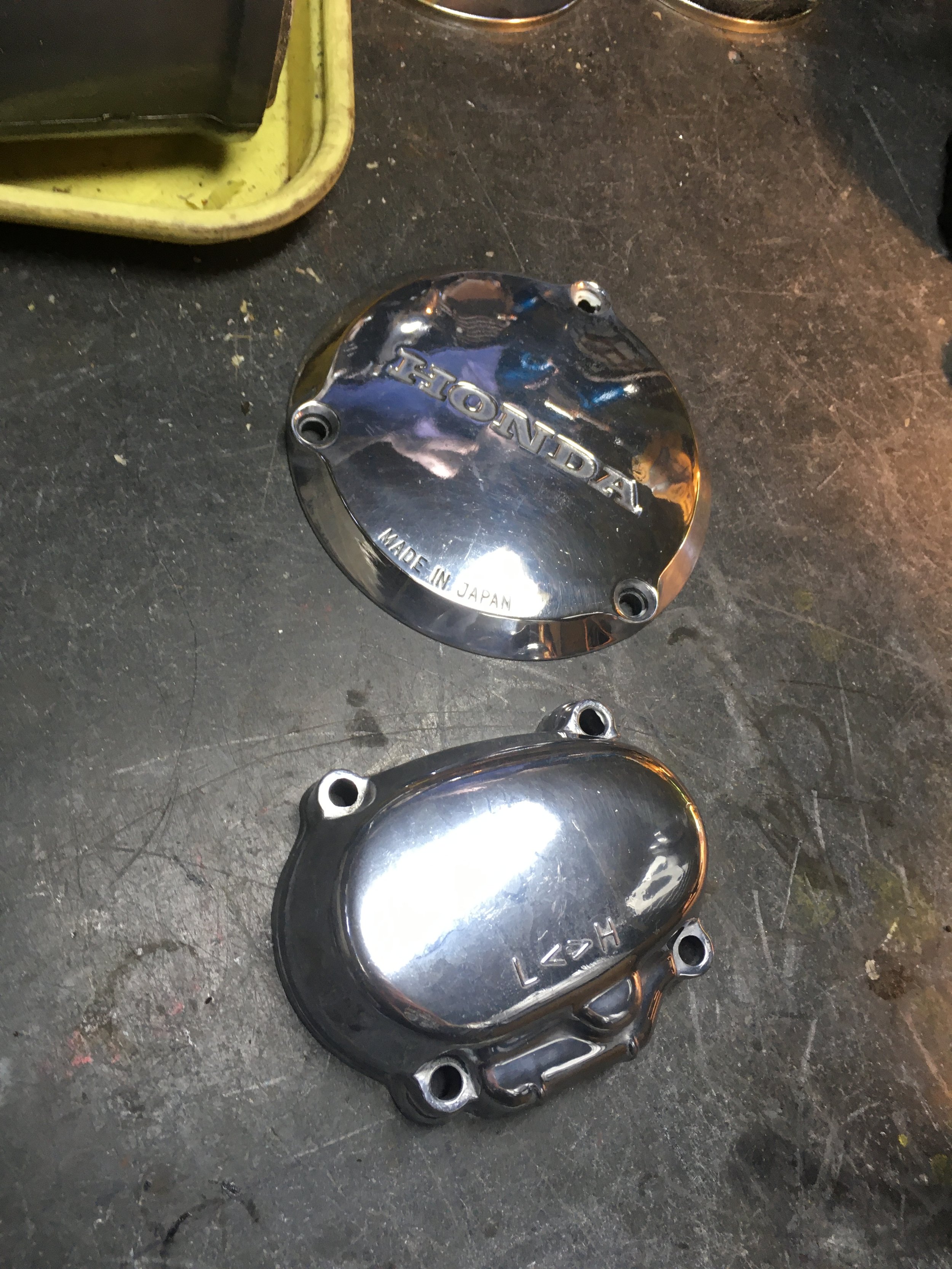
The small side covers were polished out. Although the high-low gear cover is painted from the factory, it is often worn off by the foot of the rider, and looks like its half polished, so polishing it out the rest of the way seems like a better solution.

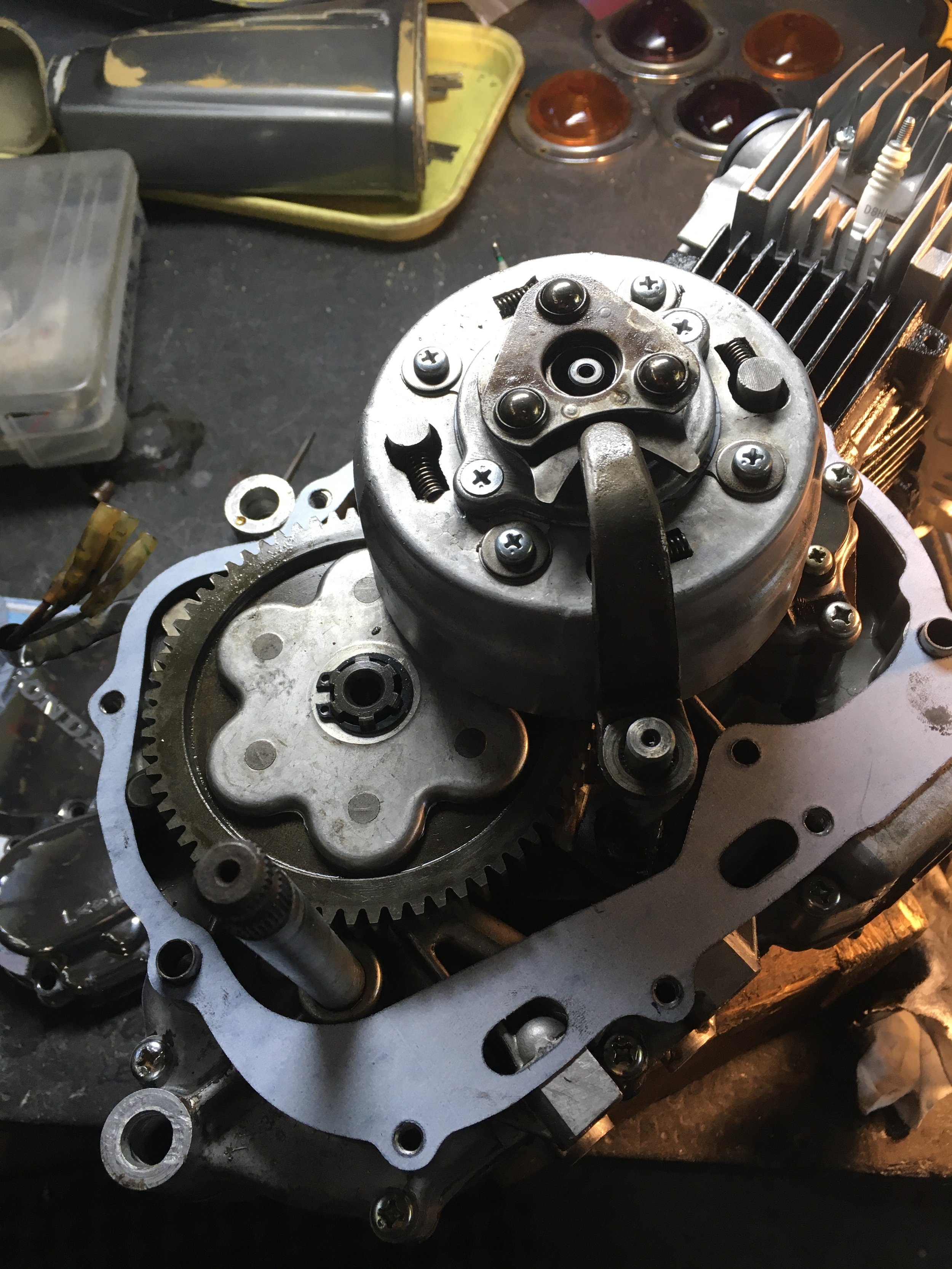
The oil slinger was pretty clean, making me think someone serviced the clutch not that long ago. The similarities between the 90cc engine and 70cc platform are many, but there are still slight differences that had me pulling out the manual.

Waiting on a set of engine shaft seals to get the engine buttoned up. A new sprocket went in to replace the worn original one. The valve inspection covers, points cover and points base were also polished out. Even though the engine block didn’t look too bad from above, there was a good layer of dried grime just about everywhere aside from the small exposed square just below the carb.

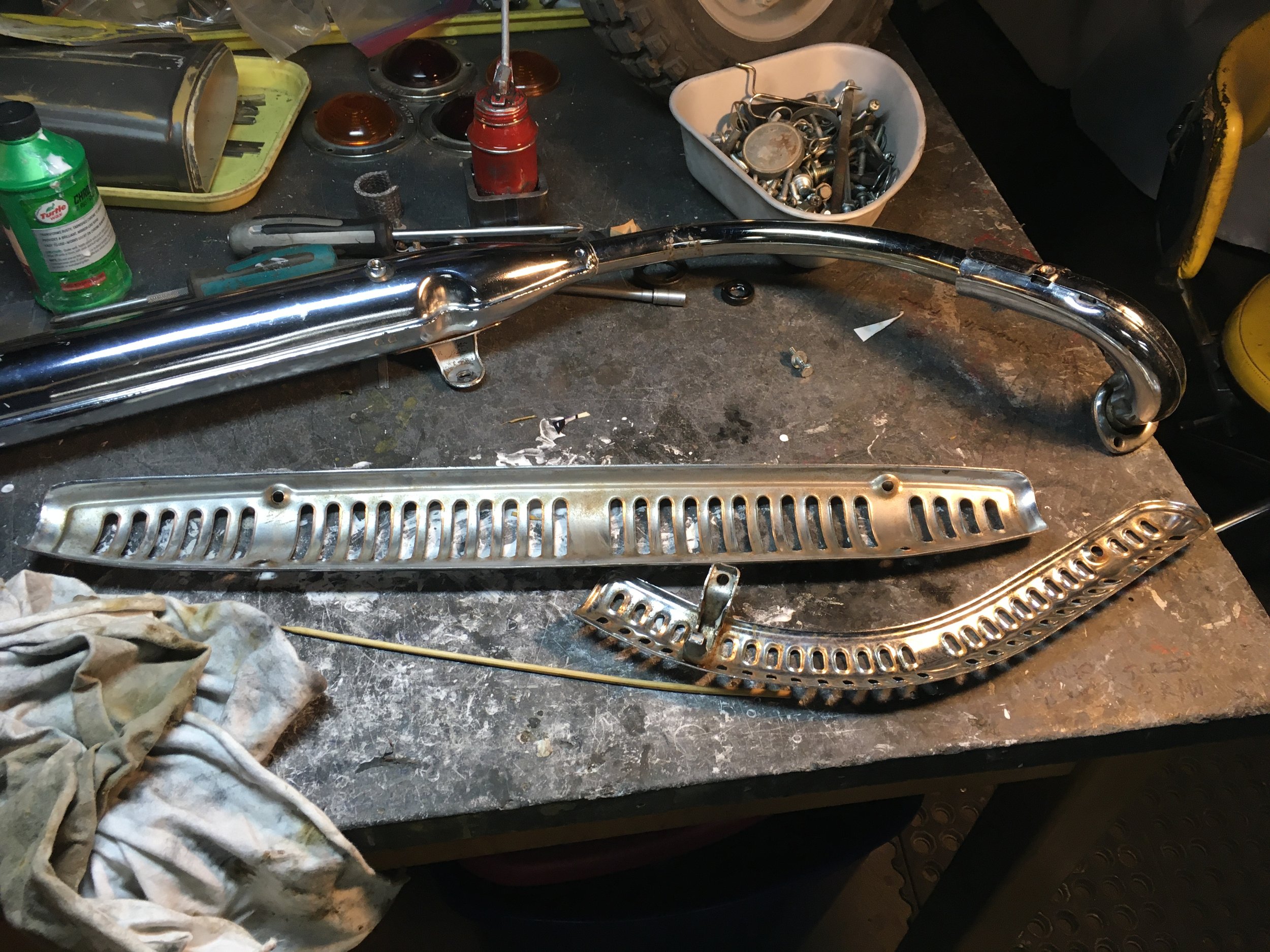
The exhaust is in excellent shape. There were small areas of surface rust that were removed, and the backsides of the heat shields were de-rusted. Because the chrome plating process does not deposit as much metal on concave surfaces as it does on convex or flat surfaces, the backside of the shields are often rusted. The rust was light enough on this bike that chrome polish and some elbow grease removed it. Not a super big detail, but the reflectivity of the muffler under the guard will reflect the rust, and the pipe will not look quite as nice as it could.

After the cleaning and a couple insulating washers were replaced, the muffler is back on, with a fresh exhaust seal at the head. Waiting on the left side of the engine to get buttoned up before the footpeg assembly can be installed.

The intake manifold was oxidized on the front, so it was bead blasted and wet sanded to reproduce the original finish. The air filter and the plastic parts are being re-painted, and will be the last big hurdle. There are some cracks that need to be repaired in the down tube cover before it can be painted. Another reason to de-rust the backside of the exhaust heat shields can be seen from this angle.