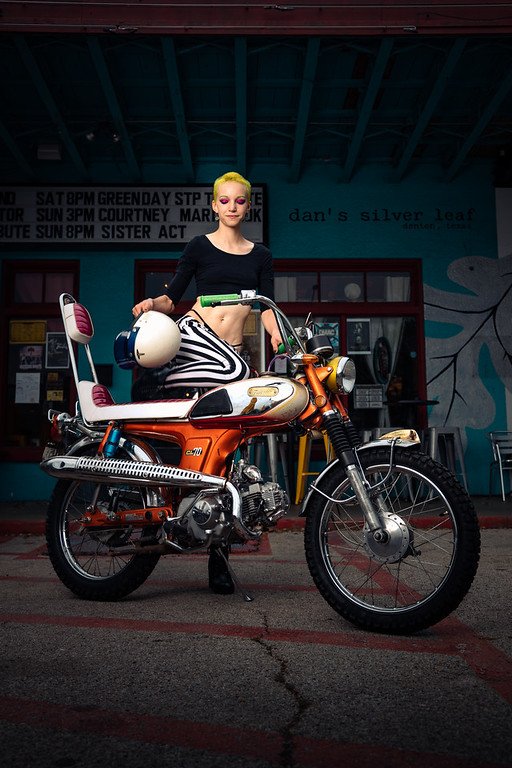
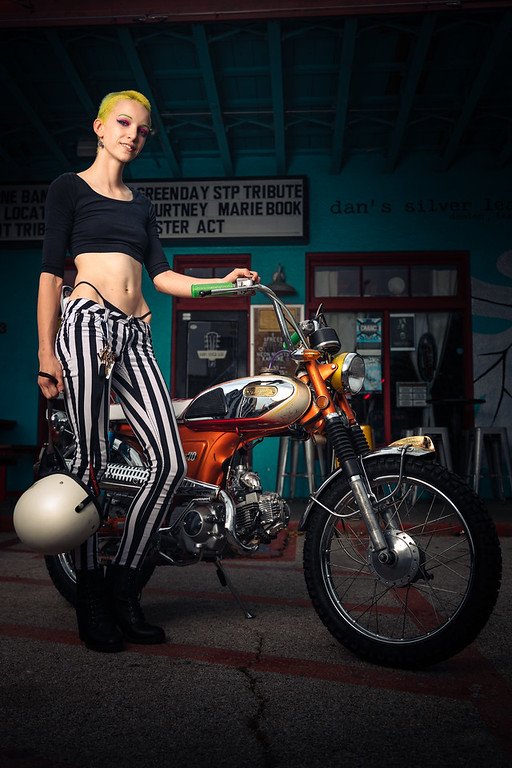
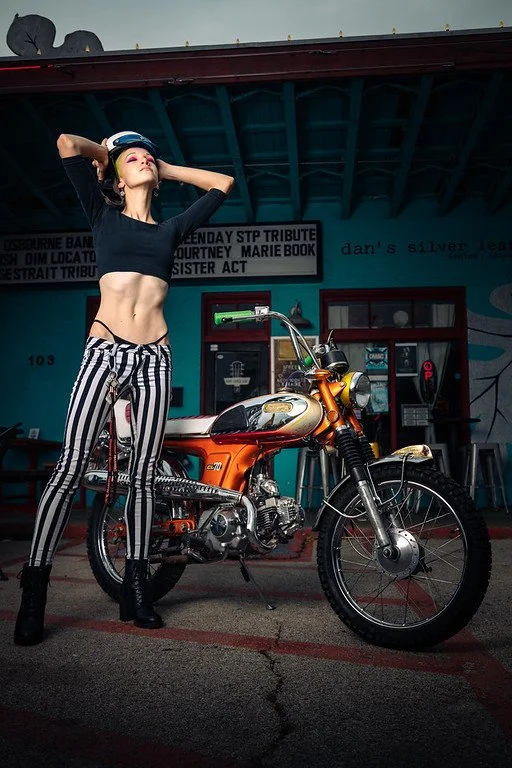
Flaquita Photo shoot picture dump. Pictures by RWB Visuals. Enjoy.











1971 Honda CL70 Flaquita Bike update, 1970 Honda CT90 restoration, 1970 Triumph Trident revival
Looks like the early seventies around the shop. Three bike that have been recently purchased are getting revived, restored, or built up. Flaquita is mostly done. A 1970 Triumph Trident 750 followed me home from Preservation Cycles, and a 1970 Honda CT90 was found through a friend. The weather is great for riding now, and Motorcycle revivals in the Spring always feel so right.
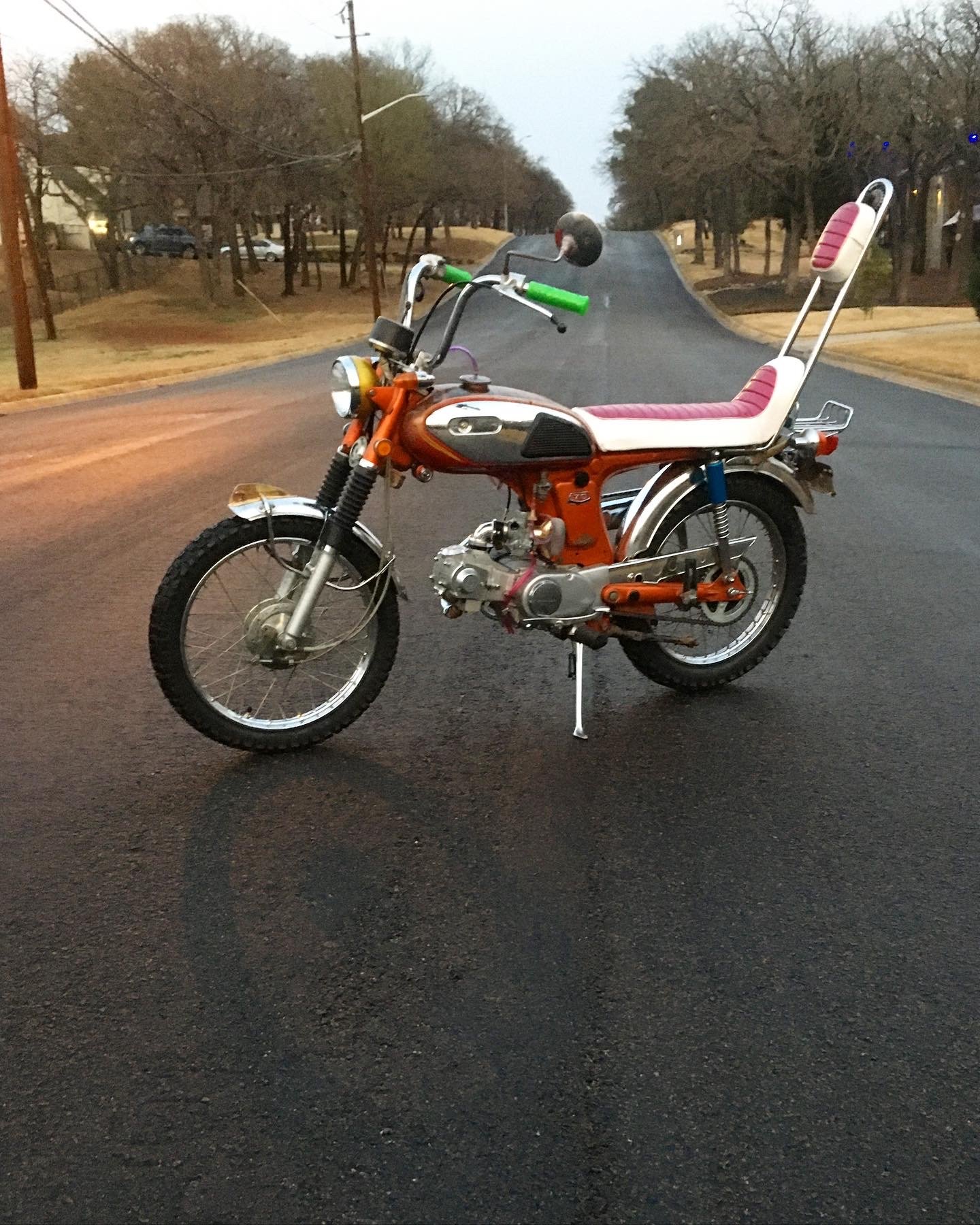
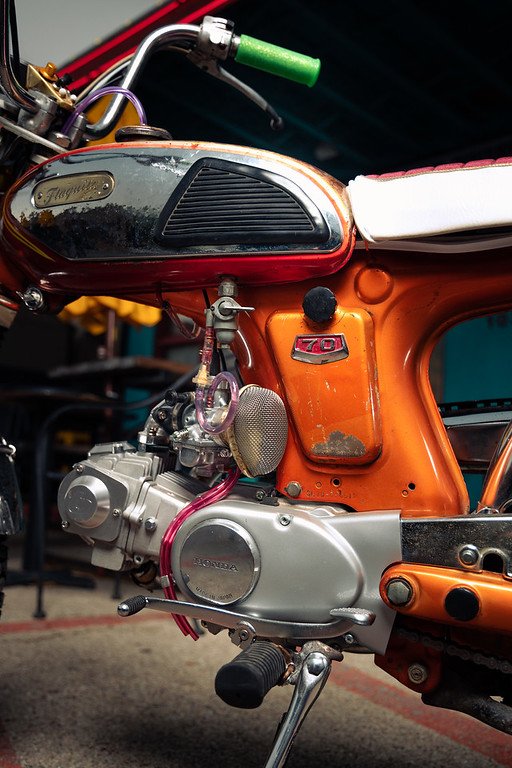
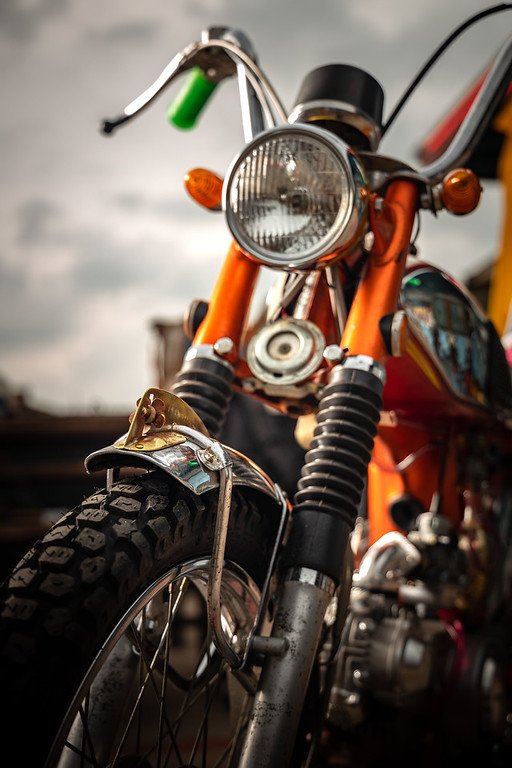
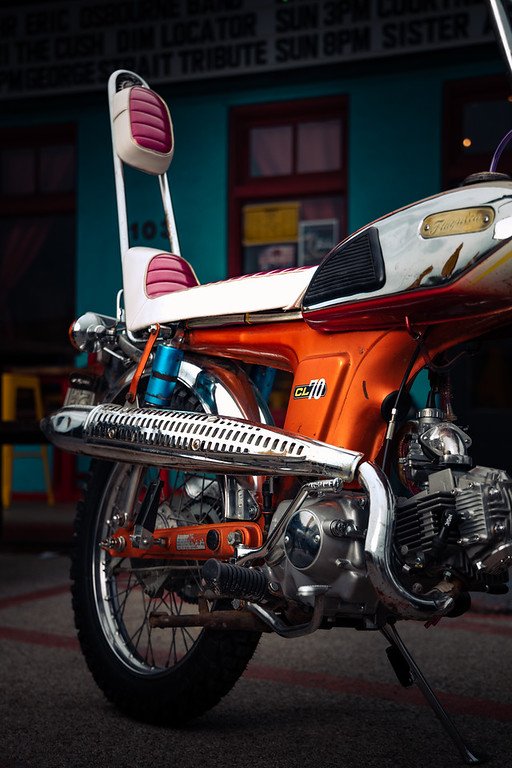
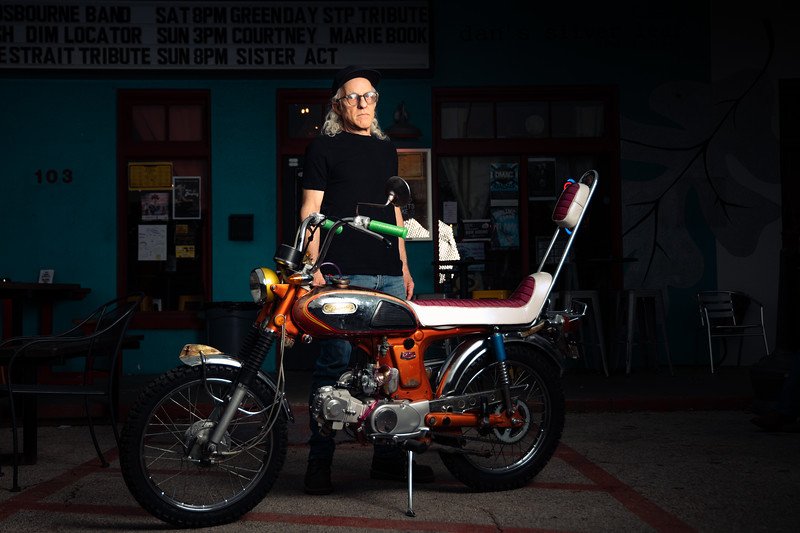
Just about done with the Flaquita CL70. A Zodiac vinyl seat cover, quickie paint, Triumph “Fonzie” bars, custom air filter and some finishing touches since the last post. She has been ridden, and is a gentle ride with a load of power for her frame. The handlebars were narrowed in the center, shortened on the ends, and green glitter grips to jazz them up. Thought about streamers on the bar end, but there are places even I won’t go.
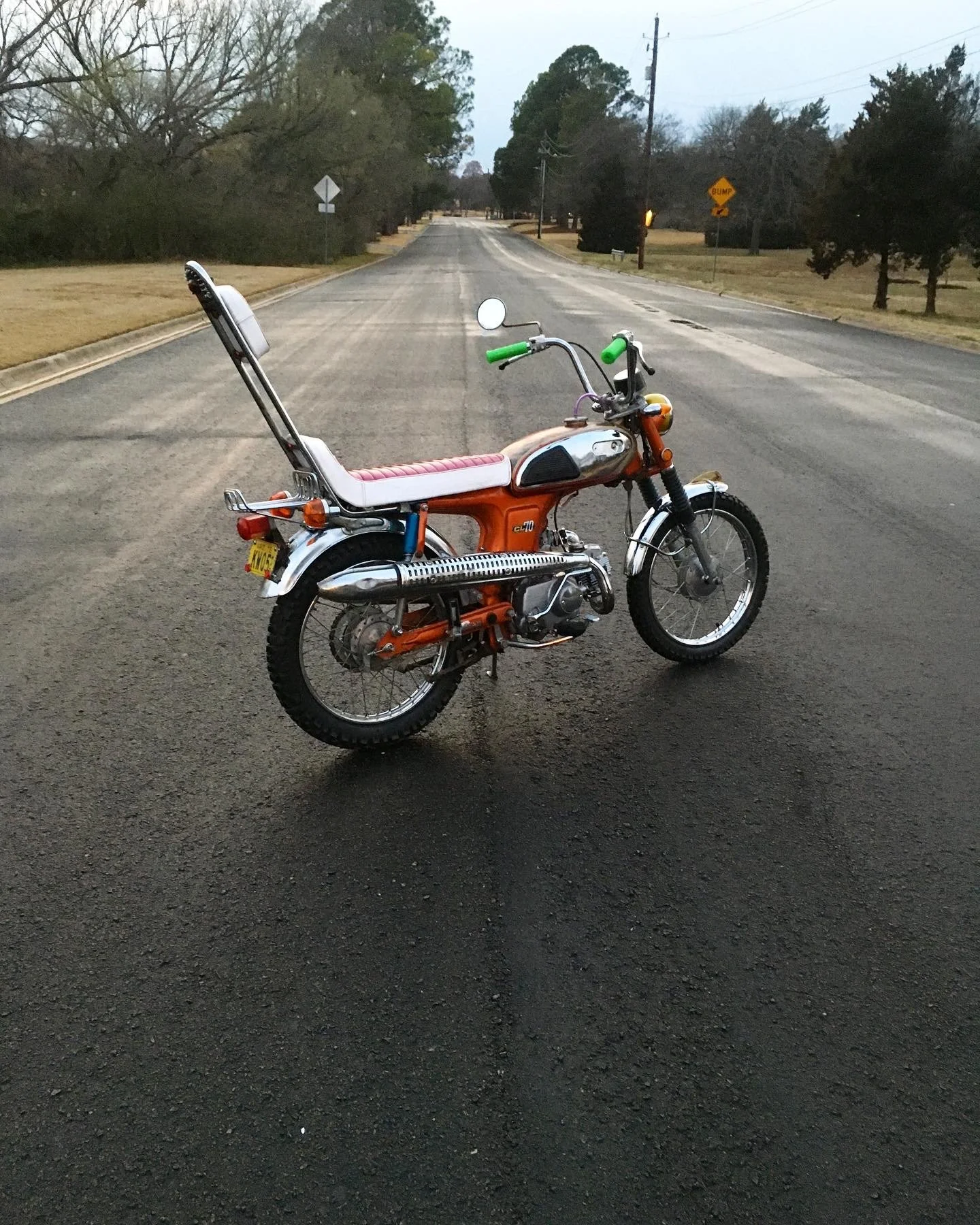
Some turn signals were added to the bike. A set of original rear signals and the mount fit perfectly with the rear rack, clearing it as if it was built around it. Pure luck on that one. The front signals are some that came with a bunch of used parts, and were mounted on the Tijuana trike, but needed to be on this build.

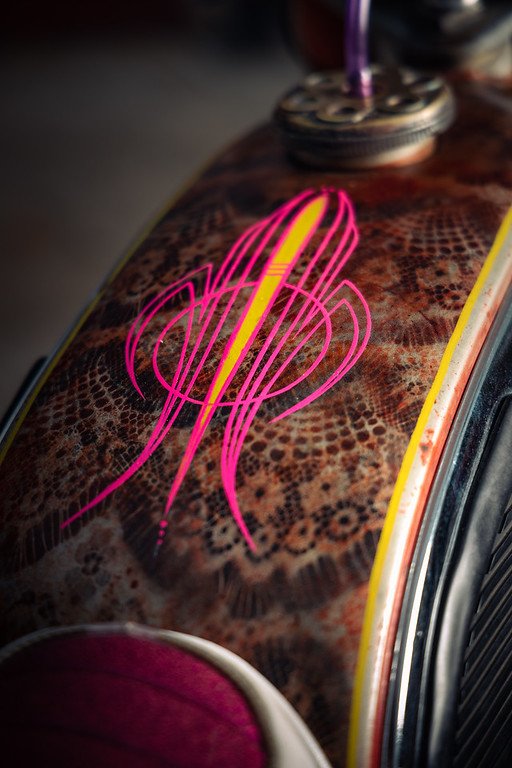
The seat was covered by Mikey Kneavel of Weatherford, Texas. He Did a seat cover for a custom pink pick-up Skratch’s Garage is building, and the color scheme was so cool, I asked him to do this seat the same. I was trying to make sort of a Schwinn bicycle banana style with a little Norton motorcycle Hi-Rider in there too. The tank was painted with rattle-can and five bucks worth of lace in about ten minutes. Skratch painted the tank vector at his shop while I watched. He mixed up a gold green and pink that tied everything together. So good.

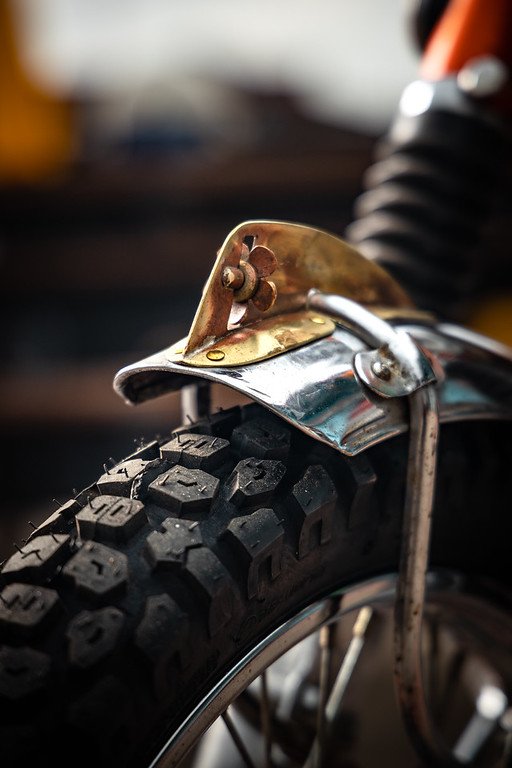
A pedestrian slicer was made from brass for the front fender. The propeller is a wind indicator. When it is spinning, you are either moving fast, or there is a shitload of wind, should that question ever arise. Seriously, it is an ornament of no particular purpose…exactly as planned.
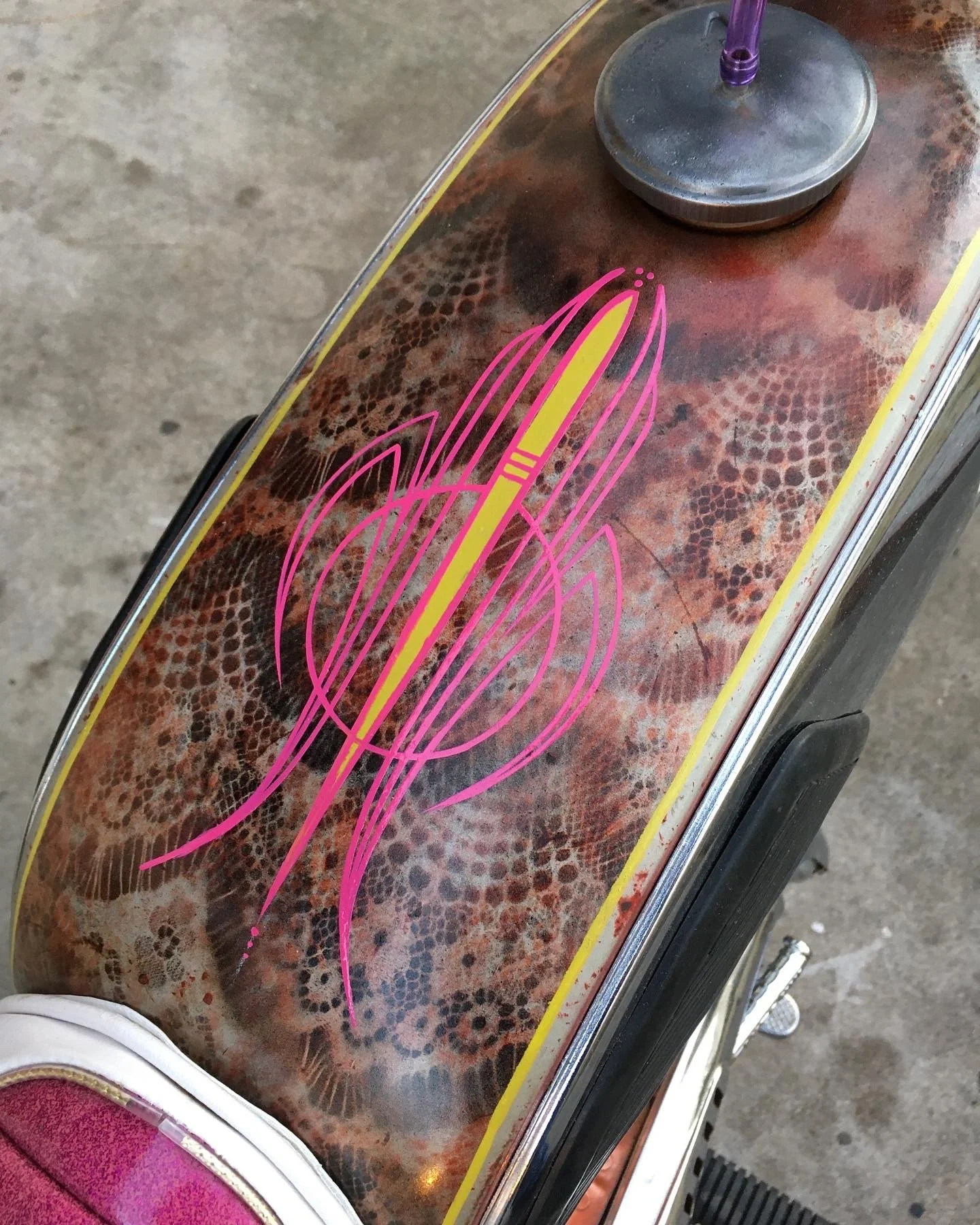
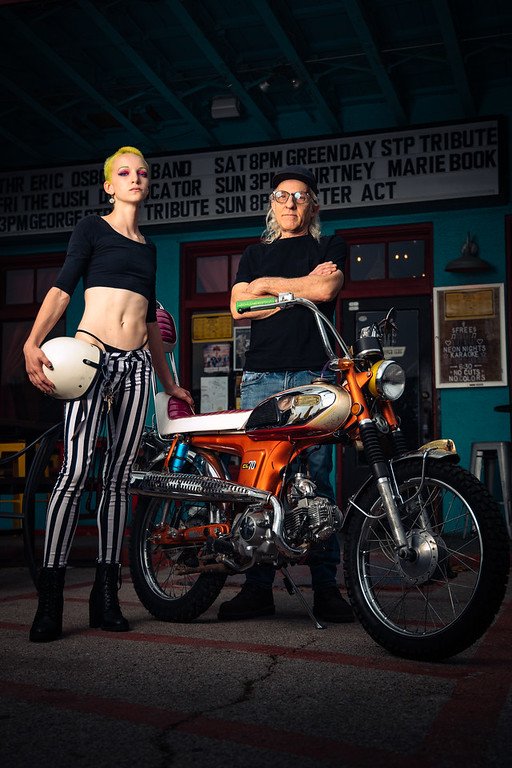
The imagery and symbolism of a motorcycle representing a woman’s body is well known. In this case, she is wearing a lace top, a tight white and magenta skirt, some silver jewelry, and a wicked vector tattoo. She is tall and skinny, and a little fast. On the other hand, she drinks gasoline and farts smoke.

Skratch on the left and Mikey Kneavel on the right at Skratch’s Garage in Fort Worth, Texas. This was after Skratch did the tank pinstripe, and we fitted Mikey’s seat for the first time.
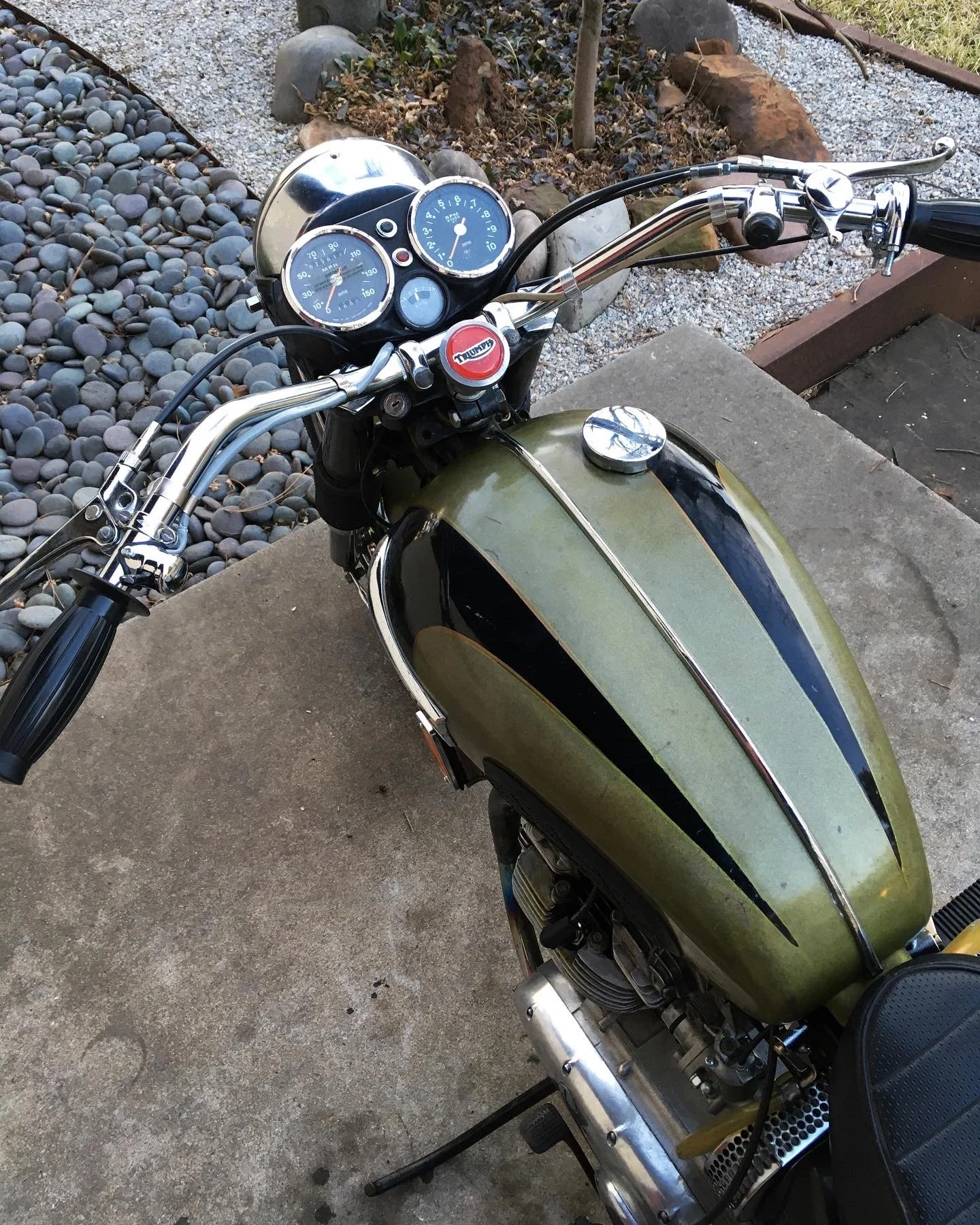
Another recent arrival at the shop, a 1970 Triumph Trident got the revival treatment along with a bunch of small details and a thorough cleaning. The original “Spring Gold” factory paint is faded, but still presents well, so it was buffed out gently by hand. The chrome is all original save for the new air cleaner assembly.
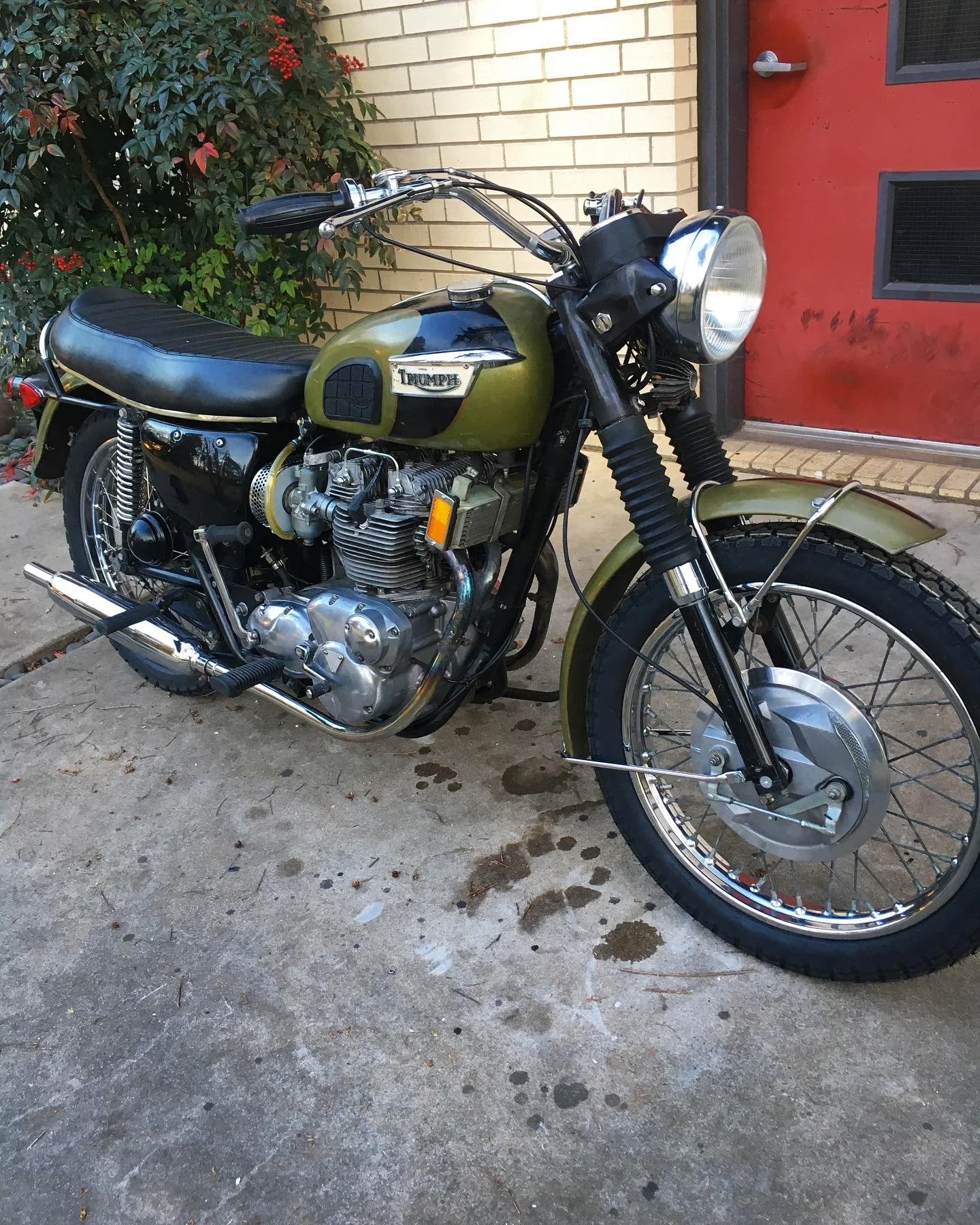
For once, the oil puddle is not from this Triumph, but a Yamaha i was working on. When the weather is good like it has been recently, I work out on this North-facing pad on the side of the shop. The Trident got some heavy duty stainless Buchanan spokes on the rear, a Pazon electronic ignition system, new Dunlop tires and tubes, a gas cap, brake and ignition switches, cables, the airbox, rubber foot peg and pedal covers, and a used left side cover. The previous owner had swapped the original numbers matching engine out for the one in it now, due to a thrown rod. A new set of Amal carbs was purchased, but he never got it running. It runs now, after an English friend told me the secret: flood the shit out of all three carbs with the ticklers, open the throttle almost wide open, and kick strong. If it does not start after your kick, do not stop kicking till you certify it has not backfired out the carbs, as this is always a possibility, and more dangerous with flooded carbs. The original engine will be rebuilt at some point, but this one runs strong.

New coils and cables under the seat along with a special cover on the oil tank.

A tuna can to place under the carbs while flooding. It can then be poured back in the tank.
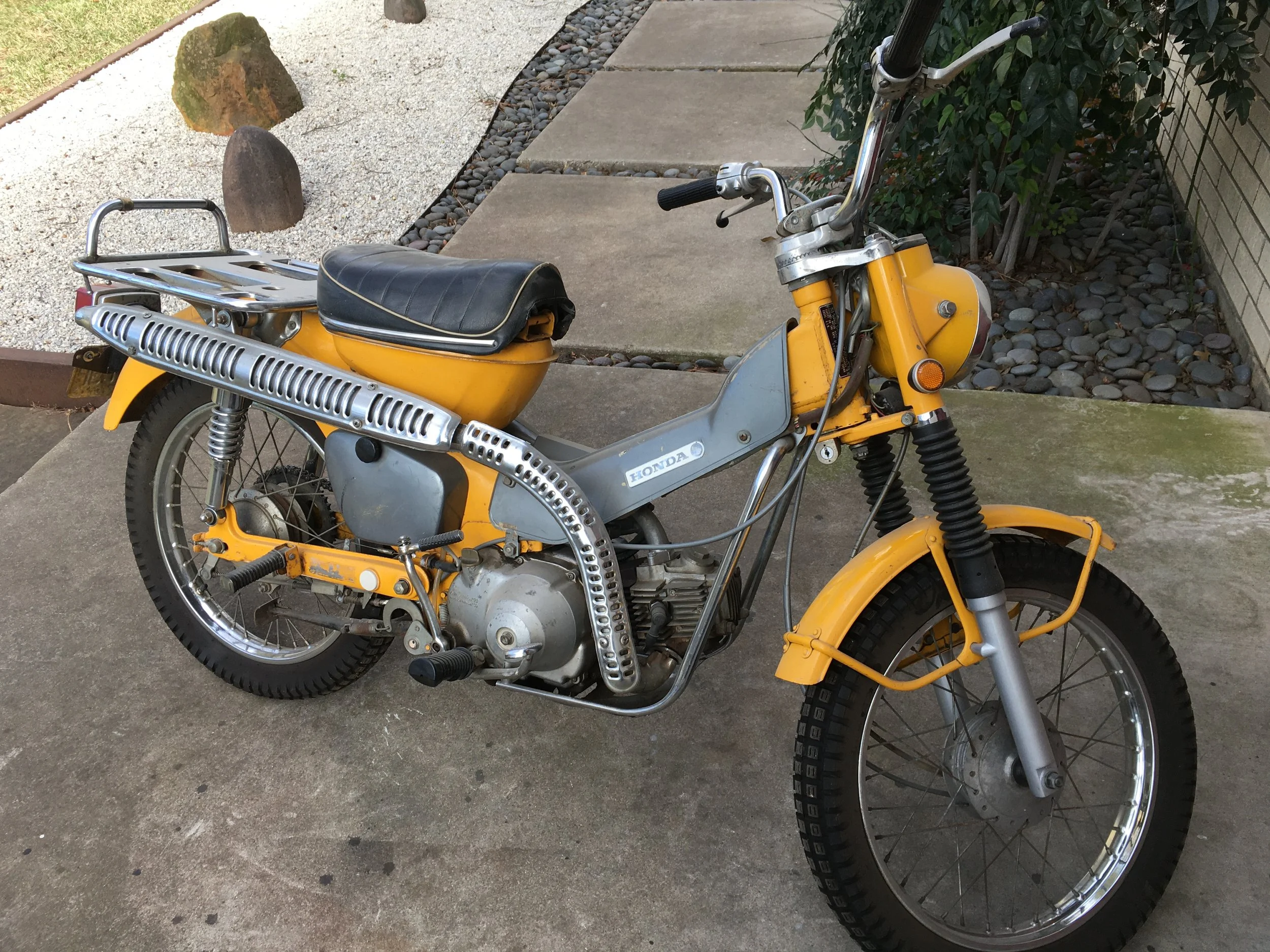
A 1970 Honda CT90 is also in the shop getting a sympathetic restoration. The original paint was in very nice shape with some dings and wear, but worth preserving. The chrome was in exceptional shape and was only cleaned and polished. The aluminum will be polished out, rubber replaced, and zinc parts re-plated. The front forks and rear shocks appear to be replacements by a previous owner, and are in like-new condition.
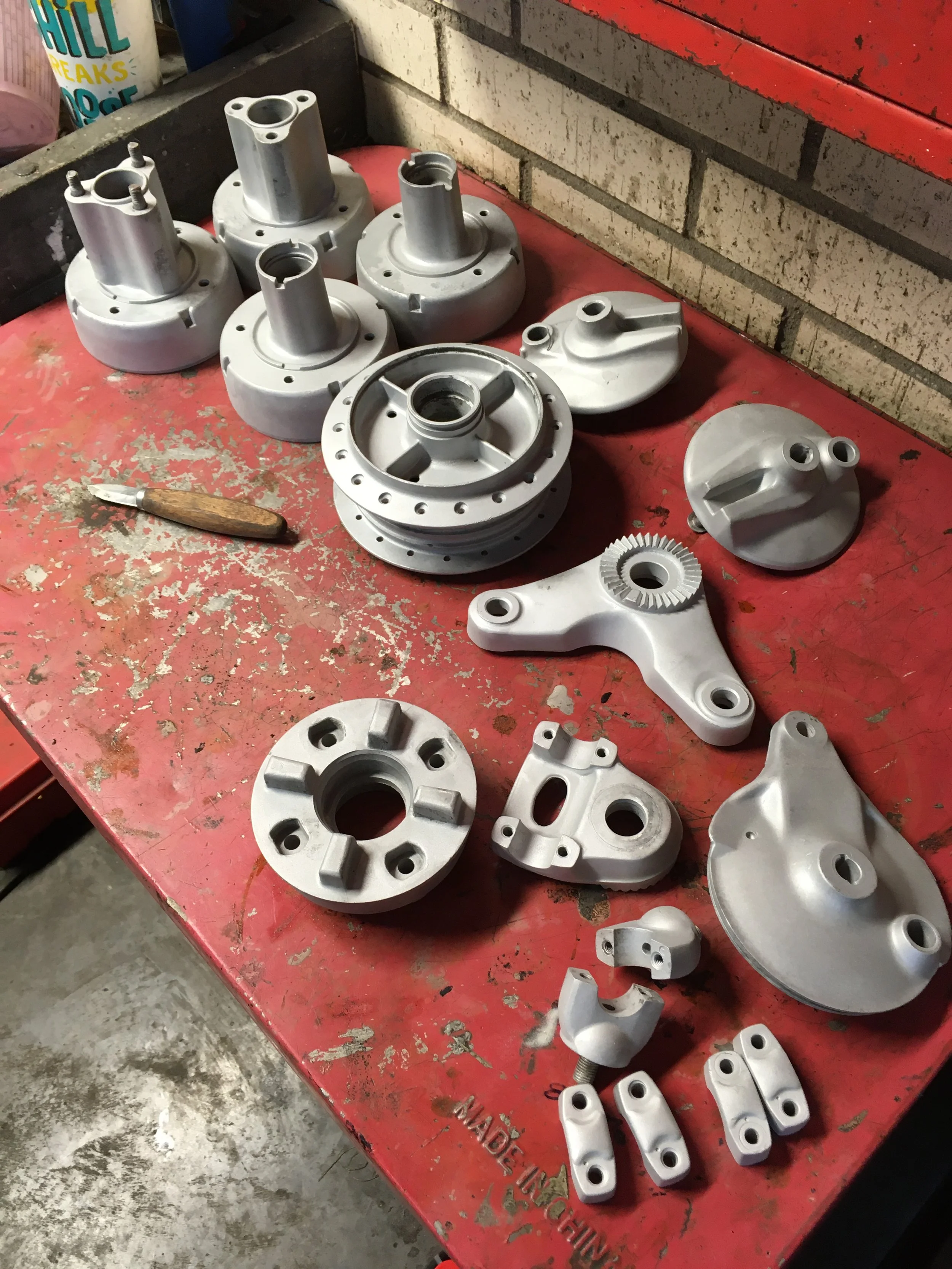
After cleaning and bead blasting, these parts (for two different bikes) will be polished, and bearing and seals will be replaced.

The same parts polished and waiting for the re-plated zinc hardware. The handlebar controls were also reworked, doing some cleaning, lubricating, polishing and some new external wire sheathing.

Hard to believe, but I bought this can of touch-up paint at a Barber Vintage Motorcycle swap meet a few years back, and it is still usable and a dead-on match.

Everything except some engine screws, including the tool kit will be re-plated on the CT90. It is surprising how much stuff there actually is, and it must all be de-greased, bead blasted, and burnished on wire wheel before it goes out for plating. Nicks are smoothed out there is always some straightening involved. The engine screws will be pulled when the engine is serviced, but I am trying to get the wheels and center stand back on along with most of this hardware before digging into that. Because my platers quit doing spokes, a new set from Honda was purchased for the rear, and an aftermarket set for the front.

Some before and after. This is a chain guard that has been partially cleaned. At this point, the only grease and dirt is on the part of the guard at the top of the picture. The rest of the brown on the curved lower portion is rust. Even though it appears to be rusted through, the rust is mostly staining the surface of the paint. It has come from underneath through small pores and been deposited there. There are rust removers out there, but the one I like is plain old chrome polish with rust remover. The next picture shows the result.
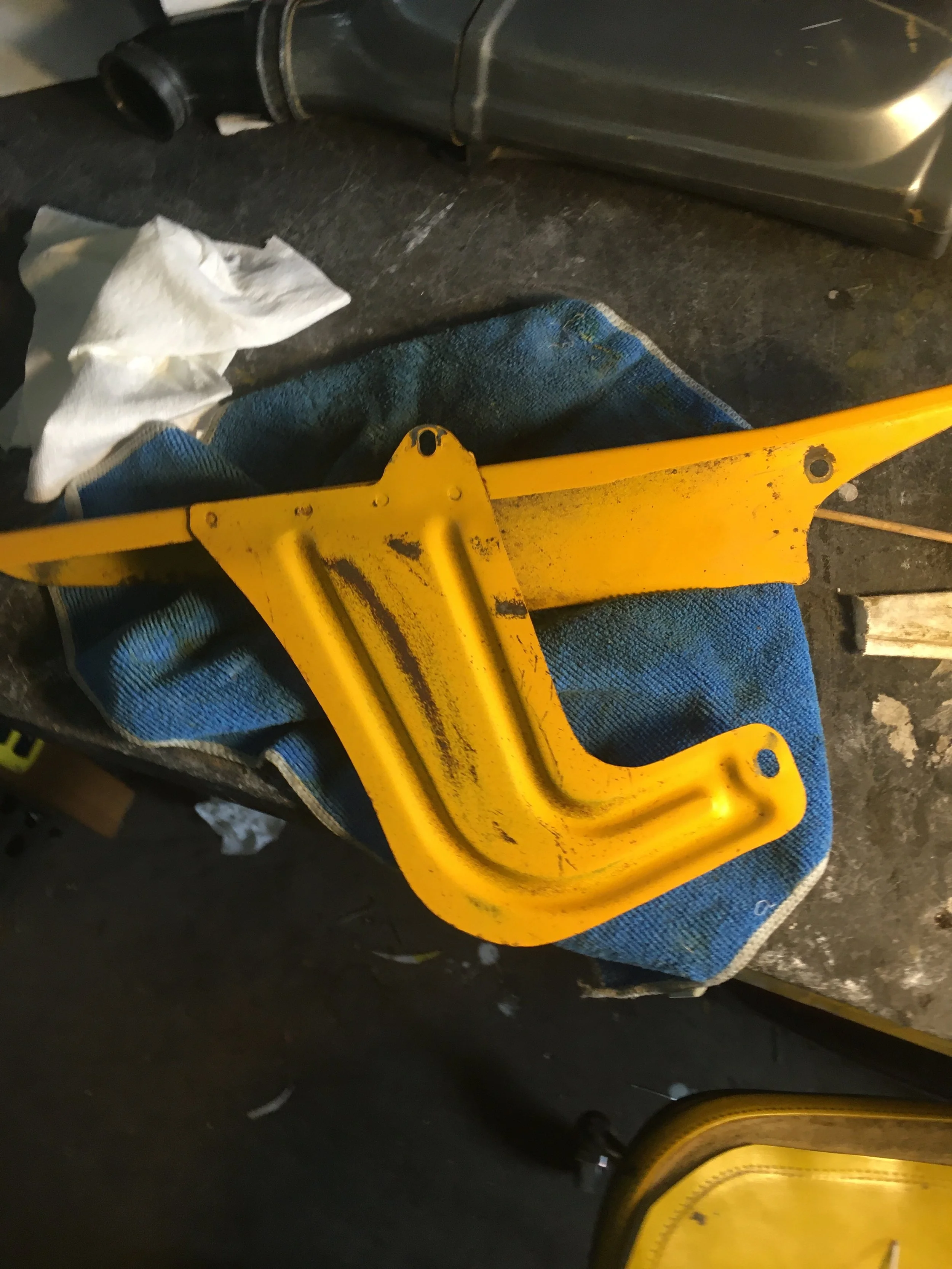
At this point, only chrome polish and degreaser have been used to get this result. It is laborious and should be done by hand to minimize paint loss, but the results are worth it. I put the polish on with a rag thick enough it stays wet, and after a few minutes, it softens and can be rubbed off.

Spring cleaning at the shop means taking each of these bikes out for a little run. Hard work, but someone has to do it.
1971 Honda CL70 named Flaquita, a 1979 Yamaha XT500 leaves the shop, 1966 P1800 update, and the Norasaki build.
Plenty going on around the shop. The “Flaquita” build is getting close to completion, A Yamaha XT500 found a new owner, the trunk lid on the 1966 Volvo P1800 was repaired, and a seat assembly was made for the “Norasaki” build, a 400cc Kawasaki triple tied to a Norton featherbed frame.
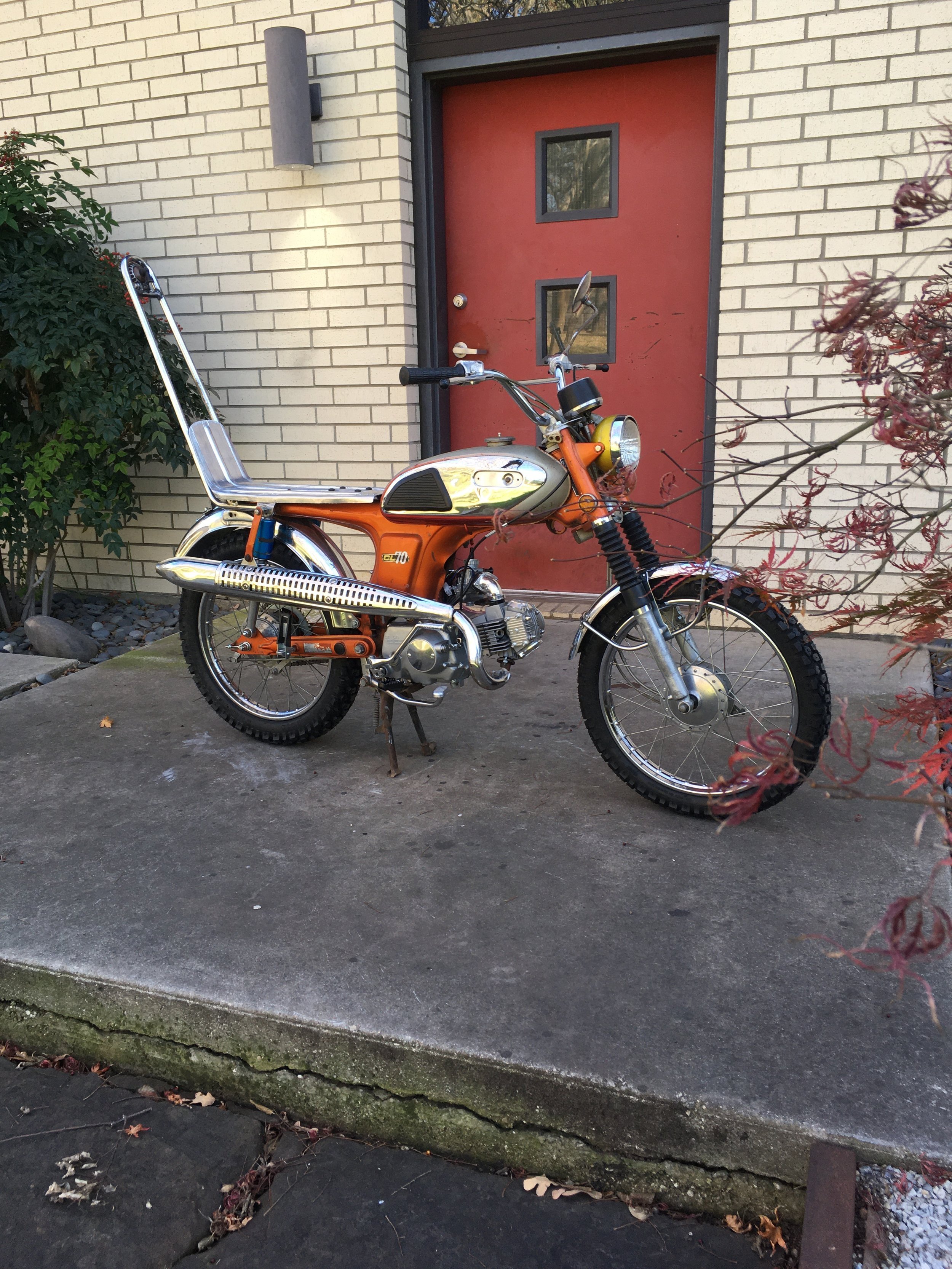
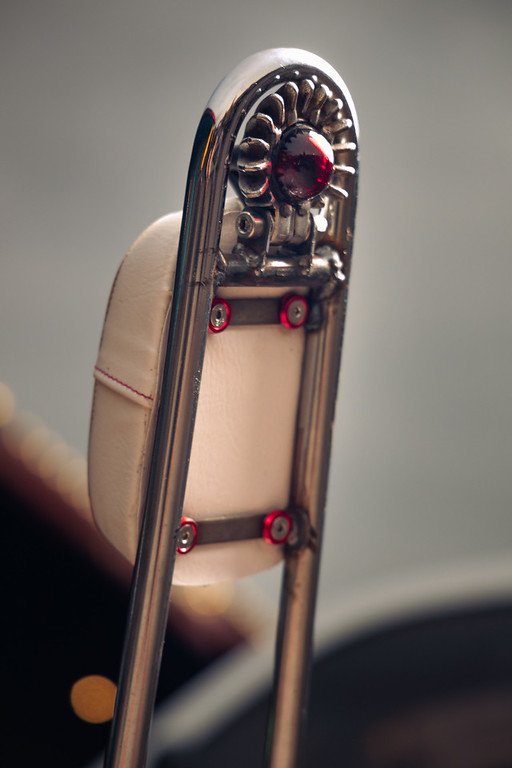
Her name is Flaquita. A 1971 Honda CL70 with a 1970 Yamaha Trailmaster 100 tank, modified CB350 sissy bar, CRF50 footpeg assembly, custom seat and rear rack, and a 108cc stroker engine with electronic ignition and 12 Volt electrics. New cables, brake levers, tire tubes and dual sport tires, some new brake shoes, fork tubes, seals, and gaiters, and an aftermarket CT70 wire harness and key round out the build list.

When I got this bike, it had a Chinese E-start engine that was in place, but did not appear to have ever been running. The muffler, chain guard, seat, wiring harness, and tank were missing, and it was well coated with dust and rust. The tank was later located, but the Yamaha tank looked better, so it is staying. The battery cover on the side of the frame was missing, and a used one was found in an online auction for a small fortune.
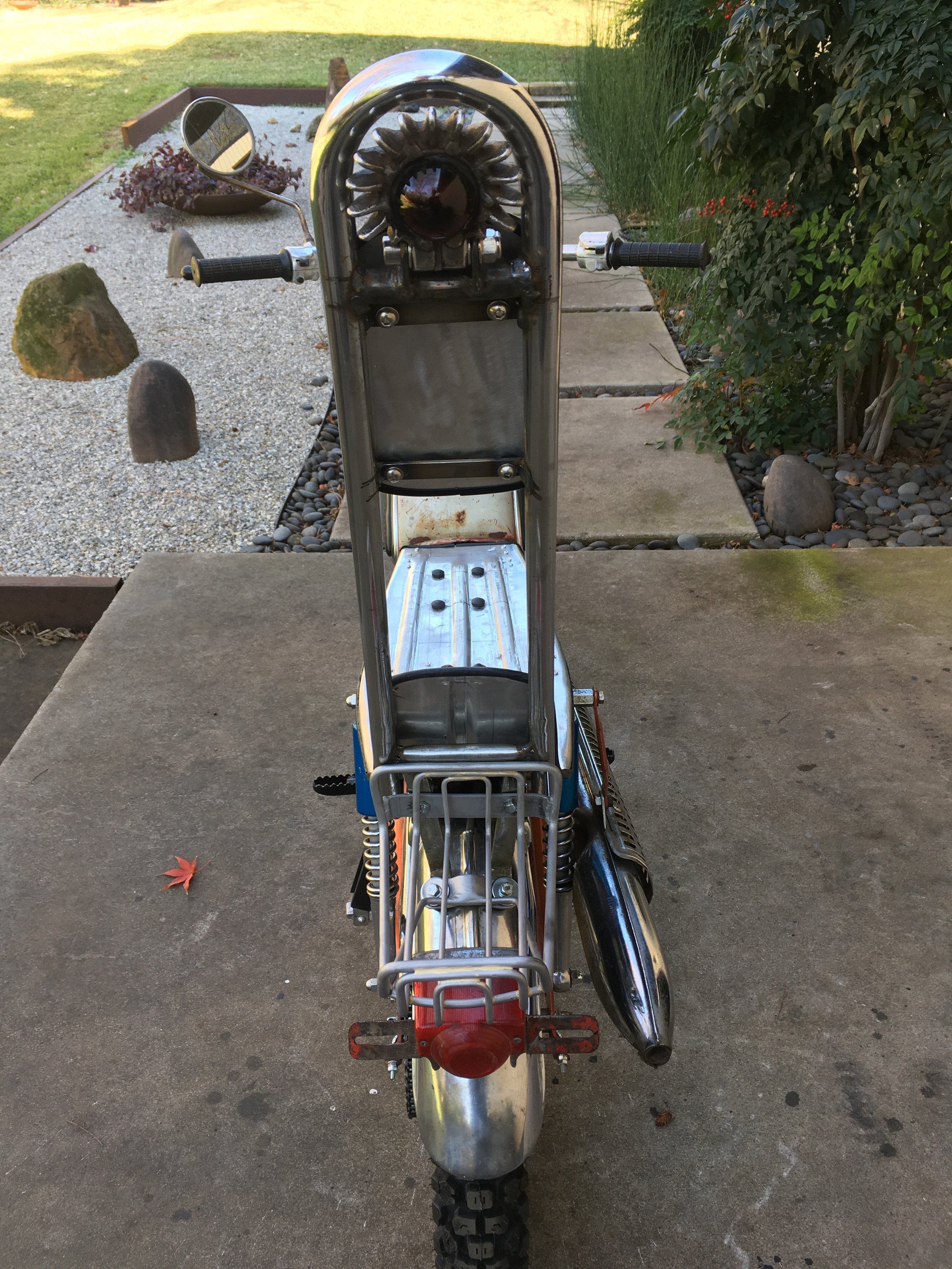
The tail light body was made a couple years back, and recently wired with no particular place to put it…till the sissy bar went on this build. The rear rack was made from steel rod and brazed together with brass.

If you are heading to the skate park instead of the beach.

The tail light was made from an exhaust clamp, a WW2 era Naval aircraft light lens, a piece of a cymbal sealing the backside, and a 12 Volt LED.

The racks design uses closed rectangular loops so that no cut ends are present. The lower tail light bracket is from an unknown Honda, and has had the base modified to fit the original holes in the fender.
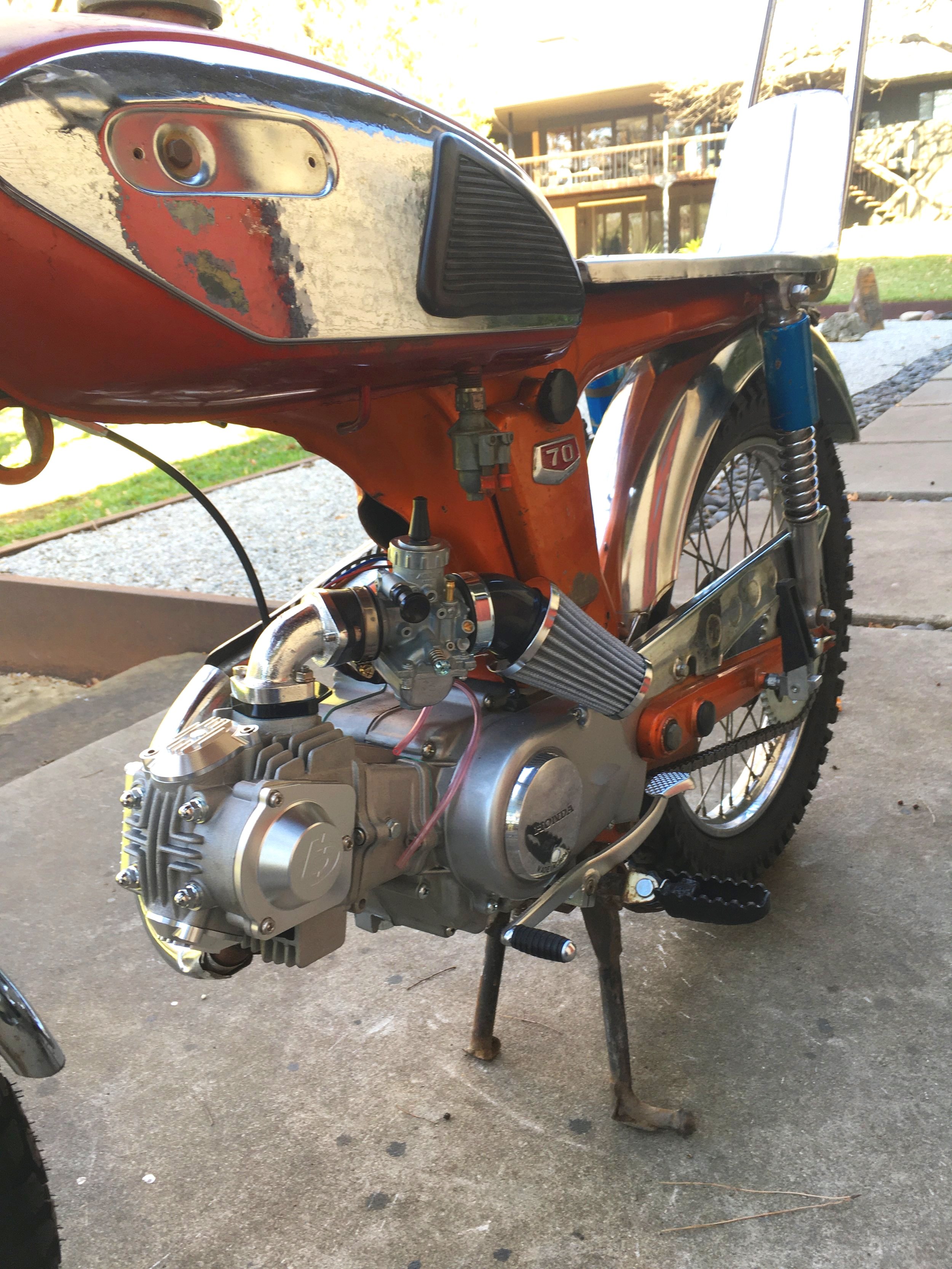
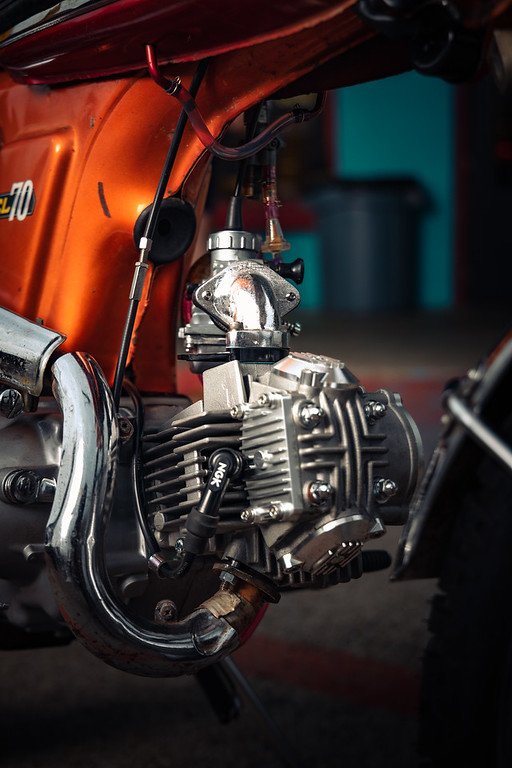
The 108cc stroker engine is mated with a 4-speed tranny, rolling rocker race head and cam, and a Mikuni VM26 carb.

An original CL70 bottom end was located to replace the Chinese one the bike came with.

This 1979 Yamaha XT500 was rehabilitated. A new set of bars, levers, grips, gaiters, spokes, and the ignition plate replaced the messed-up or missing ones the bike came with.

The inner support for the trunk lid on the 1966 Volvo P1800 was removed from the outer skin and repaired. Small areas had rusted through and were replaced with fresh metal.

Finally, a rear seat hump is being made for the Norasaki build. The triple’s pipes will exit the rear portion of the seat. The lines of the hump are made to echo the lines on the Manxman tank.